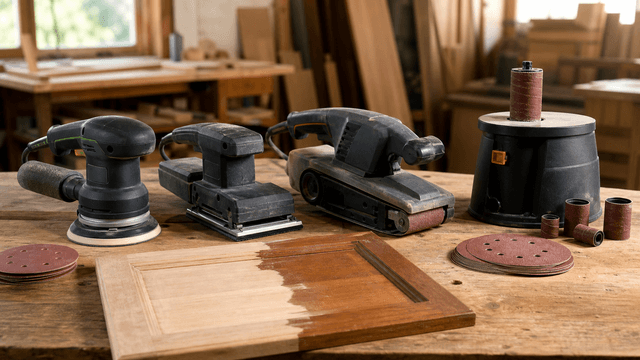
Best Belt Sanders: 4 Exact Picks for Different Jobs
Four current belt sanders, compared by belt size, speed control, weight, dust setup, and the jobs each design suits best.
Wide, Aggressive Stock Removal
Research rank #1Amazon paid link; price & availability change.
Research-BackedSpec Checked
Current recommendations are research-backed. Each article identifies its evidence, sources, update date, and limitations. No current guide is presented as hands-on tested. As an Amazon Associate, ToolShed Tested earns from qualifying purchases. When you buy through our links we may earn a commission -- at no extra cost to you. Product links and article details last reviewed August 11, 2026. Full disclosure.
Quick Answer
Four current belt sanders, compared by belt size, speed control, weight, dust setup, and the jobs each design suits best.
- #1Makita 9403 4x24-Inch Belt SanderWide, Aggressive Stock RemovalWhy: Wide 4x24-inch belt covers large workpieces efficientlyWatch for: 12.6-pound weight is demanding on vertical workCheck Price on Amazon
- #2Metabo HPT SB8V2 3x21-Inch Variable-Speed Belt SanderVariable-Speed 3x21 ControlWhy: Variable belt speed from 820 to 1,475 FPMWatch for: 9.5 pounds is heavier than the compact picksCheck Price on Amazon
- #3WEN 6321 7-Amp 3x21-Inch Belt SanderBudget 3x21 ProjectsWhy: Uses widely available 3x21-inch sanding beltsWatch for: Single 820-FPM belt speed limits adjustmentCheck Price on Amazon
At-a-Glance Comparison
Our Picks, Reviewed
#1 -- Wide, Aggressive Stock Removal
Makita 9403 4x24-Inch Belt Sander
Best for
Wide, Aggressive Stock Removal
Package
Package: verify current retailer listing before checkout
Pros
- Wide 4x24-inch belt covers large workpieces efficiently
- 11-amp motor and 1,640-FPM fixed belt speed
- Flush-to-wall design helps near vertical surfaces
Cons
- 12.6-pound weight is demanding on vertical work
- No variable-speed control
#2 -- Variable-Speed 3x21 Control
Metabo HPT SB8V2 3x21-Inch Variable-Speed Belt Sander
Best for
Variable-Speed 3x21 Control
Package
Package: verify current retailer listing before checkout
Pros
- Variable belt speed from 820 to 1,475 FPM
- 9-amp motor with a common 3x21-inch belt format
- Includes a dust bag and sanding belt
Cons
- 9.5 pounds is heavier than the compact picks
- Narrower belt needs more passes than a 4x24 model
#3 -- Budget 3x21 Projects
WEN 6321 7-Amp 3x21-Inch Belt Sander
Best for
Budget 3x21 Projects
Package
Package: verify current retailer listing before checkout
Pros
- Uses widely available 3x21-inch sanding belts
- Six-pound design is easier to move than the heavy-duty picks
- Dust bag and lock-on trigger are included
Cons
- Single 820-FPM belt speed limits adjustment
- Seven-amp motor is aimed at lighter project use
#4 -- Compact DIY Work
SKIL 7510-01 3x18-Inch Belt Sander
Best for
Compact DIY Work
Package
Package: verify current retailer listing before checkout
Pros
- Pressure-control indicator helps flag excess downward force
- Automatic belt tracking reduces manual alignment work
- Dust canister and 1-1/4-inch vacuum compatibility
Cons
- Smaller 3x18-inch belt covers less area per pass
- Six-amp motor is not intended for the heaviest removal jobs
Frequently Added to Cart
Workshop Essentials & High-Value Add-Ons
Tool buyers and tradespeople routinely bundle these verified, high-durability accessories under $25 to avoid stripped fasteners and workshop downtime.
Driving & FasteningMust-Have
DeWalt Flextorq 35-Pc Impact Ready Bit Set
Hardened steel tips resist cam-out on stubborn screws and impact drivers.
Drill/Driver BitsHigh Durability
Milwaukee SHOCKWAVE 50-Pc Impact Bit Set
Custom Alloy76 steel engineered to absorb extreme peak torque without snapping.
Everyday Hand ToolEDC Staple
Klein Tools 11-in-1 Multi-Bit Screwdriver
Replaces 11 screwdrivers and nut drivers in a single compact, heavy-duty handle.
Safety & Workshop ProtectionSafety Essential
3M Aura N95 Particulate Respirator Mask (20-Pack)
Three-panel flat-fold design seals tight and prevents eyewear fogging during sanding.
Related
You Might Also Like

George PerkinsTool Buyer & Reviewer
George Perkins buys and reviews tools for ToolShed Tested. His workshop perspective sits alongside the publication’s model research and buying guides.
Tool buyingTool reviewsWorkshop perspective
From Our Shop
Keep your tools, maintenance, warranties, and loans in one place
Workshop OS is our Excel and Google Sheets-compatible tool tracker. It includes a filled sample, a clean blank copy, and a buyer guide.
See Workshop OSThis is our own product, not an affiliate recommendation.