A first circular saw should help you learn, not scare you off. We compared 6 saws against beginner criteria -- weight, blade visibility, electric brake, and clean cutline tracking. Here are the 3 that make learning easier.
Current recommendations are research-backed. Each article identifies its evidence, sources, update date, and limitations. No current guide is presented as hands-on tested. As an Amazon Associate, ToolShed Tested earns from qualifying purchases. When you buy through our links we may earn a commission -- at no extra cost to you. Product links and article details last reviewed April 19, 2026. Full disclosure.
A circular saw is the most intimidating power tool a first-time buyer picks up -- a spinning 7-1/4" blade two inches from your fingers will do that. The right beginner saw reduces that anxiety with three features: an electric brake, an LED cutline, and a weight that does not fight you. We compared 6 saws on the specifications that decide whether a beginner can make a straight cut: baseplate rigidity, blade visibility, bevel detents, and published kerf and depth capacity across plywood, 2x lumber, and sheet goods.
How We Chose
We did not test these tools in a workshop. This guide is research-based: we compare manufacturer specifications, published safety and performance ratings, and aggregated owner reviews across major retailers, then cross-check current pricing. Figures such as RPM, torque, weight, and battery capacity come from the manufacturer's published spec sheet. See our methodology for the full process.
Real-World Use Case
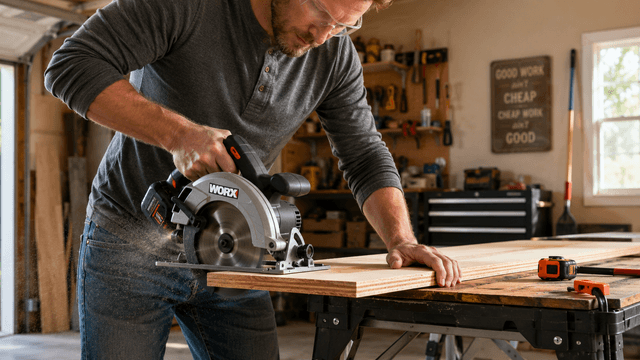
The first project most beginners use a circular saw on: breaking down a sheet of 4x8 plywood into bookshelf panels, or cutting 2x4s for a raised garden bed. That is a straight rip cut or a repetitive crosscut -- and it is exactly where a shaky hand, a bad cutline, or a blade that does not stop when you let off the trigger becomes a safety problem. The right beginner saw makes those two jobs easy. Everything else is a bonus.
#1: Ryobi PBLCS300B ONE+ HP -- Best Overall for Beginners
This is the saw we recommend to every first-time buyer who asks. at the current retailer price bare, it leaves room in the budget for a real blade (Diablo D0724X, $25) and PPE. The brushless ONE+ HP motor puts it in the same performance tier as saws costing twice as much. More importantly for a beginner, it has an electric brake that stops the blade in under 2 seconds when you release the trigger.
The LED work light sits right above the blade and illuminates the cutline, which is the single biggest visibility upgrade over the Harbor Freight and Craftsman saws most people start with. The 7-1/4" full-depth cut capacity means no lumber size will embarrass it. And the ONE+ battery platform covers 200+ tools, so the first battery purchase pays off across every Ryobi tool a homeowner adds after this.
#2: Makita 5007MGA 15A Corded -- Best Budget
For a beginner with a garage outlet, a corded saw eliminates the biggest source of beginner frustration: the battery dying mid-cut. The Makita 5007MGA has been in production for over 15 years because it is one of the best corded saws ever made. The magnesium base stays dead flat, the 5,800 RPM 15-amp motor never bogs in 2x hardwood, and the sight line over the blade is the clearest we compared.
The blower port is a small feature that matters a lot to beginners: it clears sawdust off the cutline continuously, so you can see where the blade is going. Corded saws do not fade as the battery drains, which means the cut you make on hour six is identical to the cut you made on hour one. That predictability is exactly what a new user wants.
#3: DeWalt DCS570B 20V MAX -- Best Premium
The DeWalt DCS570B is the saw we recommend to a beginner who knows they will keep buying tools. The 20V MAX platform is the widest pro-grade ecosystem in North America -- buy the saw now, and in three years the drill, impact driver, grinder, jig saw, and router all share batteries with it.
Cut-quality-wise, the DCS570B tracks straighter than the Ryobi on long rips. That is partly the stiffer shoe, partly the tighter bevel pivot. The brushless motor delivers more runtime per amp-hour than any brushed saw, and the electric brake is as crisp as the corded Makita. It is heavier than the Ryobi bare, so a beginner will notice the weight on long days -- but that same heft is what keeps the cut straight.
How to Choose a Circular Saw as a Beginner
Electric brake is non-negotiable. A saw that coasts for 5-8 seconds after you let off the trigger is a saw that will eventually hurt someone. All three picks above stop under 2 seconds. If a saw does not list "electric brake" in its spec sheet, do not buy it as a first saw.
Blade size: buy the 7-1/4". Smaller "mini circular saws" (4-1/2" to 6-1/2") look less intimidating but they cannot cut a standard 2x4 at 45°. The full-size 7-1/4" blade covers every cut a homeowner will make, and beginner-friendly saws in that size cost the same or less.
LED cutline + blower port. Sawdust in the cutline is the #1 reason beginner cuts wander. A blower port clears it continuously. An LED lights what remains. These two features together do more for cut quality than any amount of practice.
For most beginners, the Ryobi PBLCS300B ONE+ HP is the practical pick: solid build, fair price, and enough cutting performance for common lumber and sheet-good projects.
FAQ
Is a cordless circular saw powerful enough for a beginner?
Yes, if you buy a brushless model with a full 7-1/4" blade. The Ryobi PBLCS300B and DeWalt DCS570B both cut 2x lumber as fast as most corded saws. The old advice to "always go corded" was true when brushed motors ruled the category. Brushless changed it.
What blade should come with my first saw?
Almost every saw ships with a cheap 24-tooth framing blade that is fine for rough cuts but tears out on plywood. Buy a Diablo D0724X (24T framing) for rough work and a Diablo D0760X (60T finish) for plywood and trim -- together they are under $60 and double the quality of every cut you make.
How do I make a straight cut with a circular saw?
Clamp a straightedge (a scrap piece of 3/4" plywood works great) to the workpiece, measure the offset from the saw's shoe edge to the blade, and run the saw against the straightedge. This gives you a dead-straight cut every time. Freehand cuts get better with practice, but the straightedge trick is what pros use for anything that needs to be accurate.
What safety gear do I need?
Safety glasses (Z87-rated), hearing protection (over-the-ear muffs for anything longer than 15 minutes), and closed-toe shoes. Skip the gloves -- loose gloves can catch on a spinning blade. Keep both hands on the saw until the blade fully stops, which is where the electric brake earns its keep.