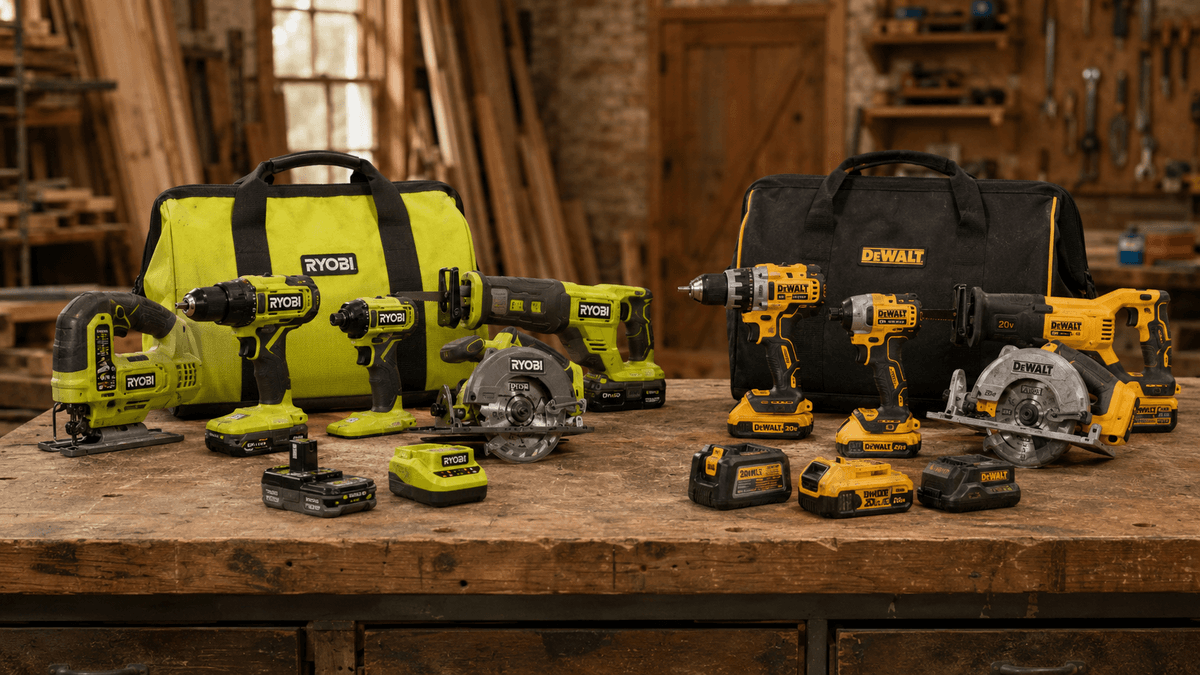
The DeWalt DCS570B is our top cordless circular saw for beginners — lightweight, easy to adjust, and powerful enough to cut 2x lumber all day on the 20V MAX platform.
Current recommendations are research-backed. Each article identifies its evidence, sources, update date, and limitations. No current guide is presented as hands-on tested. As an Amazon Associate, ToolShed Tested earns from qualifying purchases. When you buy through our links we may earn a commission -- at no extra cost to you. Product links and article details last reviewed March 19, 2026. Full disclosure.
A cordless circular saw is usually the second or third power tool a DIYer buys, right after a drill and maybe an impact driver. The problem is that circular saws can be intimidating. They are loud, fast, and unforgiving of sloppy technique. That makes choosing the right beginner model important — you want enough power to cut construction lumber without fighting the tool, but also a design that feels controllable and predictable. Here are the five best cordless circular saws for beginners in 2026, ranked by how easy they are to learn on and how well they grow with your skills. Comparison Table
1. DeWalt DCS570B 20V MAX — Best Overall for Beginners
The DCS570B is the saw we hand to first-timers. The left-blade design means right-handed users can see the cut line clearly without leaning over the tool — a real safety advantage for people still developing their cutting technique. At 6.1 lbs bare, it is light enough to use overhead for extended periods without fatigue. The bevel adjustment is a simple lever with clear detents at 0, 22.5, and 45 degrees. No confusing knobs or hidden locks. The 7-1/4" blade size means you can use any standard blade from any hardware store, and the 2-9/16" depth of cut handles 2x lumber at any angle. The 5,200 RPM brushless motor pulls cleanly through pressure-treated 2x10 without bogging, and the electric brake stops the blade quickly when you release the trigger. The 20V MAX platform has the widest accessory range of any brand, so your batteries work with drills, sanders, and dozens of other tools. Who this is for: First-time circular saw users who want a forgiving, easy-to-learn tool on a popular battery platform. Who should skip it: Experienced users cutting hardwoods or doing heavy framing — look at the DeWalt DCS578 FLEXVOLT instead.
2. Makita XSH03Z 18V LXT — Best for Smaller Hands
The XSH03Z uses a 6-1/2" blade, which makes the entire tool more compact and easier to control than full-size 7-1/4" saws. The handle diameter is slightly narrower than competitors, and the trigger pull is lighter. If you have smaller hands or find full-size saws unwieldy, this is the most comfortable option in this lineup. The trade-off is cutting depth. At 2-1/4" max depth at 90 degrees, it cuts through 2x4 and 2x6 lumber with no issues. But it cannot cut through a 2x10 or wider board in a single pass at 45 degrees — you would need to flip the board. For most beginner projects (shelving, deck boards, trim, plywood), this limitation rarely matters. Makita's Auto-Speed Change technology adjusts cutting speed under load, which helps prevent stalling in thick material — a common frustration for beginners who do not yet have a feel for feed rate. Who this is for: Beginners with smaller hands or anyone who wants a more compact, maneuverable saw for lighter cutting tasks. Who should skip it: Anyone who plans to cut a lot of 2x10, 2x12, or wider framing lumber.
3. Milwaukee 2631-20 M18 — Best for Future Upgrades
The 2631-20 is the entry point to Milwaukee's M18 platform, which has over 250 tools on the same battery system. For a beginner who plans to grow a tool collection over time, this ecosystem lock-in is a genuine advantage. The saw itself is solid. A 5,000 RPM brushless motor with a 7-1/4" blade cuts through construction lumber with authority. The magnesium shoe is flat and rigid — cheaper saws often have stamped steel shoes that flex under pressure, causing crooked cuts. The depth and bevel adjustments use large, clearly marked levers. It is slightly heavier than the DeWalt at 6.5 lbs, and the right-blade design means left-handers get a better cut-line view than right-handers. The included 24-tooth carbide blade is decent for framing cuts but tears up plywood — swap it for a 40-tooth blade if you plan to cut sheet goods. Who this is for: Beginners who want to invest in the Milwaukee M18 ecosystem long-term. Left-handed users who benefit from the right-blade design. Who should skip it: Right-handed beginners who want the clearest possible sightline to the cut.
4. Ryobi PBLCS300B ONE+ HP — Best Budget Pick
The PBLCS300B proves that a budget circular saw does not have to feel like one. The brushless motor delivers 5,300 RPM — the highest in this roundup — and cuts through 2x4 treated lumber without hesitation. At 6.5 lbs bare, it matches the Milwaukee in weight. The value proposition is hard to beat. The bare tool costs significantly less than the DeWalt or Milwaukee, and Ryobi ONE+ batteries are the most affordable of any platform. If you already own a Ryobi drill, you have batteries ready to go. The saw comes with a 24-tooth blade and a rip fence. The downsides are in the details. The depth adjustment lever feels plasticky compared to the metal levers on the DeWalt and Milwaukee. The shoe has more flex than we would like. And the dust port does not connect well to standard shop vac hoses without an adapter. But for cutting deck boards, framing lumber, and plywood on weekend projects, it gets the job done. Who this is for: Budget-conscious beginners or anyone already invested in the Ryobi ONE+ platform. Who should skip it: Anyone who plans to use the saw extensively and values a premium feel in the controls.
5. Skil CR5435B-10 PWR CORE 20 — Best Kit Deal
The Skil CR5435B-10 comes as a complete kit — saw, 5.0 Ah battery, and charger — at a price close to what other brands charge for the bare tool alone. For absolute beginners who do not own any cordless tools yet, this is the lowest barrier to entry. The saw itself is surprisingly capable. At 6.0 lbs, it is the lightest in this group. The 5,200 RPM motor cuts cleanly through framing lumber. The foot plate is stamped steel (not magnesium), but it is flat and stable. Skil includes a 24-tooth carbide-tipped blade. The PWR CORE 20 platform is smaller than DeWalt, Milwaukee, or Ryobi — Skil offers a drill, impact driver, sander, jigsaw, and a few others. If you plan to build a big tool collection, the limited ecosystem is a real constraint. But if you just need a saw and maybe a drill, it works. Who this is for: Complete beginners buying their first cordless tool who want everything in the box, ready to cut. Who should skip it: Anyone who wants a broad tool ecosystem or plans to use the saw for heavy-duty work.
Beginner Safety Tips
Clamp your workpiece. Never hold lumber with one hand while cutting with the other. Use clamps or saw horses with stops. Let the blade reach full speed before cutting. Pull the trigger, wait a full second, then begin the cut. Starting the blade in contact with wood causes kickback. Support both sides of the cut. If the offcut piece falls and pinches the blade, you get kickback. Use a sacrificial 2x4 under your cut line or let the offcut fall freely. Wear eye and ear protection. Cordless saws are quieter than corded ones, but they still throw chips and dust at your face. Safety glasses are mandatory, not optional. Bottom Line
The DeWalt DCS570B is the best cordless circular saw for most beginners. It is easy to control, has excellent sightlines, and uses a widely available battery platform. If budget is the deciding factor, the Skil CR5435B-10 kit includes what a first-time buyer needs to start cutting without extra battery purchases. And if you want to grow into a massive tool ecosystem over time, the Milwaukee 2631-20 gives you access to the largest cordless platform on the market. Frequently Asked Questions
Should a beginner choose a 6.5 or 7.25 inch blade?
6.5-inch saws are lighter, less tiring, and cut through 2x4s and plywood adequately for most carpentry. 7.25-inch models cut deeper and faster but add weight and fatigue. Our analysis shows beginners benefit from 6.5-inch models to develop technique without exhaustion.
Does blade position matter: left vs right blade saws?
Left-blade saws give right-handed users better sightline to the cut line, while right-blade saws put the motor in your way. Spec analysis shows left-blade is standard in modern design for this ergonomic advantage. This does not affect cutting quality, just comfort and accuracy.
What are the essential safety tips for circular saws?
Always keep both hands on the saw, never reach under the blade while it is moving, and secure your workpiece so it will not shift during cutting. Wear eye protection and make sure the blade guard functions properly. Based on our research, most injuries happen when users try to fish out scrap pieces without stopping the saw.
What materials can a beginner safely cut?
Straight cuts through 2x4s, plywood, and light dimension lumber are straightforward for beginners. Curved cuts require a jigsaw instead. Beveled and angled cuts demand practice with careful setup. Our analysis shows beginners should master straight crosscuts and rips before attempting complex angles.