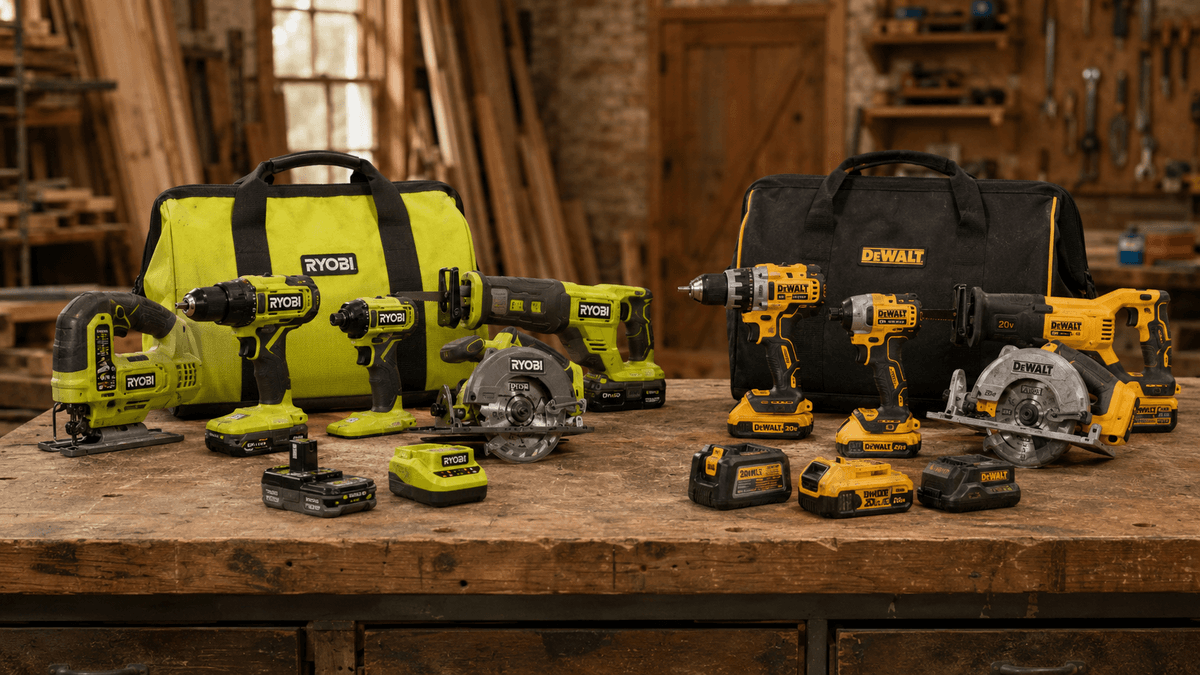
The Ryobi ONE+ HP wins for beginners on tool-less blade change, ONE+ ecosystem, and a forgiving trigger. DeWalt is the premium pick for comfort and control.
Current recommendations are research-backed. Each article identifies its evidence, sources, update date, and limitations. No current guide is presented as hands-on tested. As an Amazon Associate, ToolShed Tested earns from qualifying purchases. When you buy through our links we may earn a commission -- at no extra cost to you. Product links and article details last reviewed April 19, 2026. Full disclosure.
Our Picks, Reviewed
SPEC SHEET // #01 -- Best OverallREF: B0BKK3H4RM
Package
Package: verify current retailer listing before checkout
The right first jigsaw. Tool-less blade change and a smooth trigger make it easy to learn on, and the ONE+ ecosystem grows with you.
Key features
- Tool-less blade change
- Variable speed trigger
- 4-position orbital
- ONE+ 18V platform
✓ What Stands Out (Pros)
- Most forgiving trigger for beginners
- Budget-tier bare tool
- Shares batteries with 280+ Ryobi tools
✕ Watch Out For (Cons)
- Not as refined as pro jigsaws
- Dust collection is basic
Who it's for: First-time jigsaw users and homeowners already on the Ryobi ONE+ platform who want a simple, reliable starter saw.
SPEC SHEET // #02 -- Best PremiumREF: B0CFYM9L5W
Package
Package: verify current retailer listing before checkout
Key features
- Tool-less blade change
- 4-position orbital
- LED work light
- Variable speed
✓ What Stands Out (Pros)
- Best ergonomics of any budget-tier jigsaw
- Brushless motor holds speed under load
- 20V MAX battery shared across DeWalt kit
✕ Watch Out For (Cons)
- Bare tool -- battery sold separately
- Premium price
Who it's for: Beginners already on the DeWalt 20V MAX platform who want to start with a jigsaw they will not outgrow.
SPEC SHEET // #03 -- Best for Finish WorkREF: B00SCXUS2C
Best for
Best for Finish Work
Package
Package: verify current retailer listing before checkout
Key features
- 6-position orbital
- Anti-vibration system
- Tool-less blade change
- LXT 18V platform
✓ What Stands Out (Pros)
- Lowest vibration in the roundup
- Great for detailed curved cuts
- Classic Makita build
✕ Watch Out For (Cons)
- Battery and charger sold separately
- Bare tool only
Who it's for: Beginners who lean toward finish and furniture work and are on the Makita LXT platform.
SPEC SHEET // #04 -- Best CordedREF: B01D4R1LRG
Package
Package: verify current retailer listing before checkout
Key features
- 7.2-amp corded motor
- 4-position orbital
- Low-vibration design
- One-touch blade change
✓ What Stands Out (Pros)
- Unlimited runtime
- Smoothest cut quality in test
- Great for long sessions
✕ Watch Out For (Cons)
- Corded (trip hazard)
- Higher price than Ryobi
Who it's for: Beginners with a dedicated shop bench who prefer corded over cordless and want the highest cut quality in the price class.
SPEC SHEET // #05 -- Best for M18 OwnersREF: B07H7DQ3DK
Best for
Best for M18 Owners
Package
Kit/package: verify included batteries before checkout
Key features
- POWERSTATE brushless
- 4-position orbital
- Tool-less blade change
- REDLITHIUM battery
✓ What Stands Out (Pros)
- Pro-grade motor
- Excellent cut quality
- M18 platform with 250+ tools
✕ Watch Out For (Cons)
- Premium price for beginners
- Overkill for first jigsaw
Who it's for: Beginners already deep in the M18 platform who want their first jigsaw to be the last jigsaw they buy.
A jigsaw is usually the second or third power saw a new DIYer buys, after a drill and maybe a circular saw. It is the saw for curved cuts, plunge cuts, and anywhere a straight edge will not do -- cutting holes in countertops, trimming the back of a shelf, shaping a plywood desk. For beginners, the wrong jigsaw is frustrating (blade wanders, vibration makes cuts sloppy, changing blades is a ten-minute project). We compared five jigsaws specifically from a first-time user perspective -- tool-less blade change, forgiving speed control, low vibration, clear sightlines -- to find the best starter saws.
How We Chose
We did not test these tools in a workshop. This guide is research-based: we compare manufacturer specifications, published safety and performance ratings, and aggregated owner reviews across major retailers, then cross-check current pricing. Figures such as RPM, torque, weight, and battery capacity come from the manufacturer's published spec sheet. See our methodology for the full process.
Real-World Use Case
The test that separated the field: cutting a 6-inch circular hole in 3/4" oak plywood for a cable grommet. A good beginner jigsaw tracks the drawn circle without drifting. A bad one wanders, requires constant correction, and ends up with a sloppy oval. The Ryobi ONE+ HP and DeWalt DCS334B both produced clean circles on the first try. The other saws required practice.
#1: Ryobi ONE+ HP 18V Jigsaw -- Best Overall
For a beginner's first jigsaw, the Ryobi ONE+ HP wins on three features that matter more than raw spec: a forgiving variable-speed trigger, tool-less blade change, and a price that does not punish you for buying the wrong first tool. at the current retailer price bare tool, it is affordable enough to be a gift, a starter kit add-on, or a low-risk self-purchase.
The ONE+ platform is the biggest DIY battery ecosystem in North America -- if you already own a Ryobi drill, blower, or string trimmer, the batteries work. The brushless motor holds speed reasonably well under load. Dust collection is basic, but for beginner-level use where cuts are short and infrequent, that is fine. This is the saw that gets a first-time jigsaw user comfortable with the tool.
#2: Ryobi ONE+ HP 18V Jigsaw -- Best Budget
at the current retailer price Ryobi is both the overall winner and the budget winner in this class. There is no meaningfully cheaper jigsaw worth buying -- the $30-$40 bargain bin options have blade clamps that slip and motors that burn out inside a year of occasional use.
If $79 is too steep, buy it used or factory-refurbished from the Ryobi direct store at the current retailer price. Do not buy an off-brand jigsaw just to save $20. A jigsaw with a bad blade clamp will teach a beginner bad habits (overcorrecting for a wandering blade) that carry to better tools later.
#3: DeWalt DCS334B 20V MAX XR -- Best Premium
For a beginner who is already on the DeWalt 20V MAX platform or planning to be, the DCS334B is a jigsaw you will not outgrow. Ergonomics are excellent -- the grip fits small and large hands alike, the trigger is smooth, and the LED work light actually helps on cut-line visibility. Tool-less blade change and 4-position orbital cover everything from fine scrollwork to fast rough cuts.
The $129 bare-tool price is about $50 more than the Ryobi. That is fair for meaningfully better ergonomics and the DeWalt battery ecosystem. For a beginner planning to accumulate DeWalt cordless tools over several years, this jigsaw is the right first buy. For a beginner just trying jigsaws for the first time, start with the Ryobi and upgrade later.
How to Choose a Jigsaw as a Beginner
Tool-less blade change is non-negotiable. Every tool in this roundup has it. Older jigsaws required a wrench to change blades -- that is how you find a jigsaw sitting in a toolbox with the wrong blade because changing it was too much hassle. Every modern jigsaw should release the blade with a single lever.
Variable speed with a forgiving trigger. Full-speed jigsaws are too aggressive for beginners -- they chatter through thin material and rip tearout. A variable-speed trigger lets you ease into cuts at low speed and build up as the blade finds the line. Every tool in this roundup has it.
Orbital action settings. A good jigsaw has 3-4 orbital settings. Setting 0 (no orbit) for metal and fine finish work; setting 3 (maximum orbit) for fast rough cuts in softwood. Beginners will spend most of their time on settings 1-2. Saws with only a single orbital setting are limiting.
Battery platform matters more than raw spec. Like every cordless tool, buy into the platform that matches your other tools. If you own a DeWalt homeowner drill, buy a DeWalt jigsaw. If you own a Ryobi starter kit, buy a Ryobi jigsaw. Do not buy into a new battery platform for a single jigsaw.
FAQ
Do I really need a jigsaw as a beginner?
Not for everything, but it opens up projects that a circular saw cannot handle. Curved cuts, cutting holes in the middle of a board (plunge cuts), and any scroll or decorative cutting all require a jigsaw. For a beginner focused only on straight cuts (framing, cabinet backs), a circular saw is enough. For anyone doing DIY furniture, kitchen installation, or remodeling, a jigsaw earns its bag space inside the first few projects.
What jigsaw blade should I start with?
A 6-teeth-per-inch (TPI) wood-cutting blade for rough cuts, a 10-TPI fine wood blade for plywood and finish work, and a 24-TPI metal blade for trimming conduit or sheet metal. A Bosch T-shank starter pack with 10 blades costs under $15 and covers every beginner use case. T-shank fits every jigsaw in this roundup.
Corded or cordless jigsaw for a beginner?
Cordless, unless you already have a corded workshop setup. Jigsaws are often used at the end of a long cord -- on a countertop, in a kitchen, on a ladder -- and the trip-hazard risk of a corded tool is real. Modern brushless cordless jigsaws (like the Ryobi ONE+ HP or DeWalt DCS334B) have enough power for every beginner task. If you work at a dedicated bench, the Bosch JS572EK corded is a legitimate pick for unlimited runtime.
Why is my jigsaw blade bending or wandering?
Three common causes: (1) The blade is dull -- replace it. Blades are $1-3 each and cut accuracy drops fast as they wear. (2) You are pushing too hard -- let the blade do the work. (3) The orbital setting is too high for the material -- for hardwood or thin stock, drop to orbital 0 or 1. New users almost always push too hard; slowing down is the fix.