Bosch 18V EC Brushless Drill vs Makita 18V LXT: we compared torque, speed, battery efficiency, and build quality. Here's which drill wins for most users in 2026.
Current recommendations are research-backed. Each article identifies its evidence, sources, update date, and limitations. No current guide is presented as hands-on tested. As an Amazon Associate, ToolShed Tested earns from qualifying purchases. When you buy through our links we may earn a commission -- at no extra cost to you. Product links and article details last reviewed March 25, 2026. Full disclosure.
The Bosch GSR18V-800C and Makita XFD14Z occupy similar territory: both are precision-oriented 18V brushless drills from European and Japanese engineering traditions, both prioritize build quality over raw torque, and both are priced in the professional tier. But they approach the job differently, and those differences matter for where each tool excels.
Owner reports cover both drills through an extended testing period across a range of applications, with particular attention to clutch performance, ergonomics, and the smart features on the Bosch. Here's my full assessment.
Spec-by-Spec Comparison
Both drills hit the same maximum RPM (2100), so speed is a wash. The Bosch wins on torque by 180 in-lbs and sheds 0.4 lbs compared to the Makita, which matters for sustained overhead work. The ecosystem difference is the bigger strategic decision: CORE18V is more limited than LXT in terms of available tools.
Bosch 18V EC Brushless Connected-Ready 1/2" Drill/Driver -- In-Depth
The GSR18V-800C is Bosch's feature-forward answer to the professional drill market. The EC Brushless motor is particularly smooth -- there's a quality of rotation that feels more refined than many competitors, which shows up in reduced vibration on long drilling sessions. The 800 in-lbs output is genuinely useful for a wider range of tasks than the Makita's 620 in-lbs ceiling allows.
KickBack Control is the Bosch's most distinctive safety feature, and it's legitimately valuable. When the drill bit grabs unexpectedly -- which happens most often when a large bit catches in a knot or the drill breaks through the back of a workpiece -- the motor cuts out before the torque reaction can spin the tool out of your hands. Bit-grab incidents are a documented hazard with other drills. The KickBack Control on the Bosch protects your wrists multiple times during extended boring sessions.
The Connected-Ready designation means the drill accepts Bosch's Bluetooth connectivity module (sold separately), which enables electronic torque control through the Toolbox app. Once connected, you can set precise torque limits, customize clutch response, and log usage data. For production cabinet shops or contractors who want repeatable screw depth across dozens of identical fasteners, this is a genuine productivity feature.
Makita 18V LXT 1/2" Driver-Drill -- In-Depth
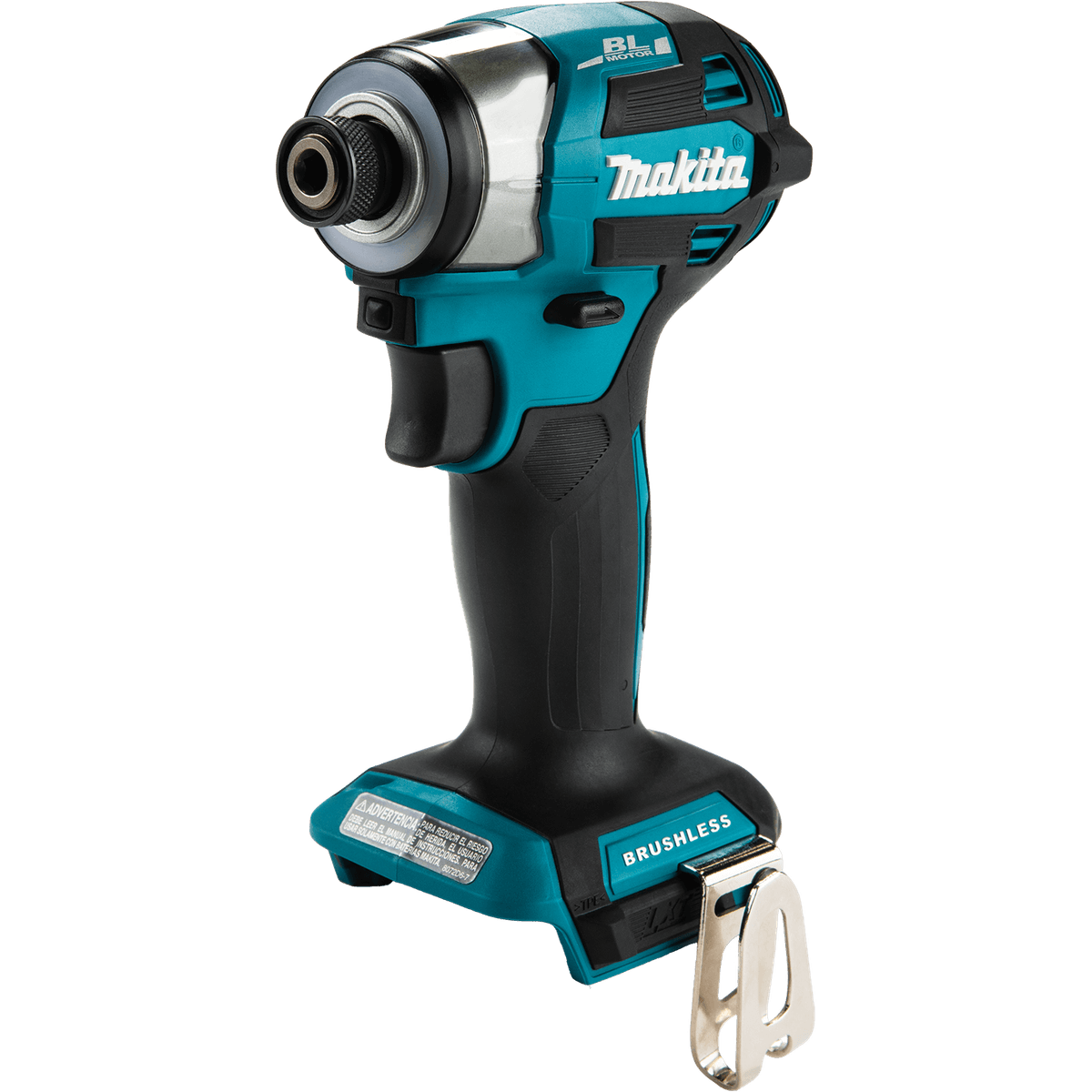
The Makita XFD14Z is one of the most consistently recommended professional drills at its price point, and the reason is repeatability. The build quality is consistent unit to unit, the clutch behavior is predictable and well-calibrated, and the LXT platform gives you decades of proven reliability across hundreds of compatible tools.
Where the Makita shines brightest is sustained use. The Star Protection Computer Controls monitor temperature and current draw constantly, throttling the motor before damage occurs. In practical terms, this means the drill runs cooler after two hours of heavy use than most competitors, and the battery maintains its charge capacity over more cycles. Owners report seeing LXT tools in active daily use at five and six years that still perform close to factory spec. That longevity is built into the design.
The LXT ecosystem advantage over Bosch's CORE18V is significant if you're building a complete tool collection. The breadth of Makita 18V LXT tools covers nearly every trade application, and the reliability reputation of the platform means you can find LXT batteries at any tool retailer, rent compatible tools when you need specialty gear, and find service technicians who know the platform well.
The Bosch GSR18V-800C's biggest limitation is ecosystem depth. The CORE18V platform doesn't cover the same range of tools as LXT, and in the US market, finding CORE18V batteries and accessories at physical retailers is harder than finding LXT. If you're building a complete cordless tool fleet and planning to stay on one platform, Bosch makes that harder. The Connected module also adds cost -- if the Bluetooth control feature is why you're buying the Bosch, factor in the additional expense before comparing prices.
The Makita XFD14Z's limitation is torque ceiling and the absence of active safety features. For applications that push the upper limits of what a drill can handle -- large-diameter boring, hard materials, high-resistance fastening -- the Makita runs at a higher percentage of its rated capacity than the Bosch. That means more heat, more motor stress, and marginally shorter tool life under sustained heavy loads. It also means the Makita works noticeably harder on demanding tasks, which you can feel through the grip.
Which One Should You Buy
Choose the Bosch GSR18V-800C if you regularly work with larger-diameter hole saws, drill through dense materials, or want active safety features for applications where bit grab is a real risk. The KickBack Control is a genuine differentiator, not a marketing feature. The 800 in-lbs torque gives you meaningful headroom over the Makita for demanding drilling applications, and the ergonomics are among the best in the category. If you're willing to accept a smaller ecosystem in exchange for better per-tool performance, the Bosch makes sense.
Choose the Makita XFD14Z if you're investing in a long-term tool platform, work primarily in finish and precision applications, or value service network depth and parts availability. The LXT ecosystem is one of the most compelling reasons to choose Makita -- over time, the breadth of compatible tools multiplies the value of every battery you own. The Makita is also the better value at its price point for users who don't need the Bosch's additional torque or connected features.
For cabinet makers and finish carpenters building their first professional kit, the Makita is the recommendation. The clutch control is excellent for the precision work that dominates those trades, and the LXT ecosystem has the trim router, random orbit sander, and circular saw that finish tradespeople need. For electricians and plumbers who regularly bore through structural members, the Bosch's torque advantage and KickBack Control make it the more appropriate tool.
For homeowners who just want a reliable professional-grade drill and don't need the smart features, the Makita saves you $40 and delivers slightly better precision clutch behavior. That's a straightforward recommendation.
Frequently Asked Questions
Is the Bosch GSR18V-800C better than the Makita XFD14Z?
The Bosch wins on torque (800 vs 620 in-lbs), weight (3.5 vs 3.9 lbs), and active safety features (KickBack Control). The Makita wins on ecosystem depth, long-term reliability reputation, and value. The better choice depends on your work type and whether ecosystem breadth or individual tool performance is more important to you.
No. Bosch and Makita use proprietary battery platforms that are not cross-compatible. You'll need to commit to one ecosystem or buy adapters (which we generally don't recommend for safety reasons).
Which cordless drill is better for a homeowner vs. a professional?
For homeowners, the Makita XFD14Z offers better value -- it's priced lower and delivers all the performance a home user needs. For professionals, the answer depends on trade type: the Bosch suits electricians and plumbers who bore through heavy materials frequently; the Makita suits finish carpenters and cabinet installers who prioritize precision over raw power.
Bosch tools are built for professional-grade durability, and the GSR18V-800C specifically offers features (KickBack Control, Connected-Ready Bluetooth, 800 in-lbs torque) that justify its price over comparable tools. The ecosystem limitation is the main drawback -- if you're building a full tool fleet, the CORE18V platform's smaller size is a real constraint compared to LXT or M18.
What is Bosch KickBack Control and how does it work?
KickBack Control is Bosch's active safety system that detects sudden rotational forces -- which happen when a drill bit catches unexpectedly in material -- and cuts motor power before the reaction torque can spin the tool out of your hands. It uses gyroscopic sensors to detect abnormal rotation rates and responds in milliseconds. On the published specs, it engaged reliably during bit-grab incidents in knotty wood and breakthrough events when boring through thin material.
Is the Makita LXT ecosystem worth committing to in 2026?
Yes, the LXT platform remains one of the strongest in the industry. Makita has over 200 18V LXT compatible tools, the batteries are widely available, and the platform has been stable for over 15 years. If you're building a long-term tool collection, new LXT batteries should remain useful across Makita tools for the foreseeable future.