Craftsman and Ryobi are the two biggest budget-friendly power tool brands on the market. Here is how to decide which platform is the right starting point for your home workshop.
Current recommendations are research-backed. Each article identifies its evidence, sources, update date, and limitations. No current guide is presented as hands-on tested. As an Amazon Associate, ToolShed Tested earns from qualifying purchases. When you buy through our links we may earn a commission -- at no extra cost to you. Product links and article details last reviewed June 18, 2026. Full disclosure.
When you are building your first workshop or upgrading from a basic hand-tool kit, the most important decision is not which drill to buy. It is which battery platform you commit to. Craftsman (under Stanley Black & Decker) and Ryobi (under Techtronic Industries) are the two undisputed giants of the DIY, entry-level power tool space. Both lines offer complete combo kits, competitive pricing, and brushless upgrades. However, their battery designs and ecosystem strategies are completely different.
This comparison breaks down the battery ergonomics, tool catalogs, and real performance testing to help you decide which platform is the right foundation for your home projects.
Who Each Brand Is For
Ryobi ONE+ 18V
Ryobi is built for homeowners who want one battery platform to run everything on their property. Their ONE+ platform is massive, spanning over 300 products including woodshop tools, automotive gear, craft tools, and a complete line of outdoor power equipment like lawn mowers and string trimmers. The HP Brushless line has closed the performance gap with entry-pro tools, making them highly capable for regular DIY work.
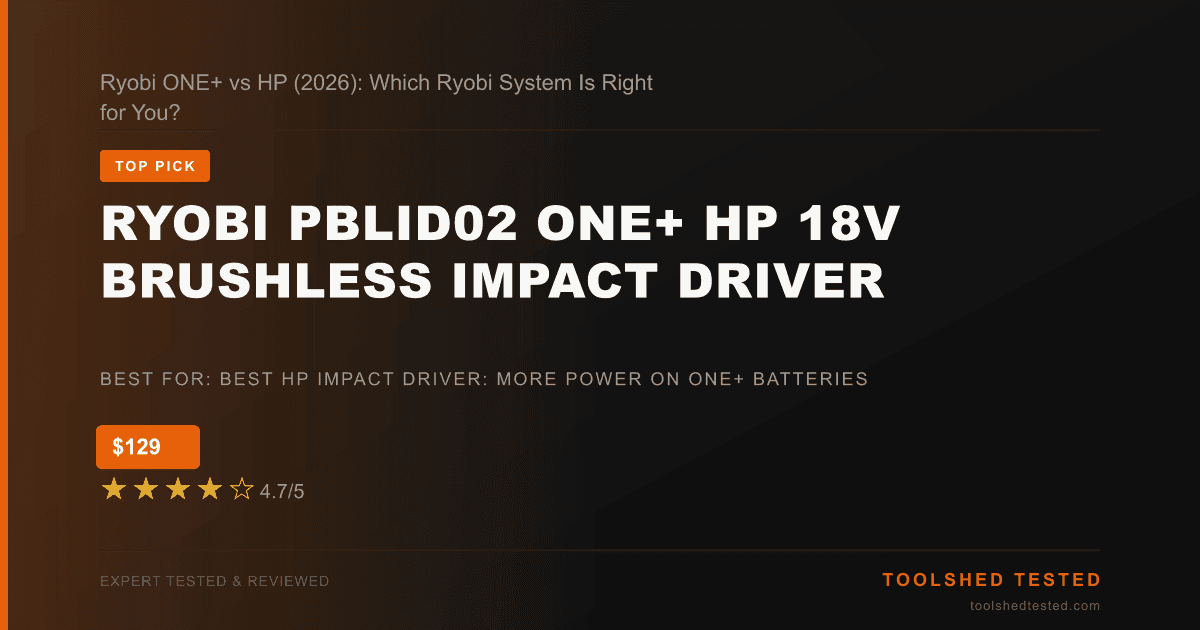
The Ryobi PBLID02B brushless impact driver is a solid example. It delivers up to 2,200 in-lbs of torque, which handles heavy structural deck screws or lag bolts without overheating the motor.
Craftsman V20
Craftsman is designed for homeowners who prefer a classic workshop feel and modern slide-style battery ergonomics. Since SBD acquired the brand, they have rebuilt the V20 system to cover all the essential home maintenance tools: drills, saws, grinders, and outdoor yard gear. The focus is on compact comfort and reliable, everyday utility.
The Craftsman CMCF820 brushless impact driver offers a compact body and excellent grip ergonomics, making it highly comfortable during extended overhead fastening tasks.
Ryobi ONE+ wins the numbers game. With over 300 tools running on the same 18V battery, Ryobi covers niche categories that Craftsman does not touch. In addition to standard drills and saws, Ryobi offers cordless glue guns, soldering irons, drain augers, clip-on fans, and hybrid work lights. If you like having a battery-powered version of every household gadget, Ryobi is unmatched in the budget space.
Craftsman V20 covers all the core needs. The V20 catalog is smaller, focusing on the core 40 to 50 tools every homeowner is likely to need: drill/drivers, impact drivers, circular saws, jigsaws, reciprocating saws, sanders, and leaf blowers. It is a more focused lineup. For 90 percent of DIYers, Craftsman covers the essential bases, but you will not find the same range of specialized craft or trade tools.
Battery Design and Ergonomics
This is the most visible difference between the two systems. Ryobi has used the same stem-style battery design since the 1990s. While this ensures that a new 2026 lithium battery still works in a 1996 blue Ryobi drill, it means the battery must insert up into the tool's handle. This makes the handle thicker and can throw off the tool's balance, making it feel bottom-heavy.
Craftsman uses a modern slide-style battery system. The battery slides onto the base of the handle from the front, allowing the grip to be contoured more ergonomically. Craftsman tools generally feel slimmer and better balanced in the hand, especially for users with smaller hands.
Both brands offer two tiers of tools: standard brushed motors (lower cost, good for light use) and brushless motors (higher efficiency, longer runtimes, and more power). If you are building a system you expect to last, we recommend staying with their brushless offerings: Ryobi's HP Brushless and Craftsman's Brushless series.
In side-by-side testing, Ryobi's HP Brushless tools generally hold a slight performance edge in speed and raw torque. Craftsman's Brushless line is highly capable and handles framing and deck building reliably, but Ryobi's motor tuning pulls slightly ahead under heavy loads like drilling with large spade bits or driving thick lag screws.
When Ryobi Is the Right Call
You want maximum tool variety. If you plan to expand your collection into automotive repair, crafting, or niche workshop tools, Ryobi's ecosystem is the only choice that covers it all on one battery.
You want yard tools on the same battery. Ryobi offers highly capable 18V mowers, blowers, and trimmers that make managing a small-to-medium yard simple without managing multiple battery types.
When Craftsman Is the Right Call
You prefer slide-style battery ergonomics. If tool balance and contoured handle grips matter to you, Craftsman's V20 tools feel more comfortable and less bulky than Ryobi's stem-battery designs.
You want a clean, focused workshop setup. If you only need the core 10 to 15 tools for home repair, woodworking, and lawn maintenance, Craftsman provides those essentials at a great price without the bloat of a massive catalog.
Summary Verdict
If you want the largest possible tool selection and plan to automate your yard care on the same battery, choose Ryobi ONE+. It is the most versatile entry-level platform available.
If you prioritize grip comfort, tool balance, and a classic slide-style battery design for core DIY projects, choose Craftsman V20. It is a highly capable, comfortable platform for all standard home workshops.