The best Amazon tool starter kit for new homeowners starts with a drill and driver, then adds a saw, shop vac, sander, and practical accessories.
Current recommendations are research-backed. Each article identifies its evidence, sources, update date, and limitations. No current guide is presented as hands-on tested. As an Amazon Associate, ToolShed Tested earns from qualifying purchases. When you buy through our links we may earn a commission -- at no extra cost to you. Product links and article details last reviewed June 5, 2026. Full disclosure.
A new homeowner does not need every tool at once. The first kit should cover the repairs and upgrades that happen immediately: shelves, furniture, curtain rods, loose gates, garage storage, outlet covers, patched trim, dirty cars, and the first weekend project that turns into three trips to the hardware store.
The best Amazon tool starter kit starts with a cordless drill and impact driver, then adds a circular saw, shop vac, sander, and practical accessories. Buy in that order unless a specific project demands otherwise.
The Right Buying Order for New Homeowners
First: Buy a drill and impact driver kit. This covers holes, screws, anchors, furniture, shelves, cabinet pulls, and most fast repairs.
Second: Add a circular saw when you start cutting lumber, plywood, fence boards, or shelves.
Third: Buy a wet/dry vac. Cleanup is not optional once you start cutting, sanding, drilling, and tracking garage dirt into the house.
Fourth: Add a sander for anything visible: trim, doors, paint prep, patched walls, and furniture.
Best First Cordless Kit: DeWalt DCK240C2
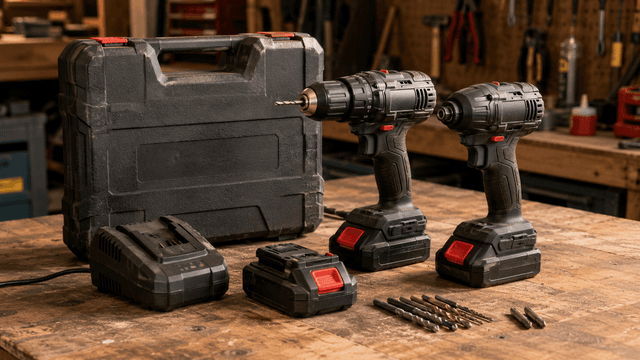
The DCK240C2 wins because it solves the first-buyer problem cleanly. You get a drill, an impact driver, batteries, charger, and bag. A cheaper bare tool is not cheaper when the battery and charger are missing.
The drill handles holes, anchors, hardware, and pilot holes. The impact driver handles longer screws, shelves, garage storage, deck fixes, and anything that would twist your wrist with a drill. This is the core pair most homeowners reach for repeatedly.
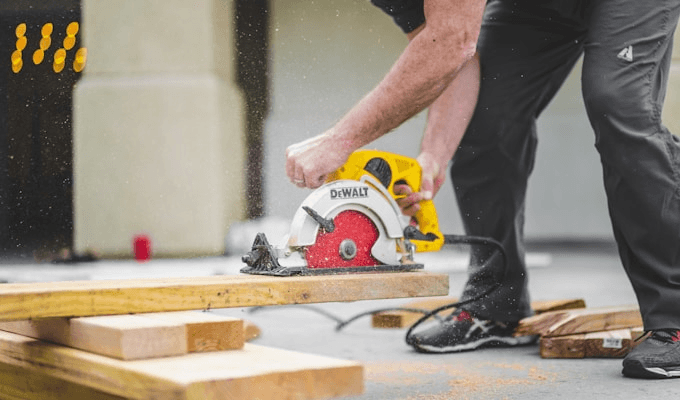
Best First Saw: DeWalt DCS570B
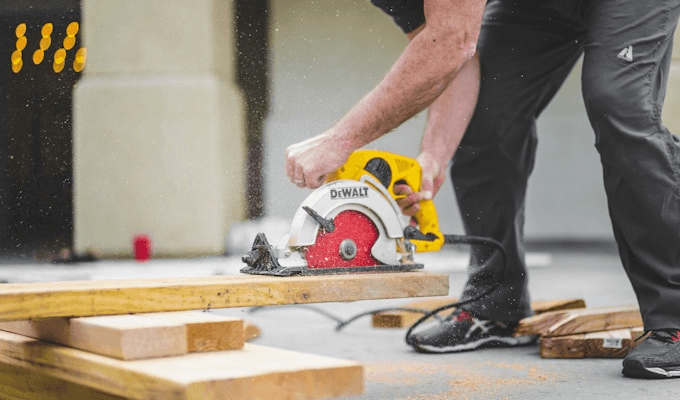
A circular saw is the tool that moves a homeowner from small repairs into actual builds. Shelves, plywood panels, fence boards, deck boards, garage cabinets, and workbench parts all need straight cuts. The DCS570B is a good first saw because it stays on the 20V MAX platform and has full 7-1/4-inch capacity.
Buy a decent blade and a straightedge with it. A good blade does more for cut quality than most beginners expect.
The wet/dry vac is the tool people buy too late. Once you drill, cut, sand, or clean out a garage, a household vacuum is the wrong tool. The WD1450 handles sawdust, wet messes, leaves, car dirt, drywall crumbs, and workbench debris.
If storage is tight, look at a smaller vac. If you have a garage or basement, the 14-gallon size is worth it.
A sander makes visible projects look finished. It cleans up rough shelf edges, prepares trim for paint, smooths patched spots, and makes furniture projects feel less improvised. The DCW210B is a strong fit after a DeWalt starter kit because it uses the same 20V MAX battery platform.
Do not forget sanding discs. A sander without discs is another half-finished purchase.
Best Budget Fastening Kit: Craftsman CMCF800C2
If you are not ready for a full drill and impact combo, the Craftsman impact driver kit is a practical budget route for fastening-heavy work. It makes furniture assembly, shelf screws, garage hooks, and light project fastening easier than using a drill for everything.
The tradeoff is platform depth. It is a good budget kit, but DeWalt, Ryobi, and Milwaukee give you broader upgrade paths.
What to Skip at First
Skip specialty saws, rotary tools, expensive cordless grinders, and premium batteries until you know what projects you repeat. A new homeowner gets more value from a strong core kit plus bits, blades, anchors, tape measure, level, safety glasses, and storage.
Starter Accessories That Matter
The tool bodies are only half the setup. A drill-driver kit needs a basic drill-bit index, impact-rated driver bits, a magnetic bit holder, wall anchors, and a small case that keeps the pieces from disappearing into a drawer. A circular saw needs a better blade than many stock blades and a straightedge guide. A shop vac needs the right filter or bag if you are cleaning fine dust instead of leaves and chunky debris.
Do not overspend on accessory bundles with dozens of pieces you will never use. Buy the consumables that match the first three projects: hanging shelves, cutting storage lumber, cleaning the garage, painting trim, or building a workbench. That keeps the first cart practical instead of turning into a random toolbox dump.
When Ryobi Makes More Sense
DeWalt is a strong default for homeowners who expect heavier repairs, deck work, and long-term tool growth. Ryobi can be the better value if the project list is lighter and the household also needs inflators, fans, lights, vacuums, and yard tools on one battery family. The right answer is not brand loyalty; it is the platform that covers the jobs you will actually repeat.
If budget is tight, start with a Ryobi or Craftsman kit and spend the saved money on blades, bits, safety glasses, and storage. If the house needs a deck rebuild, fence work, basement framing, or regular outdoor repairs, start stronger with DeWalt or Milwaukee so the tools are not the limiting factor.
FAQ
What tool should a new homeowner buy first?
Buy a drill and impact driver kit first. It covers the widest range of immediate household jobs and gives you batteries and a charger for future tools.
Is a circular saw necessary for a new homeowner?
Not on day one, but it becomes necessary once you cut shelves, plywood, fence boards, deck boards, or garage storage lumber.
Should new homeowners buy one battery platform?
Yes for cordless tools. Pick one main platform for drill, driver, saw, sander, and lights. Cleanup tools like wet/dry vacs can be separate if they solve the job better.