When it comes to building your DIY toolkit, few tools are as essential, or as transformative, as a quality cordless drill.
Current recommendations are research-backed. Each article identifies its evidence, sources, update date, and limitations. No current guide is presented as hands-on tested. As an Amazon Associate, ToolShed Tested earns from qualifying purchases. When you buy through our links we may earn a commission -- at no extra cost to you. Product links and article details last reviewed June 13, 2026. Full disclosure.
When it comes to building your DIY toolkit, few tools are as essential—or as transformative—as a quality cordless drill. Whether you're hanging shelves, assembling furniture, or tackling renovation projects around your home, the right cordless drill can save you hours of frustration and deliver results that rival professional work. But with countless models available at varying price points, choosing the best cordless drill for DIY homeowners requires understanding what features actually matter and where to invest your money wisely.
The cordless drill market has evolved dramatically over the past decade. Today's best cordless drills combine impressive power, lightweight ergonomics, and battery technology that keeps pace with extended work sessions. Unlike the underpowered models of years past, modern cordless drills can handle tasks that once required pneumatic or corded equipment. This guide will walk you through everything homeowners need to know to select a drill that won't gather dust in your garage.
Understanding Cordless Drill Specifications That Matter
Before comparing specific models, you need to understand the core specifications that determine whether a cordless drill will work well for your projects. Most DIYers focus on brand names and price tags, but the real performance story lies in the details.
Voltage and Power Output form the foundation of any cordless drill's capabilities. Drills typically range from 12V to 20V, with some professional-grade models reaching 24V or higher. For most DIY homeowners, an 18V to 20V drill strikes the ideal balance between power and weight. A 12V drill works fine for light duty—small holes in drywall, simple assembly tasks—but struggles with tougher applications like drilling into hardwood or driving long screws into treated lumber. Conversely, anything above 20V adds weight and cost that most homeowners won't fully utilize.
Chuck size affects your versatility more than many people realize. Most cordless drills feature either a ½-inch or 3/8-inch chuck. The larger ½-inch chuck accepts standard drill bits and accessories, while the smaller 3/8-inch chuck limits you to narrower bits. For home use, a ½-inch chuck is the practical choice. It's compatible with the widest range of bits and attachments you'll encounter.
Torque ratings, measured in inch-pounds (in-lbs), tell you how much rotational force the drill can generate. Higher torque enables the drill to drive larger fasteners and work in demanding materials. A drill rated at 500-700 in-lbs handles typical homeowner tasks comfortably. Ratings above 1000 in-lbs are excellent but often come with heavier, pricier drills.
Battery capacity is measured in amp-hours (Ah). A 2.0-3.0 Ah battery suits light work and short sessions. For DIYers tackling full-day projects, 4.0-5.0 Ah batteries provide longer runtime between charges. Lithium-ion batteries dominate the market now for good reason: they charge faster, weigh less, and maintain power output better than older nickel-cadmium or NiMH technology.
The Importance of Weight and Ergonomics
One aspect of cordless drill selection that separates pleasant experiences from frustrating ones is how the tool feels in your hands during extended use. A drill that's light but unbalanced will tire your wrist and shoulders just as quickly as a heavier, well-designed model.
Weight matters most for overhead work—installing ceiling fixtures, hanging high cabinets, or working on a ladder. A drill under 4 pounds becomes noticeably less exhausting during these tasks. However, weight alone tells an incomplete story. A drill's center of gravity, handle design, and overall balance contribute equally to how it performs during real work.
Look for drills with rubberized grips that reduce vibration and improve control. Variable-speed triggers let you adjust output on the fly, which prevents the tool from bucking when you're working in tight spaces or starting holes in slippery materials. A secondary side handle, while adding a few ounces, dramatically improves stability during demanding applications and prevents wrist strain.
LED Work Lights and Practical Features
Modern cordless drills increasingly include built-in LED work lights, and this isn't a gimmick—it's a genuinely useful feature. These lights illuminate your work area, which proves invaluable in dim corners, inside cabinets, or when working under fixtures. The slight added weight is worth the convenience and improved accuracy.
Drill mode selection—the ability to switch between drill and hammer (percussion) modes—expands your tool's utility. Hammer drill mode is particularly helpful when drilling into masonry or concrete, tasks you'll encounter when installing exterior fixtures or attaching mounting brackets to stone foundations.
Single-sleeve chuck designs hold bits more securely than traditional keyed chucks, and they're faster to use since you don't need a separate key. Battery LED status indicators are another practical touch: a quick glance tells you remaining charge without guesswork.
Best Cordless Drills for Different Homeowner Needs
The Budget-Conscious All-Rounder
If you're building your first toolkit or want a backup drill without spending significantly, a solid entry-level option offers surprising capability. Entry-level cordless drills in the $80-$150 range handle the majority of household tasks effectively. Check Price to see currently available budget-friendly models with solid ratings.
These drills typically include a battery and charger, which represents genuine value. They're underpowered compared to premium alternatives, but for hanging shelves, assembling furniture, and driving deck screws, they perform admirably. The key disadvantage is reduced runtime—you'll finish charging cycles more frequently and may need to purchase an additional battery for extended projects.
The Mid-Range Sweet Spot for Most DIYers
Spending $150-$300 on a cordless drill puts you squarely into territory where quality, power, and features align excellently. Drills in this range typically feature 18V or 20V systems with 1.5-3.0 Ah batteries, adequate power for nearly all household applications, and better ergonomics than budget models.
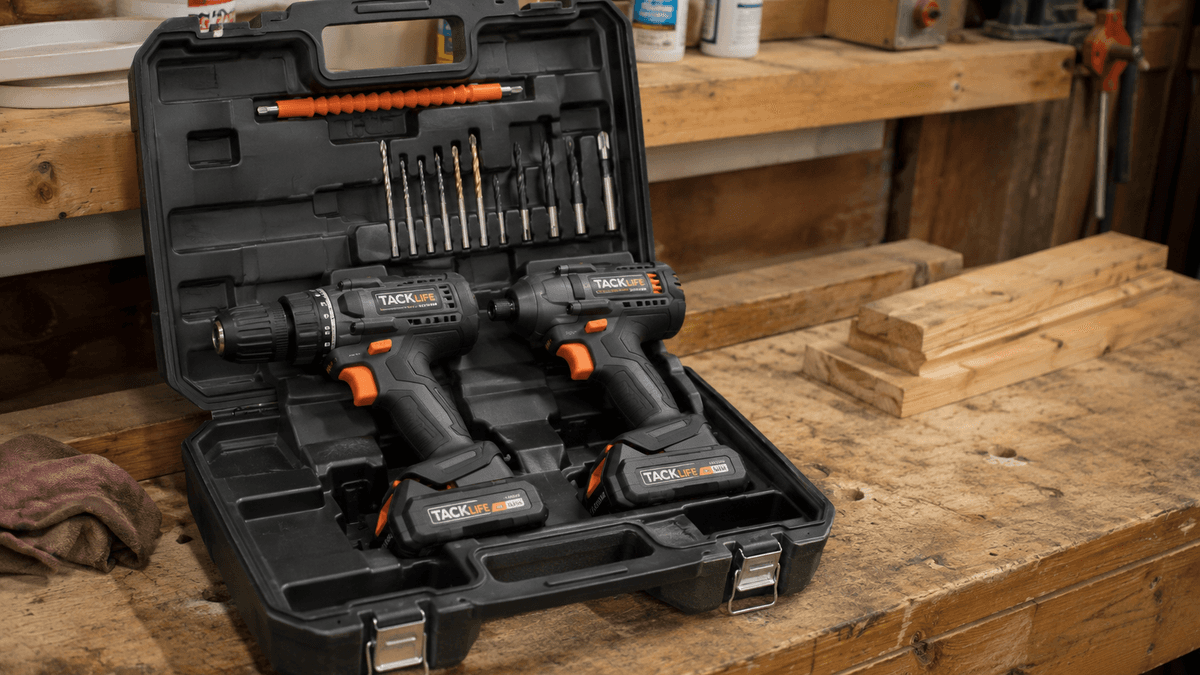
Many mid-range drills come as two-tool combo kits bundling a drill with an impact driver. Impact drivers are phenomenally useful for driving fasteners quickly without the bit slipping in screw heads. If you're serious about DIY work, this combination represents exceptional value. Check Price to explore current combo kit options in this category.
The Premium Choice for Serious Homeowners
Premium cordless drills ($300-$600+) deliver professional-grade power, superior durability, and features like tool-free bit changing and integrated work lights. These drills often come in compact brushless designs with advanced lithium-ion systems that maintain power output throughout the battery's discharge cycle.
Brushless motor technology is worth understanding: these motors use electronic commutation instead of brushes, reducing friction, generating less heat, and lasting longer. They're more efficient, drawing less current while delivering more power. If you're investing in a premium drill, brushless design should be a non-negotiable feature.
Premium systems also feature superior battery technology with integrated fuel gauges and faster charging—some systems charge fully in 30 minutes. If you're planning extensive projects or see woodworking in your future, premium drills prove their worth through reduced downtime and less user fatigue.
Making Sense of Battery Ecosystems
An underappreciated consideration in cordless drill selection is the battery ecosystem. Most major manufacturers (DeWalt, Milwaukee, Makita, Bosch, Ryobi) use proprietary battery systems. Once you invest in one brand's drill and batteries, switching brands means starting your battery collection from scratch.
This matters significantly if you're building a complete toolkit. Many homeowners discover that owning multiple tools from the same manufacturer makes practical sense. You can share batteries across all your power tools, reducing the total number of chargers and batteries you need to maintain. Check Price to compare battery options for your chosen platform.
Major manufacturers now offer expansive ecosystems—hundreds of tools that all share the same battery platform. Consider this ecosystem depth when choosing your initial drill. A brand with extensive tool options gives you more flexibility for future purchases.
Specialized Cordless Drills for Specific Tasks
While general-purpose drills handle most household needs, certain projects benefit from specialized designs. Compact right-angle drills fit into tight spaces where standard drills are unwieldy. Hammer drills, as mentioned earlier, become essential when working with masonry or concrete. Rotary hammers represent the extreme end of this spectrum, delivering dramatic impact force for serious concrete applications.
For most homeowners, a single quality general-purpose drill handles 90% of projects effectively. Specialized drills are worth considering only when you anticipate specific projects that demand them. Renting rather than purchasing specialized equipment often makes economic sense for occasional use.
Essential Accessories and Add-Ons
A cordless drill alone is incomplete without supporting accessories. Quality drill bit sets are fundamental—budget bits dull quickly and produce frustrating results. Check Price to find comprehensive bit sets that cover most household materials.
Beyond bits, invest in:
- Screw driver bits: Including Phillips, square-drive, and Robertson styles for maximum compatibility
- Spade bits: For drilling large-diameter holes in wood
- Hole saws: When you need perfectly round holes in drywall or light wood
- Magnetic bit holders: To keep bits organized and prevent loss
- Extra batteries: A second battery means uninterrupted work while one charges
- Quality charger: Premium chargers reduce charging time and extend battery life
Maintenance and Longevity Considerations
Cordless drills are robust tools, but they benefit from basic maintenance. After dusty work, compressed air cleans out accumulated debris that can jam mechanisms or accelerate motor wear. Storing drills in cool, dry locations extends battery life significantly—heat degrades lithium-ion chemistry rapidly.
Check chuck tightness periodically; even quality chucks can loosen slightly through normal use. A loose chuck drops bits unexpectedly and generates vibration that damages the tool internally. Most chucks tighten easily by hand.
Battery care extends tool lifespan and maintains performance. Avoid completely depleting lithium-ion batteries—recharge when the drill feels noticeably weaker rather than waiting until it dies. Conversely, don't leave fully charged batteries sitting unused for months; periodic maintenance charges prevent chemistry degradation.
Final Thoughts: Choosing Your Ideal Cordless Drill
Selecting the best cordless drill for DIY homeowners ultimately requires matching tool capabilities to your anticipated projects and budget. A homeowner who hangs shelves monthly and occasionally assembles furniture has different needs than someone renovating their entire house.
Start by honestly assessing your projects and usage frequency. Budget-friendly drills handle light duty effectively. Mid-range models deliver impressive capability at accessible prices. Premium tools prove their worth through extended runtime, superior power, and durability if you're serious about home projects.
Regardless of which model you choose, prioritize ergonomics and weight. A tool you enjoy using gets used more frequently, leading to more successful projects. Don't fall into the trap of choosing based purely on voltage ratings or brand prestige—real performance comes from balanced design, quality construction, and features that match your actual needs.
The investment in a quality cordless drill pays dividends through years of reliable service and countless completed projects. Whether you select an entry-level model or a premium brushless system, you're gaining a tool that fundamentally expands what you can accomplish around your home. With the right cordless drill in hand, those DIY projects transition from intimidating to genuinely achievable.