Whether you're tackling a squeaky door hinge, hanging shelves, or replacing a leaky faucet washer, having the right essential tools on hand can save time, money, and frustration.
Current recommendations are research-backed. Each article identifies its evidence, sources, update date, and limitations. No current guide is presented as hands-on tested. As an Amazon Associate, ToolShed Tested earns from qualifying purchases. When you buy through our links we may earn a commission -- at no extra cost to you. Product links and article details last reviewed June 12, 2026. Full disclosure.
A well-equipped tool collection is the foundation of home maintenance, repair, and improvement. Whether you're tackling a squeaky door hinge, hanging shelves, or replacing a leaky faucet washer, having the right essential tools on hand can save time, money, and frustration. Unlike specialized tools designed for specific trades, the essential tools every homeowner should own serve broad purposes across countless household tasks. This guide breaks down which tools genuinely matter and why they belong in your home.
Homeownership introduces a steady stream of maintenance demands. A loose door knob, a picture frame that needs hanging, cabinet hardware that's come loose, or minor drywall touch-ups—these aren't emergencies, but they accumulate. Without basic tools readily available, you'll either pay a professional for simple jobs that cost far less in materials, or you'll leave problems unaddressed until they become serious.
A foundational tool collection also builds competence and confidence. When you own proper tools and understand their basic use, you're more likely to address small problems before they spiral. A dripping faucet handled promptly might prevent water damage; trim painted seasonally keeps wood protected. Beyond practical concerns, there's genuine satisfaction in handling your own space rather than depending entirely on outside help.
The tools covered here represent genuine utility across diverse situations. Each serves multiple purposes and appears on nearly every credible homeowner tool list. They're not trendy or specialized—they're the working foundation professional handspeople and serious homeowners rely on repeatedly.
A quality hammer belongs in every home. While many modern fastening methods exist, hammering remains the most straightforward way to drive nails for hanging items, light framing, and demolition work. Choose a claw hammer in the 16-ounce weight range as your primary option—heavier than 16 ounces becomes tiring for extended use, while lighter versions lack sufficient driving power for standard nails.
The claw serves as equally important a function as the head. You'll use it constantly to pull nails during adjustments, corrections, and disassembly. A smooth, slightly curved claw removes nails more effectively than a straight design and causes less damage to surrounding materials.
Hammer quality matters more than most people realize. A cheap hammer often has a head that loosens from the handle or feels unbalanced, making work slower and less accurate. A moderately priced hammer from an established maker will likely last decades. When selecting, hold several to find one that feels naturally balanced in your hand—this personal fit dramatically affects comfort during use.
Screwdrivers are among the most-used tools in any home. Rather than buying a multi-bit screwdriver that attempts all jobs with marginal success, invest in a small set covering the most common sizes and types. At minimum, you need:
Slotted screwdrivers in at least two sizes, typically 1/4-inch and 3/16-inch widths. Though less common in modern fastening, they appear frequently in older hardware and appliances.
Phillips head screwdrivers in sizes #1 and #2, which handle the majority of Phillips fastening situations in typical homes.
Square drive (Robertson) screwdrivers, increasingly common in modern hardware, particularly in furniture and cabinetry.
A basic six-piece set covering these types and sizes costs modest money and lasts indefinitely. For repeated furniture assembly or cabinet-hardware work, compare our cordless screwdriver picks. Higher-end hand screwdrivers feature ergonomic handles that reduce fatigue during extended use. Keep screwdriver tips clean and replace damaged bits or tools because a poor fit can slip and damage fastener heads.
Adjustable Wrench: Flexibility for Fasteners
An adjustable wrench, often called a crescent wrench, handles various hex-head nuts and bolts without requiring a complete set of individual wrenches. A 10-inch adjustable wrench covers most household situations, though an 8-inch option provides better control in tighter spaces.
The adjustable mechanism allows one tool to work across multiple fastener sizes. This efficiency comes with an important caveat: adjust the wrench carefully so the jaw sits flush against the fastener, and turn steadily without forcing. A wrench that slips and rounds the fastener head creates serious problems. With proper technique, an adjustable wrench handles faucet work, furniture assembly, and countless other fastening situations.
Many households find value in adding a small slip-joint pliers or tongue-and-groove pliers to their collection for gripping and turning tasks where a wrench won't fit. These tools provide different mechanical advantage and reach into spaces where wrenches cannot go.
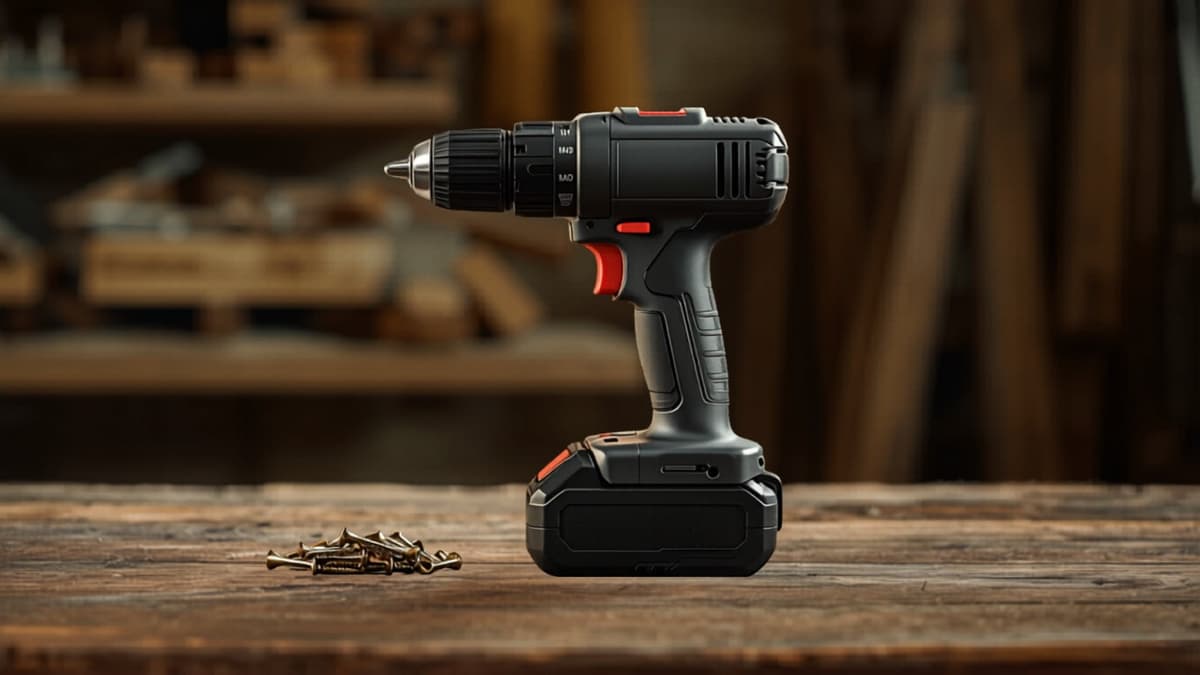
If you're purchasing a single power tool, a cordless drill-driver is the clear choice. Modern drill-drivers are affordable, versatile, and dramatically faster than hand tools for drilling holes and driving fasteners. Select a model with sufficient power (18 volts or higher) and chuck capacity for standard bits.
A drill-driver handles pilot holes before screw driving—a crucial step that prevents wood splitting and fastener stripping. They're essential for assembling furniture, hanging cabinets, installing shelving, and countless projects beyond. The variable speed trigger allows precise control, while reverse function removes stubborn fasteners.
Complement your drill with a basic bit set including twist bits for wood and metal in common sizes, along with countersink bits if you plan any finish carpentry. A Phillips head screw bit and square drive bit handle the most common fastening situations.
Level: Achieving Proper Alignment
A quality level ensures that shelves, cabinets, picture frames, and other installations sit properly. A 24-inch or 32-inch spirit level works for most household tasks, offering sufficient length to detect even slight deviations from true horizontal or vertical.
Laser levels have become popular and offer advantages for larger projects, but a traditional spirit level with clear bubble indicators serves homeowners reliably. Look for models with easily readable bubbles and durable construction—a level that gets dropped loses accuracy and becomes unreliable.
Many household problems—drawers that stick, doors that don't close properly, shelves that shift—stem from installation on surfaces that weren't level or plumb. Taking time to verify alignment before installation prevents frustration during use.
Tape Measure: Accurate Dimension Capture
A 25-foot tape measure covers most household measuring needs. The slight curve in quality tape measures allows them to extend and retract smoothly, and the locking mechanism holds the blade extended while you position items.
Purchase a tape measure with 1-inch width—wider blades resist buckling when extended, preventing the frustration of a blade that collapses partway out. Mark common measurements directly on tape or take photos with dimensions—this saves time when reviewing projects or communicating with professionals who might help with larger tasks.
Measuring twice before cutting or fastening becomes intuitive with a tape measure readily available. This habit prevents costly errors and wasted materials.
Pliers: Gripping and Bending
A quality pair of slip-joint pliers (adjustable pliers that open wider as you squeeze) handles most household gripping tasks. They adjust to grip various fastener sizes, hold objects while you work, and bend wire for hanging or securing purposes.
Many homeowners find value in adding needle-nose pliers for reaching into tight spaces and working with smaller fasteners. A locking pliers (Vise-Grip style) provides one-handed clamping for holding materials while you work single-handed.
Pliers shouldn't be your primary fastening tool—use wrenches for hex fasteners—but they excel at adjusting, removing, and holding during assembly. Quality pliers feel smooth when operating and maintain their grip without excessive slipping.
Utility Knife: Precision Cutting
A utility knife with replaceable blades handles countless cutting tasks from drywall trimming to opening packaging safely without damage. Fixed-blade utility knives with replaceable cartridges provide the best balance of safety and performance.
Keep blades sharp—a dull blade requires excessive pressure, making it more likely to slip. Replace blades frequently and dispose of old ones safely. A utility knife belongs in every kitchen, workshop, and utility area for quick cutting tasks that don't justify larger tools.
Flashlight: Visibility in Dark Spaces
A reliable flashlight illuminates pipes under sinks, spaces inside cabinets, attics, and crawlspaces where problems often hide. Modern LED flashlights are brighter and more efficient than older incandescent models, running longer on batteries while producing superior light quality.
A handheld flashlight is essential, but many homeowners also keep a headlamp—a light worn on the forehead—for tasks requiring both hands. The ability to see clearly while working increases both safety and work quality.
Stud Finder: Wall Navigation
Modern stud finders use electronic detection to locate the wooden or metal framing behind drywall. This proves invaluable for hanging heavy items safely, as fasteners driven into studs hold far more weight than drywall anchors alone.
Battery-powered stud finders have become affordable and reliable. Most detect studs about 1.5 inches wide behind drywall reliably. Understanding your wall construction prevents mounting television screens, shelves, or heavy pictures with inadequate support.
Paint and Drywall Supplies
Basic painting supplies—rollers, brushes, drop cloths, and tape—handle interior touch-ups, wall repairs, and refresh projects. A few quality brushes for detail work and one roller for larger areas cover most needs. Keep quality tape for masking—cheap tape allows paint bleed-through.
For drywall repairs, a putty knife, lightweight joint compound, and sandpaper address small holes and damage. Many homeowners find these materials worth keeping on hand for inevitable wall nicks and dings that occur during normal living.
The essential tools every homeowner should own don't demand large investment or space. A basic set of hand tools costs moderate money and fits in a small toolbox. Add a cordless drill-driver, and you've covered perhaps ninety percent of typical household maintenance.
Rather than purchasing a complete pre-assembled kit, consider building your collection based on actual needs. When a task arises, if you don't have the proper tool, research whether it's something you'll use repeatedly. This approach ensures you own what you actually use rather than tools that occupy space without purpose.
Quality matters more with tools than with many purchases, because poor-quality tools create frustration and often fail during important projects. A mid-range tool from an established maker typically outlasts and outperforms both budget and premium-tier options for most household applications.
Conclusion
Essential tools every homeowner should own create the foundation for confident home maintenance and improvement. A hammer, screwdriver set, adjustable wrench, drill-driver, level, tape measure, pliers, and utility knife handle the vast majority of household situations. Add a flashlight, stud finder, and basic painting supplies, and you're equipped for virtually any standard homeowner task.
These tools don't require significant investment or specialized knowledge. They work intuitively, last for decades with basic care, and build competence as you use them. Most importantly, owning these essential tools eliminates the friction between noticing a household need and addressing it—you simply reach into your collection and get to work. That combination of capability and accessibility defines what makes these tools truly essential for every homeowner.