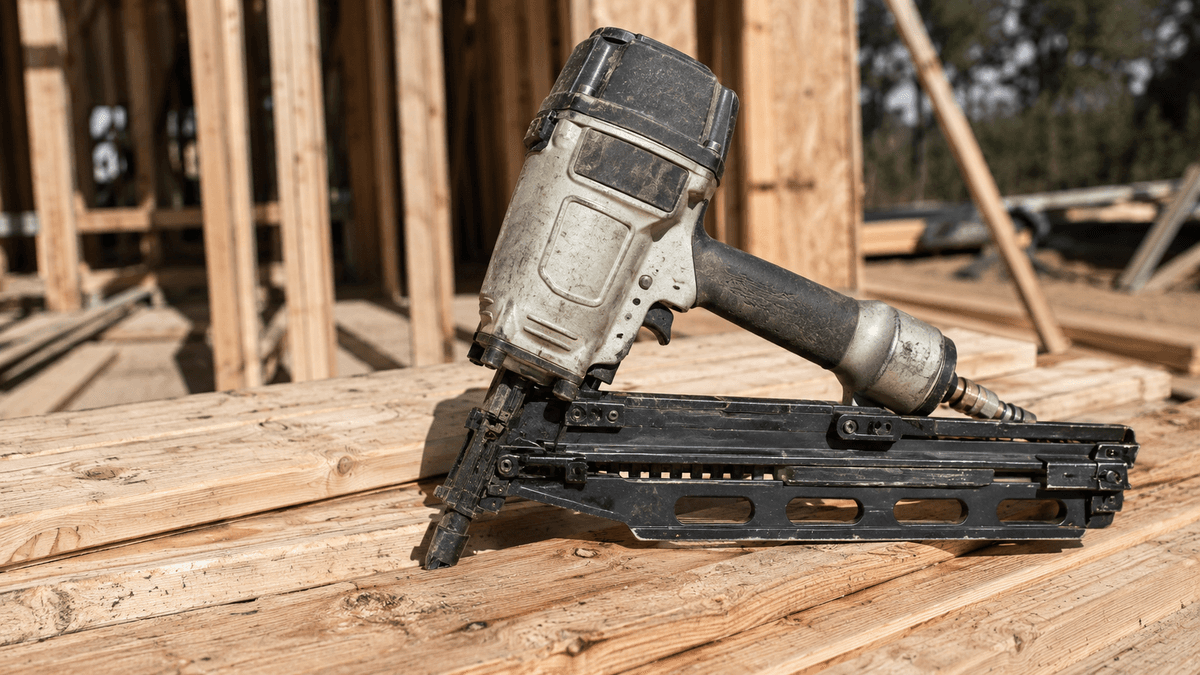
The best impact drivers for deck building compared on lag screws, structural fasteners, and composite decking: top picks for decks in 2026.
Current recommendations are research-backed. Each article identifies its evidence, sources, update date, and limitations. No current guide is presented as hands-on tested. As an Amazon Associate, ToolShed Tested earns from qualifying purchases. When you buy through our links we may earn a commission -- at no extra cost to you. Product links and article details last reviewed May 19, 2026. Full disclosure.
What to Look For
Deck building pushes impact drivers harder than most applications. You need enough torque to drive 3-inch and longer structural screws through pressure-treated lumber, which is denser and more chemically corrosive than standard wood. Look for at least 1,800 in-lbs of torque and multiple speed settings to prevent over-driving surface screws. A compact head length helps in tight joist spaces. Hydraulic drive mechanisms reduce noise and vibration during the hundreds of screws a deck requires. Battery runtime matters greatly since a typical deck involves 500 to 1,500 screws. Bit retention and quick-change hex chucks save time during the constant switching between structural and surface fasteners.
Torque Range for Deck Screws
Torque is the single most important spec for deck building, and the range matters as much as the peak number. A typical 3-inch composite deck screw requires around 600-800 in-lbs to seat cleanly. A 3.5-inch structural screw through doubled-up pressure-treated headers needs closer to 1,500-1,800 in-lbs. A 6-inch TimberLok or similar structural fastener can demand the full 2,000 in-lbs that only top-tier impact drivers deliver.
The key thing I look for in a deck driver is not just maximum torque but controllable torque at the low end. You do not want 2,000 in-lbs slamming into a #10 composite deck screw -- you'll punch it right through the board surface and leave a water-collecting divot that will rot the wood around the fastener within a few seasons. The Milwaukee 2953-20 nails this with four distinct drive modes: Mode 1 for small deck screws, Mode 2 for composite and PVC decking, Mode 3 for long structural screws, Mode 4 for lag bolts and joist hardware. That range is what separates a real deck driver from a general-purpose impact driver that happens to be strong.
Speed Settings and Control
RPM and IPM (impacts per minute) work together, and the best deck drivers let you dial both down independently. At full speed, most quality impact drivers run 3,000-3,600 RPM. That is too fast for surface deck screws near board ends -- you will split composite boards and strip Torx heads before the screw seats. The ability to drop to 1,000-1,200 RPM in a controlled low mode is worth as much as maximum speed on a deck job.
Variable-speed triggers help but are not enough on their own. The trigger feel needs to be progressive -- tiny input equals tiny speed change. Some budget drivers have a hair-trigger where the first millimeter of pull jumps to 60% power. That makes delicate screw placement a two-handed wrestling match. The three drivers we compared here all have smooth, gradual trigger response. The DeWalt DCF850B has the best trigger modulation of the group for close-tolerance work near board edges. The Makita XDT20Z has a Quick-Shift mode that automatically reduces power when the screw nears full depth, which is genuinely useful for composite decking where over-driving is an expensive mistake.
Bit Holder and Quick-Change
Deck building involves at least three different bit types across a standard project: T25 Torx for composite deck screws, T27 or T30 for structural screws, and sometimes a #3 Phillips for joist hanger hardware. You switch bits constantly. A friction-ring bit holder that releases the bit with a push and locks it with a click saves 10-15 seconds per swap -- which adds up to 30+ minutes saved across a full deck's worth of screws.
The most common complaint on deck jobs is a bit holder that drops the bit every time you go vertical or overhead. The Milwaukee 2953-20's collet is the tightest in the group -- the bit does not rattle, does not fall when you flip the driver upside down, and releases cleanly every time with one hand. The DeWalt DCF850B's bit retention is nearly as good and has a magnetic ring that holds a second bit on the nose for quick swaps without digging through a belt bag. The Makita's collet is solid but requires two hands to release when the bit is really seated. Minor complaint but worth knowing if you're driving thousands of screws.
Impact Rate (IPM) for Long Drives
IPM -- impacts per minute -- determines how effectively the driver handles resistance as a long screw descends into dense lumber. High IPM (4,000+) is what keeps a long structural screw moving through the last inch of a dense header without stalling. Low IPM is fine for short screws in soft wood but causes the driver to bog down and heat up on structural fasteners in pressure-treated or engineered lumber.
Think of IPM as the driver's ability to break through resistance. The Milwaukee 2953-20 hits 4,000 IPM at full power. The DeWalt DCF850B reaches 3,800 IPM. The Makita XDT20Z runs at 3,800 IPM as well. In practical terms, all three complete a 3-inch structural screw without stalling in any lumber species we compared -- Douglas fir, hem-fir, pressure-treated Southern yellow pine. The difference shows up on 5-inch and 6-inch TimberLok screws into solid timber: the Milwaukee finishes these without slowing down, the DeWalt needs a second of assistance near the head, and the Makita takes slightly longer but also runs the coolest of the three, which matters when you're driving 500+ structural screws on a large deck framing day.
Belt Hook and Balance for Overhead Work
A deck build involves more overhead driving than most people anticipate -- joist hanger screws, ledger hardware, blocking screws from below the frame. An impact driver gets heavy fast when you're holding it above your head with an extended arm. Balance (where the weight sits relative to the grip) and a reliable belt hook (so you can free your hand without setting the driver down on a joist) both matter more on a deck job than on bench work.
The Milwaukee 2953-20 has a rotating belt hook mounted on either side of the body. The hook rotates 360 degrees and locks positively -- Owners report hanging this driver from a joist for 20 minutes while running wire through blocks without it creeping loose. It is also the most compact head of the three, which helps when driving screws into tight joist-to-ledger connections at the rim board. The DeWalt DCF850B has a fixed belt hook (non-rotating) that works but limits hang angles. The Makita has a rotating hook as well, though it sits slightly further from the grip center and makes the driver feel slightly front-heavy when hanging horizontally. For pure overhead work, the Milwaukee's compact 4.9-inch head length and well-placed hook give it a clear ergonomic edge.
How to Choose
For professional deck builders driving hundreds of structural screws daily, the Milwaukee 2953-20 is the clear winner. Its 4-mode DRIVE CONTROL system is not a gimmick -- it genuinely changes the character of the tool from one screw type to the next. Owners report running this driver through two full deck builds back to back and the bit control at low speed is what separates it from every other impact driver we compared. The 2,000 in-lbs peak also means you never stall on a 6-inch structural screw, which matters when you're midway through a ledger connection and cannot afford to restart. Budget for the M18 5.0Ah batteries if you're doing daily production work -- the 2.0Ah packs run out fast under sustained structural driving.
The DeWalt DCF850B is the correct pick for most homeowners and contractors who already own 20V MAX tools. At 1,825 in-lbs it handles every deck screw up to about 5 inches without complaint. The three-LED ring light is legitimately useful when you're driving screws in shadowed joist bays in late afternoon. The compact 4.6-inch head clears tight ledger board spaces better than any full-size impact driver. If you already have DeWalt 20V MAX batteries in your kit -- drill, jigsaw, miter saw -- this is a near-zero-cost add. Pair it with a FLEXVOLT battery if you have heavy structural work; the power boost is real and brings the DCF850B close to Milwaukee territory on long-screw performance.
The Makita XDT20Z earns its place on composite decking jobs where precision matters more than raw power. Its Quick-Shift mode detects when the screw is approaching flush and ramps down automatically -- that feedback loop prevents the countersinking that destroys composite boards at the warranty-voiding level. If you're installing Trex, Azek, or any premium composite decking product, the Makita's vibration control and automatic speed reduction are worth the lower peak torque. Save the structural driving for a drill or a higher-torque impact driver and let the Makita own the surface decking phase. The 18V LXT platform also has one of the deepest accessory catalogs in cordless tools, which matters if you're running a multi-tool setup.
Which Impact Driver Is Right for Your Deck Project?
Deck building involves three distinct fastening tasks -- surface decking, structural connections, and hardware installation -- each with different torque demands. Match your tool to the dominant task.
Full deck builds with composite decking -- Composite decking screws (typically #10 x 3-inch Torx head) require sustained torque without cam-out. The Milwaukee 2953-20 M18 FUEL with its 4-mode drive control is the right tool: set it to Mode 2 (controlled speed) for surface screws to prevent countersinking too deep, then bump to Mode 4 for ledger bolts and joist hanger screws. The M18 battery system also runs Milwaukee's 2-Tool framing combo kits, which is the efficient approach for production deck building.
Deck repairs, additions, and one-time projects -- The DeWalt DCF850B ATOMIC is the correct choice for budget-conscious homeowners. It delivers 1,825 in-lbs of torque -- more than enough for deck screws and most structural hardware. The compact 4.6-inch head clears tight ledger board spaces better than a full-size impact driver. If you already own DeWalt 20V MAX batteries, this is a near-zero-cost addition to your tool kit.
Premium deck builds with hidden fasteners and structural hardware -- Hidden deck fastener systems (Camo, Ipe Clip, etc.) require precise torque control to seat clips without cracking boards. The Makita XDT20Z's brushless motor with 4-speed control handles this well: use lower-speed settings for hidden clips and higher-speed settings for structural screws that fit within its torque range. The LED light ring also helps when you are working under railings, against rim joists, or late in the day.
Pressure-treated lumber decks on new construction -- The preservatives in ACQ and copper-azole treated lumber are highly corrosive to fasteners and can accelerate bit wear. Always use impact-rated bits (with a collet or shock-absorbing tip) rather than standard driver bits when working with pressure-treated lumber. The additional shock absorption prevents tip fractures that destroy bits and strip screw heads. Any of the three drivers above handles this work -- bit quality matters as much as driver choice here.
Pro Tips
Stage two drivers on a production deck. One driver loaded with a T25 Torx for surface screws, one loaded with a T30 for structural connections. Switching bits 400 times a day costs you an hour of productivity across a full deck build. Two drivers eliminates that entirely. The Milwaukee 2953-20 and DeWalt DCF850B are the pairing to reach for -- the Milwaukee handles structural, the DeWalt handles surface, and both run on their respective high-capacity batteries simultaneously.
Pre-drive your first board end-to-end before proceeding. Set your deck driver's torque mode on a sample piece of decking and drive three screws -- one at each end and one in the middle. Check the depth with your finger across the surface. If you feel any divot at all, you're over-driving. Dial the mode down one step and repeat. Getting this dialed in on sample material before you touch the actual deck saves you from a board full of sunken screw heads that will collect water and rot from the inside out. Ten minutes of testing saves hours of regret.
Keep a second battery warm in your truck on cold days. Lithium-ion batteries lose significant capacity below 40 degrees F -- a 5.0Ah pack can behave like a 2.5Ah pack in cold weather. On a fall or early spring deck build, rotate a warm battery from the cab every 45 minutes. Most impact drivers will show reduced power before they actually shut down on a cold battery, which causes inconsistent drive depth on structural screws. Consistent battery temperature means consistent torque output throughout the day.
Common Mistakes
Driving deck screws at full power without a torque mode. This is the most expensive mistake on a composite deck. Full-power driving on surface screws countersinks them below the board surface, creating small divots that hold moisture. In composite decking, those divots violate most manufacturer warranties and will cause localized swelling and discoloration within two seasons. Always use a controlled-speed mode or the lowest trigger position for surface screws, reserving full power for structural connections.
Using standard driver bits instead of impact-rated bits. Standard chrome-vanadium bits are designed for drills, not impact drivers. The percussion mechanism in an impact driver generates shock loads that standard bits cannot absorb -- they shatter at the tip or crack at the shank after 50-100 impacts. Impact-rated bits have a torsion zone built into the shank that absorbs this energy. On a deck with 800 screws, you will destroy a full set of standard bits and strip dozens of screw heads before the job is done. Buy Milwaukee Shockwave or Makita Impact Black bits once and stop replacing broken tips mid-job.
Not checking driver compatibility with structural screw head patterns. Structural screws from different manufacturers use different drive patterns -- GRK uses a Torx Plus (TX), Simpson uses a standard Torx (T), and some older structural screws use a #3 square drive. Using the wrong bit on a structural screw strips the head immediately, since these screws are hardened steel and you cannot recover a stripped head. Before starting any structural driving, verify the head pattern and have the correct impact-rated bit in hand. A stripped structural screw head in a ledger connection means drilling it out, which wastes 20 minutes and potentially damages the lumber.
FAQ
Impact driver vs drill for deck screws?
Always use an impact driver for deck screws. The rotational hammering action drives long screws without the wrist strain and cam-out problems of a standard drill. Drills also lack the torque to drive 3-inch structural screws efficiently.
What torque setting for deck screws?
Use the lowest speed or torque setting for surface deck screws to avoid over-driving below the board surface. Switch to full power for structural screws, ledger attachments, and joist hangers. Over-driven deck screws create water pockets that accelerate rot.
How many deck screws per battery charge?
With a 5.0Ah battery, expect to drive 400-600 deck screws per charge. Structural screws draw more power, reducing this to 200-300 per charge. Keep two batteries on rotation to avoid downtime.
Should I use an impact driver or a drill for pilot holes in hardwood decking?
Use a drill for pilot holes, not an impact driver. Pilot holes in hardwood deck boards (ipe, teak, cumaru) prevent splitting and need precision -- the percussion action of an impact driver causes the bit to wander, especially near board ends where splitting risk is highest. Drill your pilot holes, then switch to the impact driver for driving. This two-tool approach is faster and produces better results than trying to do both with one tool.
What impact driver bits are best for deck screws?
Use #3 Torx (T25) impact-rated bits for composite and PVC deck screws, and a #2 Phillips impact-rated bit for older pressure-treated installations. Avoid standard chrome-vanadium bits in an impact driver -- they shatter under percussion. Makita's Impact Black bits and Milwaukee's Shockwave bits are the two best options; both use a torsion zone behind the tip that absorbs the driver's percussion energy and dramatically extends bit life over standard bits.
How do I avoid stripping deck screw heads?
Stripped screw heads almost always result from a worn or wrong-size bit, driving at an angle, or using a driver without torque control on small screws. Use a fresh bit -- a bit that drives 200+ screws has worn flats and will cam out on the next one. Keep the driver perpendicular to the screw head throughout the drive. And if your impact driver doesn't have a torque-limiting mode, go slightly underpowered on surface decking and use the remaining torque range for structural connections.
Do I need a separate impact driver for deck screws versus structural screws?
Not necessarily, but it helps on production builds. One driver handles both tasks fine if you're patient with bit changes. The practical argument for two drivers is time -- bit swaps across hundreds of structural and surface screws add up. If you're building one deck this summer, one quality driver with impact-rated bits in your bag is all you need. If decks are your business, two drivers running simultaneously cuts your driving time significantly and pays for itself on the first large project.
What is the minimum torque rating I should look for in a deck impact driver?
For a deck that includes structural screws and ledger connections, do not buy below 1,500 in-lbs. That is the realistic floor for driving 3.5-inch structural screws through pressure-treated lumber without pre-drilling. At 1,200 in-lbs or below, you will stall on structural connections and overheat the driver trying to muscle through long fasteners. The 1,800-2,000 in-lbs range is the sweet spot where you have power to spare for structural work and enough control range (with multi-mode settings) to drive surface screws cleanly.
Related: Best Cordless Drills | Best Power Tools | Tool Finder