The complete power tool guide for 2026: drills, saws, impact drivers, grinders, and more. Honest buying advice for every skill level and budget.
Current recommendations are research-backed. Each article identifies its evidence, sources, update date, and limitations. No current guide is presented as hands-on tested. As an Amazon Associate, ToolShed Tested earns from qualifying purchases. When you buy through our links we may earn a commission -- at no extra cost to you. Product links and article details last reviewed March 17, 2026. Full disclosure.
Shaping & Finishing — Sanders (random orbital, belt, detail), routers, planers, and grinders. These turn rough lumber into finished work.
Fastening & Assembly — Brad nailers, finish nailers, framing nailers, and staplers. Essential for trim work, framing, and upholstery.
Demolition & Heavy Work — Rotary hammers, demolition hammers, and angle grinders. For concrete, masonry, and teardown projects.
Drills & Drivers
The drill/driver is the most fundamental power tool you'll own. In 2026, there's no reason to buy a corded drill unless you're doing extremely specialized work.
Drill/Drivers
A standard drill/driver handles 90% of homeowner tasks: drilling holes, driving screws, mixing paint, and light-duty boring. Look for:
- Brushless motor (longer life, more power, better battery efficiency)
- At least 500 in-lbs of torque for general use
- Two-speed gearbox (low speed for driving, high speed for drilling)
- LED work light (surprisingly useful in cabinets and crawl spaces)
Our top picks:
Read more:Best Cordless Drills 2026 | Best Power Tool Combo Kits 2026
Impact Drivers
If a drill/driver is a handshake, an impact driver is a fist bump. The rotational impacts let you drive long screws and lag bolts without wrist strain. Every serious DIYer needs one.
Key specs to watch:
– 1,800+ in-lbs of torque for deck screws and lag bolts
– Hydraulic drive mechanism for smoother operation (newer models)
– Multi-speed settings to avoid overdriving in soft materials
Read more:Best Impact Drivers 2026
Impact Wrenches
For automotive work, lug nuts, and heavy-duty bolt removal. The cordless models from Milwaukee and DeWalt now rival pneumatic shop tools.
Read more:Best Impact Wrenches 2026
Hammer Drills
When you need to drill into concrete, brick, or masonry, a standard drill won't cut it. Hammer drills add a percussive action that pulverizes masite while the bit spins. For occasional concrete anchors, a hammer drill mode on your combo drill is fine. For serious masonry work, step up to a dedicated rotary hammer.
Saws
Saws are where most of your budget will go if you're doing any kind of woodworking or remodeling. Each type serves a distinct purpose.
Circular Saws
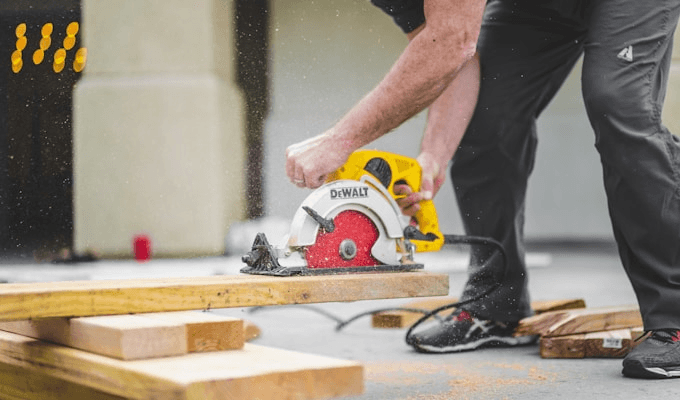
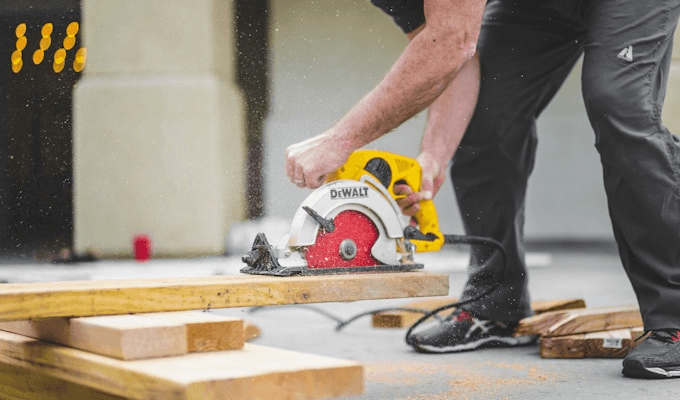
The workhorse of job sites everywhere. A 7-1/4" circular saw handles framing lumber, plywood, and sheet goods. In 2026, the best cordless circular saws match corded models for power.
Read more:Best Circular Saws 2026
Miter Saws
For precise crosscuts and angled cuts on trim, molding, and framing. A 10" sliding compound miter saw is the sweet spot for most workshops. A 12" adds capacity for wider boards but takes up more space.
Read more:Best Miter Saws 2026
Table Saws
The centerpiece of any serious woodworking shop. Table saws excel at rip cuts (cutting along the grain), repeated cuts to identical widths, and dado cuts with the right blade.
Categories:
– Jobsite table saws (check current retailer pricing): Portable, fold-up stands, great for contractors
– Contractor table saws (check current retailer pricing): Heavier, more accurate, better fences
– Cabinet table saws ($1,500+): Shop-grade precision, heavy cast iron, industrial fences
Read more:Best Table Saws 2026
Reciprocating Saws
Demolition's best friend. Recip saws (Sawzalls) tear through walls, pipes, nails, and branches. They're not precision tools — they're destruction tools, and they're fantastic at it.
Read more:Best Reciprocating Saws 2026
Jigsaws
For curved cuts, cutouts, and detail work in wood, plastic, and thin metal. The jigsaw fills the gap between a circular saw (straight cuts) and a scroll saw (extremely fine curves).
Read more:Best Jigsaws 2026
Band Saws
For resawing thick lumber into thinner boards, cutting curves in thick stock, and general-purpose woodworking cuts. A 14" band saw is the standard shop size.
Sanders
Sanding is the unglamorous work that separates a mediocre project from a professional-looking one. The right sander makes it tolerable.
Random Orbital Sanders
The most versatile sander for general woodworking. The random orbit pattern prevents swirl marks that plague standard orbital sanders. A 5" random orbital sander should be in every workshop.
Read more:Best Random Orbital Sanders 2026 | Random Orbital vs Sheet Sander
Belt Sanders
For aggressive stock removal. Belt sanders flatten boards, strip finishes, and shape wood quickly. They're not for finish sanding — use a random orbital after the belt sander does the heavy lifting.
Detail Sanders
Triangular pads reach into corners and tight spaces that orbital sanders can't touch. Essential for furniture refinishing and trim work.
Drum Sanders
For flattening wide panels and achieving uniform thickness across boards. A drum sander is a serious shop investment ($800-$2,000+) but transforms your workflow if you work with hardwood.
Routers
Routers are arguably the most versatile single tool in a woodworking shop. Edge profiles, dadoes, rabbets, dovetails, template work, sign carving — a router does it all.
Fixed-Base Routers
Mounted in a router table or used freehand for edge profiling. The motor stays at a set depth.
Plunge Routers
The bit can plunge into the workpiece, making them essential for dadoes, mortises, and inlay work.
Combo Kits
Most manufacturers sell a motor with both fixed and plunge bases. This is the best value if you're buying your first router.
Trim Routers
Compact, one-handed routers for edge profiles, laminate trimming, and light detail work. Milwaukee and DeWalt both make excellent cordless trim routers now.
Grinders
Angle Grinders
Angle grinders cut metal, grind welds, polish surfaces, and remove rust. A 4-1/2" angle grinder is the standard size. Variable speed is important — different materials need different RPMs.
Read more:Best Angle Grinders 2026 | Angle Grinder vs Die Grinder
Bench Grinders
Stationary grinders for sharpening chisels, drill bits, and garden tools. A 6" or 8" bench grinder with a good wheel dressing tool is a shop staple.
Die Grinders
Small, high-speed tools for grinding in tight spaces, porting, and detail metalwork.
Nailers & Staplers
Pneumatic nailers dominated for decades, but cordless battery-powered nailers have caught up. The convenience of no compressor, no hose, and no fumbling with fittings is hard to overstate.
Brad Nailers (18-Gauge)
For trim, molding, cabinet assembly, and light woodworking. The most commonly used nailer in finish carpentry.
Finish Nailers (16-Gauge and 15-Gauge)
For heavier trim, baseboards, crown molding, and stair treads. 16-gauge is most common; 15-gauge provides more holding power.
Framing Nailers
For framing walls, building decks, and sheathing. These drive 3-1/2" nails and are essential for any structural work.
Pin Nailers (23-Gauge)
Nearly invisible holes. For delicate trim, veneer, and assembly where you don't want visible nail holes.
Read more:Best Staple Guns 2026 | Best Brad Nailers 2026 | Best Framing Nailers 2026
The Swiss Army knife of power tools. Oscillating tools sand in corners, cut flush against surfaces, scrape adhesive, and make plunge cuts in drywall. Every toolbox needs one.
Read more:Best Oscillating Multi-Tools 2026
For engraving, polishing, cutting small items, and hobby work. A rotary tool is more precision instrument than power tool.
Biscuit Joiners
For edge-to-edge joints in panel glue-ups. A biscuit joiner cuts a small slot for an oval biscuit that aligns and strengthens joints.
Planers
Thickness planers take rough lumber to uniform thickness. A 12-1/2" or 13" benchtop planer is the standard entry point, and it'll save you a fortune over buying pre-surfaced lumber.
Choosing a battery platform is the most consequential decision you'll make in power tools. Once you invest in batteries, chargers, and a few tools, switching ecosystems is expensive. Here's how the big four stack up in 2026.
DeWalt 20V MAX / 60V FLEXVOLT
Best for: Contractors, serious DIYers, and anyone who needs both 20V portability and 60V power.
DeWalt's 20V MAX line is massive — over 300 products. The FLEXVOLT batteries automatically switch between 20V and 60V depending on the tool, which means your circular saw and miter saw get corded-level power while your drill stays compact. Build quality is excellent, and DeWalt's warranty support is among the best.
Standout tools: DCD800 drill/driver, DCS578 circular saw, DCN680 brad nailer, DCG413 angle grinder
Battery pricing: 20V 5Ah packs run $80-$100. FLEXVOLT 9Ah packs run $150-$180.
Milwaukee M18 / M18 FUEL
Best for: Trades professionals, automotive work, and anyone who wants the absolute best cordless tools regardless of price.
Milwaukee's M18 FUEL line sets the performance benchmark in almost every category. Their ONE-KEY Bluetooth system lets you track tools, customize settings, and lock stolen tools. The M18 platform now includes over 280 tools. Milwaukee tends to be 10-15% more expensive than DeWalt, but the tools consistently test at the top of their category.
Standout tools: 2904 hammer drill, 2767 impact wrench, 2737 circular saw, M18 FUEL oscillating tool
Battery pricing: M18 5Ah packs run $80-$110. HIGH OUTPUT 8Ah packs run $140-$170.
Makita 18V LXT / 40V XGT
Best for: Woodworkers, detail-oriented users, and anyone who values smooth, refined tool operation.
Makita tools tend to have the best ergonomics and lowest vibration levels. Their 18V LXT platform includes over 300 tools and has been around long enough that the battery ecosystem is deeply mature. The 40V XGT line is growing fast and targets professional users who need more power than 18V delivers.
Standout tools: XFD14 drill/driver, BO5041 sander, XRJ05 reciprocating saw, XSS02 circular saw
Battery pricing: 18V 5Ah packs run $70-$90. XGT 4Ah packs run $120-$140.
Ryobi ONE+ / ONE+ HP
Best for: Homeowners, weekend warriors, and budget-conscious buyers who want a massive tool selection.
Ryobi ONE+ is the most affordable major battery platform, and Home Depot exclusivity means constant sales. The ONE+ HP brushless line closed much of the performance gap with pro brands. With over 300 tools in the ONE+ ecosystem — including oddball stuff like a hot glue gun, inflator, and bug zapper — Ryobi offers more variety than anyone. You sacrifice some durability and peak performance versus pro brands, but for homeowner use, Ryobi is genuinely excellent.
Standout tools: PBLDD01 HP brushless drill, PBLCS300 HP circular saw, PCL1200 combo kit
Battery pricing: ONE+ 4Ah packs run $50-$70. HP 4Ah packs run $60-$80.
Read more:Milwaukee vs DeWalt | Makita vs Milwaukee | Ryobi vs Craftsman | Brushless vs Brushed Motors
Beginner (First 6 Months of DIY)
Start with these five tools and you can handle 80% of home projects:
- Drill/driver — Your most-used tool
- Impact driver — Makes driving screws effortless
- Circular saw — Cuts lumber and plywood
- Random orbital sander — Finishes every project
- Oscillating multi-tool — Fills the gaps everything else misses
A combo kit with a drill and impact driver is the smartest first purchase. You get two tools, two batteries, and a charger for less than buying separately.
Add these to your collection:
- Miter saw — Precise crosscuts and angles
- Jigsaw — Curved and detail cuts
- Brad nailer — Clean trim installation
- Router — Edge profiles and joinery
- Reciprocating saw — Demolition and pruning
Advanced (3+ Years / Serious Woodworking)
Round out your shop:
- Table saw — The heart of a woodworking shop
- Thickness planer — Uniform board thickness from rough lumber
- Band saw — Resawing and curved cuts
- Bench grinder — Sharpening station
- Dust collector — Workshop health and cleanliness
Read more:Best Power Tools Under $100
Budget Allocation Guide
The $500 Starter Kit
The $1,500 Serious DIYer Kit
The $3,500 Workshop Build
Add to the $1,500 kit:
Safety Essentials
Power tools demand respect. Ignoring safety basics leads to life-changing injuries. This isn't optional.
Must-Have PPE (Personal Protective Equipment)
Eye protection — Wear safety glasses every single time. ANSI Z87.1-rated glasses are the standard. Prescription safety glasses exist if you wear corrective lenses.
Hearing protection — Any tool over 85 decibels causes permanent hearing damage with sustained exposure. Most power tools exceed this. Use foam earplugs (NRR 32) or over-ear muffs.
Dust protection — Sawdust causes respiratory disease over time. Use an N95 mask for general woodworking. For heavy sanding or exotic woods, step up to a half-face respirator with P100 filters.
No gloves with rotating tools — This surprises people. Never wear gloves near drill presses, lathes, bench grinders, or any tool with a rotating chuck or wheel. Gloves can catch and pull your hand into the mechanism.
Workshop Safety Rules
- Unplug or remove the battery before changing blades, bits, or adjusting guards
- Never defeat a safety guard — they exist because someone lost a finger
- Secure your workpiece with clamps — never hold material freehand against a spinning blade
- Keep a clean floor — tripping while holding a running saw is catastrophic
- Never work impaired — this includes fatigue, not just substances
- Know where the off switch is before you turn the tool on
- Maintain sharp blades — dull blades require more force, increasing kickback risk
Table Saw Safety (Deserves Its Own Section)
Table saws cause more woodworking injuries than any other tool. Key rules:
- Use a riving knife — it prevents the workpiece from pinching the blade and kicking back
- Never stand directly behind the blade — stand to the side of the cut line
- Use push sticks for narrow rip cuts
- Consider a SawStop — their flesh-detection technology stops the blade in milliseconds upon skin contact
Supporting Articles & Guides
This guide serves as the hub for our complete power tool coverage. Explore the topics below for in-depth reviews and comparisons:
Comparisons
Guides
Frequently Asked Questions
There's no single best brand — it depends on your use case. Milwaukee M18 FUEL leads for trades professionals. DeWalt 20V MAX offers the best all-around value for contractors and serious DIYers. Makita 18V LXT has the best ergonomics for woodworkers. Ryobi ONE+ is the smartest choice for homeowners on a budget.
Go cordless for almost everything. Battery technology has matured to the point where cordless tools match or exceed corded performance for drills, impact drivers, circular saws, and most other tools. The exceptions: table saws, miter saws above 10", routers, and planers still perform better corded due to sustained high-power demands.
How many batteries do I need?
At minimum, two batteries so one can charge while you work. For a full day of use, four batteries is comfortable. Buy the largest amp-hour (Ah) batteries you can afford — a 5Ah battery lasts significantly longer than a 2Ah.
Absolutely. Combo kits typically save 20-30% compared to buying tools and batteries individually. A drill/impact driver combo kit is the best first purchase for any new tool buyer.
Lithium-ion batteries last 3-5 years with normal use, or about 500-1,000 charge cycles. When a battery noticeably loses runtime or takes much longer to charge, it's time to replace it. Store batteries at room temperature and avoid leaving them on the charger indefinitely.
What's the difference between brushless and brushed motors?
Brushless motors are more efficient (25-50% longer battery life), more powerful, generate less heat, and last longer because there are no carbon brushes to wear out. The tradeoff is a higher purchase price, typically $20-$50 more. In 2026, brushless is worth the premium for any tool you'll use regularly.
Do I really need a table saw?
If you're doing any serious woodworking, yes. A table saw makes accurate rip cuts, repeat cuts, and joinery cuts that no other tool replicates as well. For general home improvement and construction projects, a circular saw with a good guide rail can substitute in many situations.