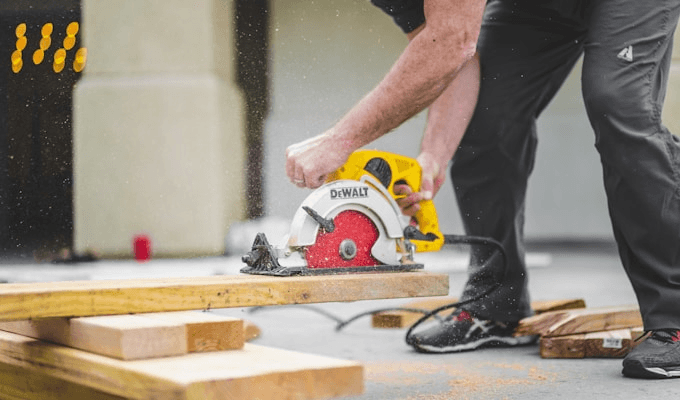
A circular saw is often the first major power tool a beginning woodworker or DIYer acquires—and for good reason.
Current recommendations are research-backed. Each article identifies its evidence, sources, update date, and limitations. No current guide is presented as hands-on tested. As an Amazon Associate, ToolShed Tested earns from qualifying purchases. When you buy through our links we may earn a commission -- at no extra cost to you. Product links and article details last reviewed May 30, 2026. Full disclosure.
A circular saw is often the first major power tool a beginning woodworker or DIYer acquires—and for good reason. It's versatile, relatively affordable, and capable of handling everything from crosscutting lumber to ripping boards to the width you need. But stepping into the circular saw aisle at your local tool retailer can be overwhelming. Saws come in different sizes, power ratings, and styles, each designed for different purposes and skill levels.
This comprehensive circular saw buying guide will walk you through the essential features to evaluate, help you understand what matters most for your specific needs, and give you the knowledge to make a confident purchase decision. Whether you're building your first deck, tackling home renovation projects, or setting up a small workshop, understanding the fundamentals of circular saw selection is the first step toward years of successful cutting.
Understanding Circular Saw Blade Size and What It Means
The most fundamental specification you'll encounter when shopping for a circular saw is blade diameter, measured in inches. The most common sizes are 5.5 inches, 6.5 inches, and 7.25 inches, with some professional models going up to 8.25 inches or larger.
Blade size directly determines the maximum depth of cut your saw can achieve at a 90-degree angle. A 5.5-inch saw can typically cut about 1.5 inches deep, while a 6.5-inch saw can cut roughly 2 inches deep, and a 7.25-inch saw reaches approximately 2.5 inches. For most beginners, a 6.5-inch saw represents the sweet spot—it handles standard lumber cutting tasks without being unwieldy or requiring excessive power.
Understanding blade size also affects portability and control. Smaller saws are lighter and easier to maneuver, particularly when making overhead cuts or working in tight spaces. Larger saws offer more depth capacity but demand more arm strength and stability. If you're primarily crosscutting 2x4s and 2x6s, a compact 5.5-inch saw works perfectly. If you anticipate cutting thicker materials or working with larger stock, stepping up to 6.5 or 7.25 inches makes sense.
The blade size also influences your purchasing flexibility down the road. Different saws accept different blade diameters, so choosing a popular size like 6.5 inches means you'll have abundant blade options when replacements or specialty blades are needed.
Circular saws are powered either by corded electric motors or rechargeable batteries. The power specifications differ significantly between these types, and understanding what these numbers mean will help you assess whether a saw has sufficient cutting capability.
Corded electric saws are rated in amperage (amps). You'll typically see ratings between 10 and 15 amps. Higher amperage generally means more motor power, better performance when cutting dense materials, and less bogging down under load. A 13-amp corded saw represents the typical mainstream choice, offering adequate power for most cutting tasks while remaining reasonably priced.
Corded saws come with the inherent advantage of unlimited runtime—you're never waiting for a battery to charge. The trade-off is mobility limitation due to cord length, and you'll need a properly grounded outlet nearby.
Battery-powered saws are rated in voltage, commonly 18V, 20V, or higher. These specifications don't translate directly to amps, but generally, higher voltage correlates with more power. Battery-powered saws have gained significant ground in recent years. For beginners doing lighter work, a quality 20V saw handles most tasks effectively. Professional-grade lithium-ion batteries in premium models can perform comparably to corded versions.
The battery-powered advantage is obvious: cordless freedom and no extension cord management. The disadvantages include battery cost (purchasing extra batteries and a quality charger adds significant expense), charge time between uses, and potential performance decline as batteries age. For someone just starting out, a corded saw often provides better value and more straightforward operation.
Motor Type: Brushed Versus Brushless Technology
As you examine specifications, you'll encounter references to brushed and brushless motors. This distinction matters more than many beginners realize.
Brushed motors use carbon brushes that wear down over time, requiring eventual replacement or motor service. They're less efficient, generate more heat, and typically have a shorter operational lifespan. However, brushed motors are less expensive to manufacture, which is reflected in the tool's price.
Brushless motors eliminate the carbon brush mechanism, resulting in more efficient operation, longer lifespan, cooler running temperatures, and less maintenance. The trade-off is cost—brushless saws command a premium. For someone building a tool collection, investing in brushless technology makes sense if budget allows, as the saw will last longer and perform more consistently throughout its life.
For beginning users on a tight budget, a quality brushed-motor saw functions perfectly adequately. If you're planning to use the saw regularly and want durability and lower maintenance, brushless technology justifies the extra investment.
Bevel and Miter Capabilities
Your circular saw's ability to make angled cuts depends on its bevel and miter adjustment capabilities.
Bevel cuts are angled cuts along the length of the board (think of cutting the edge of a board at 45 degrees). Most circular saws feature an adjustable sole plate that tilts from 0 to 45 degrees. Some saws offer greater tilt range up to 50 or 55 degrees. For beginners, the standard 0-45 degree range covers virtually all practical applications.
Miter cuts aren't quite as relevant for handheld circular saws as they are for table saws, but some models feature adjustable guides for more precise angle control. This feature matters more if you're doing finish carpentry or precise angle work.
Look for saws with smooth, positive bevel adjustment mechanisms. Some models use lever clamps that feel loose or unreliable; others use ratcheting systems or detent stops at common angles like 45 degrees. The best designs provide firm hold without excessive adjustment effort.
Corded Versus Cordless: The Practical Considerations
This is arguably the most significant decision you'll make when choosing a circular saw, and it depends entirely on your intended use and preferences.
Corded electric saws offer several advantages: unlimited runtime, consistent power throughout the cut, lower initial investment (the saw itself costs less, though you may need an extension cord), and no battery maintenance. A quality 13-amp corded saw will outlast multiple generations of battery technology.
The primary disadvantage is cord management. You'll need to work within cord reach (typically 50-100 feet with a quality extension cord), position the cord to avoid tripping hazards or entanglement, and manage cord storage between projects.
Cordless saws provide unmatched convenience and mobility. There's genuine appeal to grabbing a charged battery, making your cuts, and putting the tool away without cord hassles. For quick weekend projects or work in areas far from outlets, cordless wins hands down.
However, cordless saws require initial investment in batteries and charging infrastructure. If you don't already own other tools in the same battery platform, the total system cost is significantly higher. Battery performance also varies with temperature—cold weather reduces effectiveness—and batteries degrade over time.
For beginners, if you already own tools in a popular battery platform (DeWalt, Makita, Milwaukee, etc.), a cordless saw makes practical sense. If you're starting from scratch, a corded saw often represents better value and simpler operation.
Ergonomics and Control Features
A saw that's comfortable to hold and control will produce better results and reduce fatigue during extended use.
Weight varies considerably between models. Lightweight saws (under 8 pounds) are easier to control, especially for overhead cuts, but sometimes feel less stable in your hands. Heavier saws (9-12 pounds) provide more stability but demand more arm strength. For beginners, targeting the 8-10 pound range generally hits a practical balance.
Handle design significantly affects control. Look for saws with textured, ergonomic handles positioned to keep your wrist in a natural alignment. Some saws feature a top handle plus a front knob for two-handed control; others rely primarily on a rear handle. The best design for you depends on your hand size and personal preference—when possible, handling different models in person reveals which feels most natural.
Guard design protects your hand from the blade while allowing adequate visibility of your cut line. Newer designs feature lower-profile guards that don't obstruct your view. Some include useful features like electric brakes that stop the blade within seconds of releasing the trigger, reducing re-engagement time and improving safety.
Dust blower features on the saw direct air away from your cut line, improving visibility. This matters more than you might think, especially when making precise cuts where line-of-sight is critical.
Cutting Accuracy and Base Plate Quality
A circular saw's ability to make consistently straight cuts depends on base plate rigidity and design.
The base plate (sole plate) is the metal shoe that rides along your workpiece. Higher-quality saws use thick aluminum or magnesium plates that resist warping and provide flat, stable support. Budget saws sometimes feature thinner steel plates that can flex or develop slight bends with handling.
The plate should feature a beveled edge on the side you're looking at, which helps with visibility along your cut line. Some models include notches or measurement scales for quick reference of cut depth or bevel angle.
Quality base plates include mounting points for rip guides or edge guides, which help you make straight parallel cuts without relying solely on eyeballing the cut line. A circular saw without any guide system forces you to either purchase aftermarket guides or develop excellent hand-control technique.
Blade Quality and Availability
The blade that comes with your saw sets the tone for your early cutting experience, but understanding blade options helps you make better long-term choices.
Most saws come with a general-purpose blade suitable for crosscutting and ripping solid wood. These blades typically feature 18-24 teeth and work adequately for rough construction work. However, they sacrifice finish quality for speed.
For cleaner crosscuts, rip-specific applications, or specialty work, you'll want to build a small blade collection. This is where blade size matters—popular sizes like 6.5 and 7.25 inches have abundant blade options from many manufacturers. Obscure sizes limit your choices considerably.
Key blade features include tooth count (more teeth = smoother cut but slower speed), kerf width (thinner kerfs waste less material), and material composition (carbide-tipped blades stay sharper far longer than steel).
Safety Features to Prioritize
Before purchasing any circular saw, verify that it includes essential safety mechanisms.
Electric brakes stop blade rotation within 2-3 seconds of releasing the trigger. This feature alone significantly reduces injury risk by preventing blade coasting, which can happen for several seconds with standard saws.
Electric kickback protection or anti-kickback clutches disengage the motor if blade binding occurs, preventing the violent tool reaction that can cause serious injury. Not all consumer saws include this feature, but it's worth prioritizing.
Cord management through an integrated cord retainer prevents tripping hazards and reduces cord wear.
Transparent guards provide visibility while protecting your hands from the spinning blade.
Price Range and Value Assessment
Circular saws range from roughly its current retailer price for basic entry-level models to $200+ for premium cordless or professional-grade saws.
Beginning woodworkers can achieve reliable results with saws in the $80-$150 range. These typically offer adequate power, reasonable build quality, and useful features without premium pricing for professional-grade specifications you may not need initially.
Budget beyond the saw itself for accessories: a quality carbide blade (if one isn't included) adds $20-$30, safety gear including hearing protection and eye protection is essential, and a rip guide (check current retailer pricing) improves accuracy significantly.
Making Your Final Decision
Choosing your first circular saw comes down to honest assessment of several factors: your primary intended projects, whether you prefer corded or cordless operation, how much workshop space you have, your budget for both the saw and supporting equipment, and whether you'll use the tool