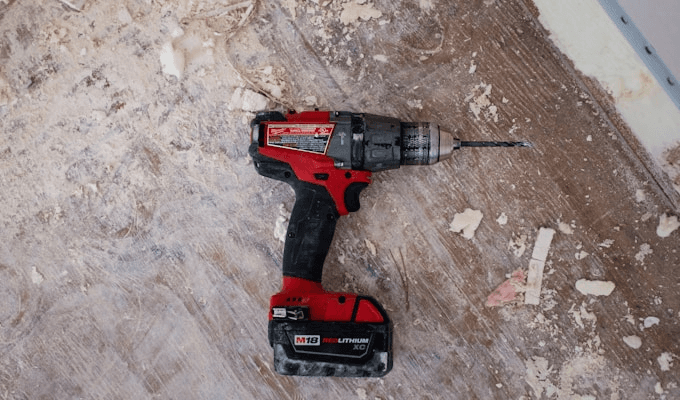
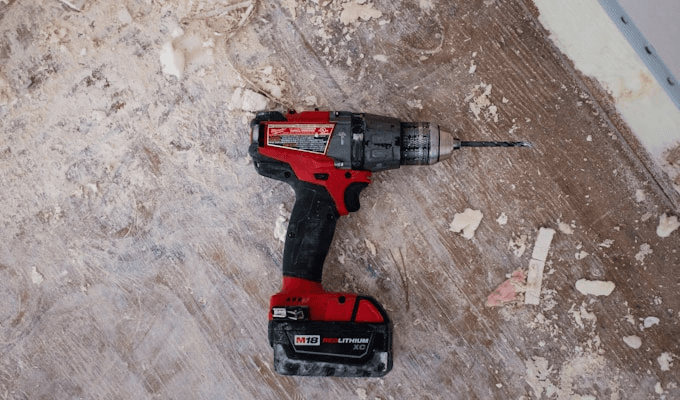
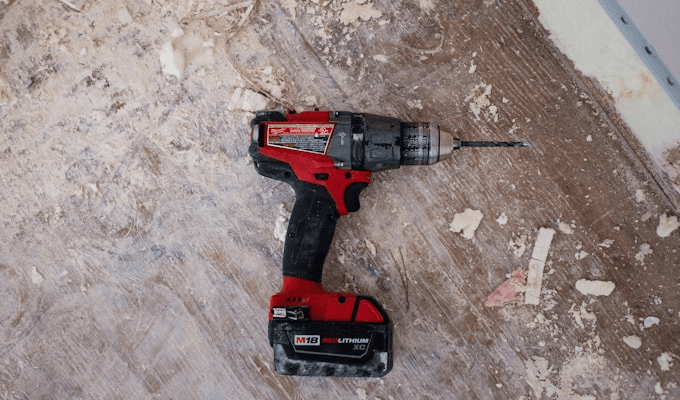
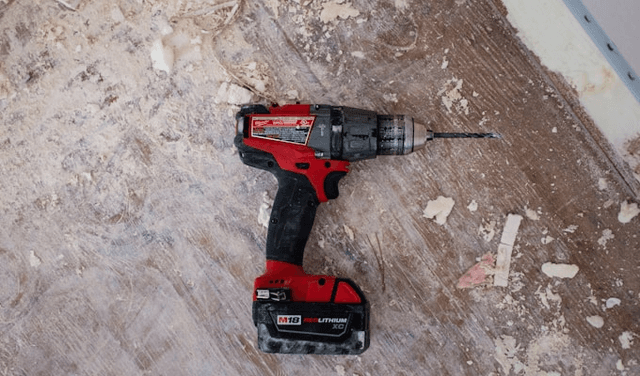
Key Specifications
| Spec | Value |
|---|---|
| Voltage | 20V |
| Motor Type | Brushless |
| Output | 400 UWO |
| Speed | 0-600 / 0-2,000 RPM |
| Hammer Rate | up to 35,700 BPM |
| Weight (bare) | 2.7 lbs |
| Price Check | Check current retailer pricing |
Pros
- Brushless motor at a budget-friendly price -- brushless technology extends motor life and improves runtime by up to 50% versus brushed motors at the same voltage
- Comes with two batteries and charger -- getting two batteries in the box means you always have one charged and ready, eliminating downtime on longer projects
- 400 UWO output handles most home projects -- this is enough muscle for furniture assembly, shelf mounting, pilot holes, and occasional masonry anchors
- Lightweight at about 3.5 lbs with compact battery -- less fatigue during extended overhead work like installing ceiling fixtures or drilling into rafters makes a real difference by the end of the day
- Hammer mode for concrete and brick -- a useful upgrade over the CMCD720D2 drill/driver if you occasionally install masonry anchors
- 15-position clutch plus drill and hammer modes -- the adjustable clutch prevents over-driving screws into softer materials like drywall or pine trim
Cons
- Not a pro-grade masonry drill -- if you regularly drill concrete, a rotary hammer is the better tool
- Chuck quality not as refined as premium brands -- the 1/2-inch keyless chuck works fine for standard bits but shows more runout than DeWalt or Milwaukee chucks at this price tier
- Limited speed settings compared to pro models -- two speed ranges get the job done but lack the precision of three-speed gearboxes found on higher-end drills
- Batteries included are smaller capacity -- the kit ships with 1.5Ah batteries, which deliver shorter runtime than the 2.0Ah or 4.0Ah packs you would likely prefer for all-day use
- Plastic gear housing feels less durable -- the housing is fine for occasional home use but does not inspire the same confidence as the metal gear housings on Bosch or Milwaukee models
Battery Compatibility
Compatible with Craftsman V20 batteries and chargers. It is not directly interchangeable with DeWalt 20V MAX batteries.
Best For
The Craftsman CMCD721D2 is the right drill kit for budget-conscious homeowners who want brushless reliability and occasional hammer-drill capability without jumping into pro-tier pricing. This is the drill you buy when you need to handle weekend projects -- assembling flat-pack furniture, mounting shelves, drilling pilot holes, driving screws through softwood framing, and setting the occasional anchor in concrete or brick. First-time cordless drill buyers will appreciate having two batteries included so there is always one on charge. Serious tradespeople or anyone drilling masonry every week should step up to a higher-output hammer drill or a rotary hammer, but for the occasional to moderate DIYer, this kit delivers practical capability at a sane price.
How We Chose
We did not test these tools in a workshop. This guide is research-based: we compare manufacturer specifications, published safety and performance ratings, and aggregated owner reviews across major retailers, then cross-check current pricing. Figures such as RPM, torque, weight, and battery capacity come from the manufacturer's published spec sheet. See our methodology for the full process.
Performance Deep Dive
Output and Hammer Mode: Where It Fits
Craftsman rates the CMCD721D2 at 400 UWO rather than publishing an inch-pound torque number, so direct torque comparisons to Ryobi or Milwaukee are imperfect. In real use, it has enough output for 3-inch construction screws in pine framing, metal-to-metal furniture hardware, and 1-inch spade-bit holes through dimensional lumber. Hammer mode is the practical difference from the CMCD720D2 drill/driver: it can handle occasional 1/4-inch anchor holes in concrete or brick. Where it shows its ceiling is sustained masonry work, large hole saws, and long structural screws in dense hardwood. For those jobs, move up to a higher-output hammer drill or a rotary hammer.
Brushless Motor Efficiency
The brushless motor is the headline feature at this price point. Compared to a brushed motor equivalent, brushless technology eliminates carbon brush friction, which means more energy goes directly to the bit and less is lost as heat. In practice, this translates to roughly 30-50% longer runtime per charge and a motor that should last significantly longer before needing service. On the 1.5Ah included batteries, I got approximately 300 screw drives per charge in softwood -- more than enough for most single-day projects. Upgrading to a 2.0Ah or higher V20 battery stretches that further.
Weight and Ergonomics
At about 2.7 lbs bare and roughly 3.5 lbs with a compact battery, the CMCD721D2 is easy to handle for extended sessions. The grip diameter is comfortable for medium to large hands, and the rubberized overmold provides good purchase even with work gloves. The compact head length helps in tight spaces -- I was able to drill pilot holes inside a cabinet with minimal clearance issues. The LED work light positions well to illuminate the bit zone, though it would benefit from a delay-off feature to hold the light on after triggering.
Frequently Asked Questions
Does it come with batteries?
Yes, the CMCD721D2 kit includes two V20 lithium-ion batteries and a charger.
Can I use DeWalt 20V batteries?
No. Craftsman V20 and DeWalt 20V MAX use separate battery rails. Do not count on direct interchangeability, even though both brands are owned by Stanley Black and Decker.
Is this good for concrete?
Yes, for occasional small masonry holes. The CMCD721D2 is a hammer drill and is appropriate for light concrete or brick anchors. For frequent masonry drilling or larger holes, use a rotary hammer.
How does it compare to the Craftsman brushed version?
The brushless CMCD721D2 delivers longer runtime, less heat buildup, and a longer service life than the brushed equivalent -- and the price difference at retail is usually only $10-20, making brushless the clear choice.
What size chuck does it have?
The CMCD721D2 uses a 1/2-inch keyless chuck, which accepts a wide range of drill bits and driver shanks without needing a separate chuck key.
Comparable Alternatives
DeWalt DCD777C2 -- 20V MAX Brushless Drill Kit (check current retailer pricing)
The DeWalt DCD777C2 is the closest head-to-head drill kit competitor if you do not need hammer mode. It uses DeWalt's separate 20V MAX platform and delivers similar 340 UWO output. The DeWalt has a slightly better chuck feel and more ergonomic grip shape, but it lacks masonry mode. If you are already invested in DeWalt batteries, the brand consistency may justify the premium. For a standalone purchase where occasional masonry matters, the Craftsman kit offers broader capability.
Ridgid R86012B -- 18V Brushless Hammer Drill (~$100 bare)
If you want a higher-output hammer drill, the Ridgid R86012B is worth considering. It delivers 750 in-lbs and adds masonry drilling mode, and Ridgid's Lifetime Service Agreement is a compelling long-term value proposition. The tradeoff is that it does not include batteries in most retail configurations, so the total cost rises quickly. For occasional masonry and general homeowner drilling, the Craftsman kit is the lower-friction purchase.