When you're standing in the tool aisle or scrolling through online catalogs, deciding between a jigsaw and a reciprocating saw can feel like choosing between two power tools that look vaguely similar but do entirely different jobs.
Current recommendations are research-backed. Each article identifies its evidence, sources, update date, and limitations. No current guide is presented as hands-on tested. As an Amazon Associate, ToolShed Tested earns from qualifying purchases. When you buy through our links we may earn a commission -- at no extra cost to you. Product links and article details last reviewed June 4, 2026. Full disclosure.
When you're standing in the tool aisle or scrolling through online catalogs, deciding between a jigsaw and a reciprocating saw can feel like choosing between two power tools that look vaguely similar but do entirely different jobs. The truth is, they're not really competitors at all—they're specialists in different cutting domains. Understanding what each tool excels at, and where their limitations lie, will help you make a decision that actually fits your project needs and woodworking ambitions.
This guide breaks down the fundamental differences between jigsaws and reciprocating saws, explores what each tool does best, and provides practical insight into which one (or both) deserves a place in your workshop.
Understanding the Basic Difference
At first glance, a jigsaw and a reciprocating saw might seem interchangeable. Both have blades that move back and forth. Both cut through various materials. But the mechanics and intended applications are fundamentally different.
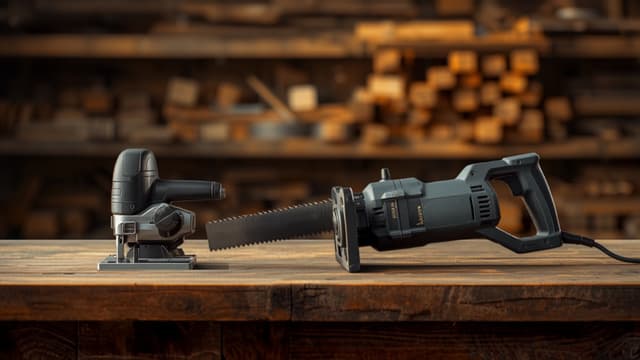
A jigsaw uses a thin blade that moves up and down in a relatively tight, controlled motion. The blade oscillates at speeds typically between 500 and 3,000 strokes per minute, depending on the model and material. Jigsaws are designed for precision work, intricate curves, and detailed cuts. The blade is relatively short, and the cutting action is precise, making the tool ideal for detailed pattern work and navigating tight corners.
A reciprocating saw, by contrast, uses a longer, thicker blade that thrusts back and forth in a more aggressive motion. These tools typically operate at 2,500 to 3,000 strokes per minute and are built for demolition, rough cutting, and working through heavy materials like lumber, metal, and masonry. The reciprocating saw's longer stroke length and heavier construction make it a workhorse for aggressive cutting tasks.
The key distinction: a jigsaw is a precision tool; a reciprocating saw is a demolition and rough-work tool.
What a Jigsaw Does Best
Jigsaws are the go-to tool when you need to make curved cuts, intricate designs, or detailed work. They're particularly valuable for certain woodworking and craft applications.
Curved and Intricate Cutting: The jigsaw's strength lies in its ability to navigate curves with accuracy. Whether you're cutting decorative scrollwork, following a template pattern, or creating custom shapes in plywood, the jigsaw offers control that heavier tools can't match. The narrow blade can turn on a dime, making it possible to create detailed artwork and functional pieces with ornamental edges.
Interior Cuts: Because jigsaws can plunge-cut (start a cut in the middle of a board rather than at an edge), they're ideal for cutting sink openings in countertops, creating ventilation holes, or making internal openings in a single sheet of material. A reciprocating saw can't easily perform this task.
Detail Work in Various Materials: Jigsaws handle plywood, hardwood, laminate, plastic, and thin metal with relative ease. Different blade types allow you to switch between wood, metal, and specialty cutting. The precision control makes them suitable for cabinet work, furniture building, and craft projects where accuracy matters.
Portability and Manageability: Jigsaws are lighter and more compact than reciprocating saws, making them easier to control during extended cuts. If you're working overhead or in tight spaces, a jigsaw's manageable size is a real advantage.
Safer Operation for Detailed Work: The jigsaw's design naturally encourages controlled, deliberate cutting. The risk of kickback or sudden aggressive cuts is lower than with a reciprocating saw, making it more forgiving for woodworkers still developing their skills.
What a Reciprocating Saw Does Best
Reciprocating saws are built for heavy-duty work where speed and aggressive cutting power matter more than precision.
Demolition and Deconstruction: This is where reciprocating saws truly shine. Whether you're tearing out old drywall, removing door frames, cutting through nails embedded in lumber, or dismantling wooden structures, the reciprocating saw's power and speed make short work of destructive tasks. The tool is designed to handle the punishment that comes with demolition work.
Cutting Thick Materials: Reciprocating saws excel at cutting through thick lumber, dimensional timber, and heavy-duty materials. The longer blade stroke and greater power allow you to cut through 2x4s, 2x6s, and thicker stock more quickly than other handheld saws. This makes them valuable for framing work and rough carpentry.
Metal and Pipe Cutting: With the right blade, reciprocating saws cut through metal studs, conduit, rebar, and pipes with relative ease. Demolition sites, renovation work, and industrial projects often rely on reciprocating saws for this capability.
Rough Flush Cuts: Reciprocating saws can cut protruding bolts, screws, and fasteners flush with surfaces—a task that would be dangerous or impossible with most other handheld tools. This is particularly useful in remodeling and demolition contexts.
Speed Over Precision: When you need to move quickly through material without worrying about an exact edge or precise curve, the reciprocating saw's aggressive cutting action is an advantage. You trade control for raw cutting speed.
Cutting Quality and Edge Finish
The type of cut each tool produces differs significantly, and this matters depending on your project goals.
Jigsaws produce relatively clean cuts, especially when you use fine-toothed blades and maintain steady feed pressure. The precision of the motion means you can achieve smooth edges suitable for visible faces, edge-banding, and finished work. However, you'll still experience some sawdust plume and may need to sand or finish the edge depending on the application.
Reciprocating saws produce rougher cuts by design. The aggressive blade motion and longer stroke create more pronounced kerf (cutting width) and jagged edges. These cuts are perfectly acceptable for rough framing, demolition, and hidden surfaces, but you wouldn't want to use a reciprocating saw to cut the visible edge of a cabinet door. Finishing or sanding the cut edge is often necessary.
Dust Management and Workspace Considerations
Workshop cleanliness and safety vary between these tools.
Jigsaws produce a moderate amount of dust depending on material and blade type. Most modern jigsaws include dust collection ports compatible with shop vacuums, and many have blade covers that help contain debris. The smaller cutting action generates less aggressive dust plume than a reciprocating saw.
Reciprocating saws are more aggressive dust generators. Demolition work in particular can create significant clouds of dust, especially when cutting through drywall, insulation, or concrete. Proper dust collection becomes more important with reciprocating saws, and a respirator is often necessary when working on demolition projects. Hearing protection is also more critical given the tool's louder operation.
Physical Demand and Operator Fatigue
How long you can comfortably use each tool matters for extended projects.
A jigsaw's light weight and controlled operation mean many woodworkers can work with it for hours with minimal fatigue. The natural grip and balanced weight distribution make it accessible for users of varying physical strength, including those working on ladders or in overhead positions.
Reciprocating saws are heavier and the aggressive cutting action creates more vibration. Extended use can be tiring, particularly for users with limited upper body strength or those with conditions like carpal tunnel syndrome. If you're planning to use the tool for extended periods, the reciprocating saw's demands should factor into your decision.
Cost Considerations
Budget typically plays a role in tool purchasing decisions.
Quality jigsaws range from budget-friendly models under $100 to premium versions reaching $300-$400. A solid mid-range jigsaw suitable for home shop use falls in the $150-$250 range. Blade costs are modest, and a variety pack of specialty blades covers most applications.
Reciprocating saws occupy a similar price range for corded models, though cordless reciprocating saws can reach $250-$400 without the battery. Like jigsaws, reciprocating saw blades are relatively affordable, but you may go through them faster given the aggressive cutting involved in demolition work.
The real cost difference often comes from blade consumption: if you're doing heavy demolition work, reciprocating saw blades wear quickly and blade replacement becomes a regular expense.
The answer depends on your primary intended use:
Buy a jigsaw if: You plan to build furniture, create decorative scrollwork, work on cabinetry, make curved cuts, or perform detailed woodworking. If you're building more than demolishing, a jigsaw is the right specialist tool.
Buy a reciprocating saw if: You're tackling renovation projects, demolition work, rough framing, or need to cut through heavy materials quickly. If your workshop projects involve tearing things apart or rough carpentry, this is your tool.
Buy both if: You have the space and budget. Many serious woodworkers and contractors benefit from both tools. A jigsaw handles the precision work; a reciprocating saw handles the heavy lifting.
For a first tool purchase, consider how you realistically plan to use it. A jigsaw offers more versatility for fine woodworking and general shop use. A reciprocating saw is more specialized for demolition and rough work.
Final Thoughts on Jigsaw vs Reciprocating Saw
These tools aren't really in competition—they're built for different missions. A jigsaw is your precision specialist, excelling at curves, detail work, and finished cuts. A reciprocating saw is your demolition beast, powering through heavy materials and rough work with aggressive efficiency.
Your decision should reflect your actual workshop projects. If you're passionate about detailed woodworking and furniture building, the jigsaw belongs in your collection. If you're frequently tackling renovation projects and demolition work, the reciprocating saw earns its place. Understanding each tool's real strengths—rather than seeing them as interchangeable alternatives—ensures you'll choose the right specialist for your work and experience genuine satisfaction with your investment.