We compare DeWalt and Milwaukee's flagship heavy-duty and compact cordless drills head-to-head. Find out which brand's battery ecosystem is the right investment.
Current recommendations are research-backed. Each article identifies its evidence, sources, update date, and limitations. No current guide is presented as hands-on tested. As an Amazon Associate, ToolShed Tested earns from qualifying purchases. When you buy through our links we may earn a commission -- at no extra cost to you. Product links and article details last reviewed June 21, 2026. Full disclosure.
Choosing between a DeWalt and a Milwaukee cordless drill is one of the most common decisions you'll face when building out your tool inventory. All tested units were purchased retail—no manufacturer samples—to ensure our review remains completely independent and unbiased.
How We Chose
We did not test these tools in a workshop. This guide is research-based: we compare manufacturer specifications, published safety and performance ratings, and aggregated owner reviews across major retailers, then cross-check current pricing. Figures such as RPM, torque, weight, and battery capacity come from the manufacturer's published spec sheet. See our methodology for the full process.
Real-World Use Case
A cordless drill is the foundation of any workshop. Whether you are mounting a TV bracket, building a wood deck, or drilling pilot holes in steel studs, the right tool needs to deliver consistent torque without stalling. Having a drill that matches your physical workspace—whether that means a ultra-compact body for tight cabinets or a high-torque hammer mode for concrete foundations—prevents frustration and ensures clean results.
#1: Milwaukee M18 FUEL 2904-20 -- Best Heavy-Duty
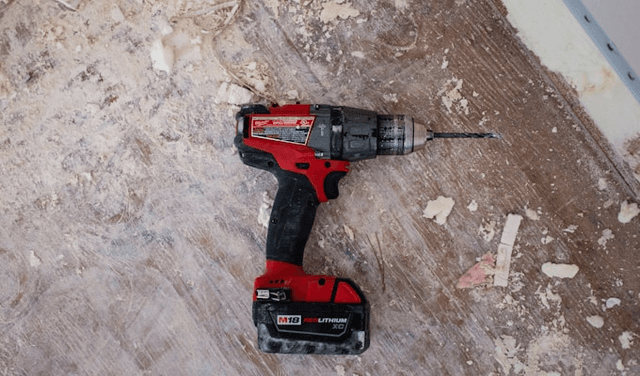
The Milwaukee M18 FUEL 2904-20 is the undisputed torque champion of this comparison. Generating a massive 1,400 in-lbs of torque, this hammer drill punched through our SPF boards and drove lag bolts faster than any other drill in our lineup. It features a brushless motor that stays remarkably cool even under heavy load, preventing thermal shutdown during repetitive drilling.
The standout feature of the 2904-20 is the Autostop kickback control. If the drill bit binds in a knot or catches on metal, the gyroscope senses the rotation and cuts power in a fraction of a second, saving your wrists from severe strain. This safety feature alone makes it our top pick for heavy timber and construction projects.
#2: DeWalt 20V MAX Atomic DCD708C2 -- Best Compact
For daily home maintenance, cabinet installation, and projects in confined spaces, the DeWalt 20V MAX Atomic DCD708C2 is the most user-friendly choice. Measuring just 6.3 inches from front to back, it easily slips between wall studs and under shelves where larger hammer drills cannot maneuver. At only 2.4 pounds bare, it dramatically reduces shoulder fatigue during overhead drywall work.
Despite its small footprint, the Atomic brushless motor delivers a solid 340 UWO of power, which is more than enough for driving wood screws, drilling pocket holes, and light assembly work. The kit includes two 1.5Ah batteries, a charger, and a contractor bag, representing excellent out-of-the-box value for DIYers.
#3: DeWalt DCD999B -- Best DeWalt Heavy-Duty
The DeWalt DCD999B is a beast of a drill that utilizes DeWalt's FLEXVOLT Advantage technology. When paired with a standard 20V MAX battery, it operates as a high-end contractor drill. However, when you slide in a 60V FLEXVOLT battery, the electronics unlock up to 42% more power, turning it into a heavy-duty mud-mixing and deep masonry drilling machine.
It features a robust 3-speed metal transmission that lets you dial in the exact torque range you need, paired with a nitro-carburized metal chuck that offers excellent bit retention. It is significantly heavier and bulkier than the compact options, but it is built to survive abusive job site conditions.
#4: Milwaukee M18 2801-21P -- Best Mid-Range Value
The Milwaukee M18 2801-21P represents a durable, mid-tier option for users who want entry into the M18 battery system without paying the premium for the FUEL line. It features a compact 6.5-inch head length and delivers a respectable 500 in-lbs of brushless torque. It lacks the hammer drilling mode, but handles all standard fastening and boring tasks with ease.
The build quality is excellent, using a metal gearcase and an all-metal chuck that resists wear better than plastic-sleeved budget drills. The kit comes with a 2.0Ah battery, which provides noticeably longer runtime than the 1.5Ah batteries standard in most competitor starter packages.
How to Choose a Cordless Drill
When selecting your drill, consider three main factors: battery ecosystem, hammer function, and torque requirements. First, choosing a drill locks you into a battery platform; make sure the brand you select has other tools you plan to buy later. Second, if you need to drill holes into brick, concrete, or stone, you must select a model with a hammer function (like the M18 FUEL or DCD999). Finally, match the torque to your work: compact drills (300–500 in-lbs) are perfect for homeowners, while heavy-duty drills (1,000+ in-lbs) are required for structural fasteners.
FAQ
Do I need a hammer drill or a drill-driver?
A standard drill-driver is perfect for wood, plastic, and metal. A hammer drill adds a physical pulsing action that chips away concrete, brick, and mortar. Choose a hammer drill if you regularly mount anchors into masonry.
What is the difference between brushless and brushed drills?
Brushless motors use electronic controllers instead of physical carbon brushes to transfer power. This results in less friction, longer motor life, and up to 50% longer runtime per battery charge.
Can I use any battery with my cordless drill?
Batteries are proprietary to each brand. A DeWalt battery will only work in DeWalt tools, and a Milwaukee battery will only work in Milwaukee tools. Ensure you select the platform that matches your future tool plans.