Milwaukee M12 FUEL vs M18 FUEL Impact Driver: we compared both platforms on fastener speed, torque, and ergonomics to settle the compact vs full-size debate.
Current recommendations are research-backed. Each article identifies its evidence, sources, update date, and limitations. No current guide is presented as hands-on tested. As an Amazon Associate, ToolShed Tested earns from qualifying purchases. When you buy through our links we may earn a commission -- at no extra cost to you. Product links and article details last reviewed March 25, 2026. Full disclosure.
This comparison comes up constantly because Milwaukee makes both of these tools, they're both FUEL-grade brushless drivers, and the M12 FUEL has closed the torque gap with its 18V competitors to a surprising degree. The question isn't really "which brand wins" -- it's "does the M18 platform justify the extra weight, cost, and battery investment over the M12 for what you actually do?"
Owner reports cover both tools side by side for several months across a range of work -- finish carpentry, electrical rough-in, overhead ceiling work, deck building, and cabinet installation. The M12 FUEL 3453-20 genuinely surprises people with what a 12V tool can do. The M18 FUEL 2953-20 is the uncompromising professional choice when torque headroom matters. Here's how to figure out which one serves you better.
Spec-by-Spec Comparison
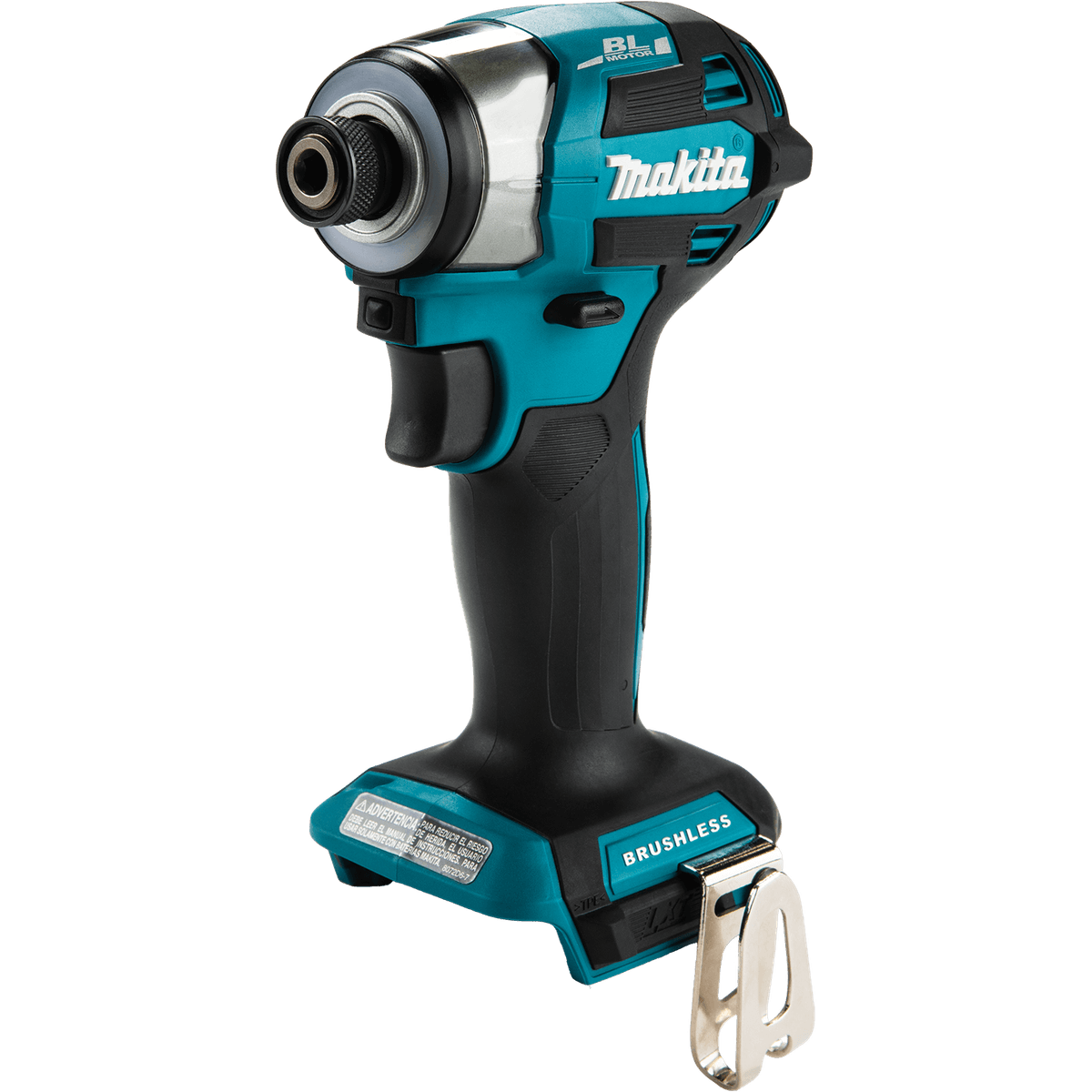
Milwaukee M12 FUEL 1/4" Hex Impact Driver -- In-Depth
The Milwaukee M12 FUEL 3453-20 is one of those tools that consistently surprises people who dismiss it as a "lightweight" option. At 1300 in-lbs on a 12V platform, this driver handles the vast majority of everyday fastening work without breaking a sweat. Cabinet screws, trim screws, standard construction fasteners, and even shorter structural screws are well within this tool's capability. Where the M12 genuinely wins is in the scenarios where weight and size are the limiting factors -- and those scenarios are more common than many people realize.
At 2.1 lbs bare, the M12 FUEL is nearly as light as any professional-grade driver you'll find. The M12 battery pack adds minimal weight compared to the M18's larger cells. If you're doing a full day of overhead work -- cabinet installation, ceiling box mounting, fixture hanging, or suspended ceiling work -- the weight savings over the M18 is not a minor comfort preference, it's a meaningful reduction in arm and shoulder fatigue that affects your work quality and safety at the end of a long day.
The three-speed selector handles a good range of precision control. Speed 1 is gentle enough for delicate finish work, Speed 3 is full power for bulk fastening. The range isn't as wide as the M18's four-speed system, but it covers the practical needs of most applications. The M12's compact 5.1-inch head length fits into tight spaces, though interestingly the M18 FUEL has an even shorter 4.59-inch head -- a result of Milwaukee's engineering work on the larger platform.
The battery consideration is real: M12 batteries are smaller and lighter, which contributes to the tool's featherweight feel, but they also have less total energy capacity than M18 packs. For sustained heavy-duty work, you'll cycle through M12 batteries faster than M18 batteries, which means more charging stops or more batteries in rotation. For lighter-duty or intermittent use, M12 batteries are perfectly adequate and convenient.
Milwaukee M18 FUEL 1/4" Hex Impact Driver -- In-Depth
The Milwaukee M18 FUEL 2953-20 is the professional trade standard for a reason. At 2000 in-lbs of peak torque delivered through a POWERSTATE brushless motor, this tool handles everything from delicate finish work on Speed 1 to structural lag screws on Speed 4 without hesitation. The 4350 IPM impact rate is class-leading, and the auto-stop mode -- which cuts power when it senses the fastener has seated -- makes this the most intelligent fastener control system in the Milwaukee lineup.
The four-speed selector gives finer control gradations than the M12's three-speed system. Speed 1 is genuinely precise enough for driving screws into trim without surface damage. Speed 4 is all-out assault for structural applications. The range between those extremes is wider and more finely tunable than what the M12 offers. Combined with the auto-stop feature, the M18 FUEL gives experienced and less-experienced users alike a tool that actively protects material quality.
Interestingly, the M18 FUEL has a shorter head length (4.59 inches) than the M12 FUEL (5.1 inches) despite being the larger-platform tool. This is a result of Milwaukee's engineering work on the compact M18 FUEL driver -- they've fit more performance into a shorter head than the smaller-platform equivalent. The 2.8 lb bare weight is 0.7 lbs heavier than the M12, which is noticeable but not prohibitive for most use cases.
The M18 ecosystem is Milwaukee's largest and most comprehensive platform. With hundreds of compatible tools, the M18 battery investment carries value across an entire tool collection. For any contractor building a complete cordless setup, anchoring on M18 gives maximum flexibility and value over time.
The Milwaukee M12 FUEL 3453-20 has two real limitations that determine who should avoid it. First, the 1300 in-lbs torque ceiling is insufficient for regular structural fastening -- lag bolts, heavy structural screws, and anything requiring sustained high torque over multiple fasteners will strain the M12 and produce poor results. Second, the M12 battery platform means maintaining a separate battery inventory if you also run M18 tools, which adds cost and complexity. Any user who regularly does heavy fastening work and needs an all-in-one platform should be on M18.
The Milwaukee M18 FUEL 2953-20's limitations are primarily about weight and cost. At 2.8 lbs and $149 body-only, it's heavier and more expensive than the M12 in situations where the M12's capability is sufficient. The extra 0.7 lbs is genuinely felt over a full day of overhead or one-handed work. The M18 is also louder under full load than the M12, which matters in occupied residential spaces where noise is a client relations issue.
Which One Should You Buy
Electricians, plumbers, HVAC installers, and any trade that does significant overhead and confined-space work should seriously consider the M12 FUEL as either a primary or dedicated secondary driver for those applications. The weight savings in overhead work is a genuine ergonomic benefit that translates to better work quality and reduced fatigue risk over a career. If your daily work is 70% or more standard fastening and less than 30% structural work, the M12 handles your load well.
Framing contractors, structural carpenters, deck builders, and anyone who regularly drives lag bolts or long structural screws should choose the M18 FUEL. There's no reasonable substitute for the 2000 in-lbs torque ceiling when you need it, and the auto-stop functionality and four-speed control make the M18 the more capable tool across a wider range of demanding applications.
Many experienced tradespeople run both platforms deliberately -- an M18 FUEL for primary work and an M12 FUEL for overhead or confined-space applications. This is not an extravagant choice; the cost difference between buying two Milwaukee FUEL drivers versus one is well within the range of productivity benefit for a full-time professional. The two tools serve genuinely different ergonomic niches.
For homeowners and DIYers who do moderate projects, the M12 FUEL is often the smarter entry point into Milwaukee's ecosystem. It handles everything a homeowner typically encounters, costs $50 less, and the M12 batteries are less expensive than M18 packs. If you later want M18 tools, the platforms don't share batteries -- but the M12 FUEL impact driver serves as an excellent dedicated overhead driver even after an M18 expansion.
Frequently Asked Questions
Is the Milwaukee M12 FUEL 1/4" Hex Impact Driver better than the Milwaukee M18 FUEL 1/4" Hex Impact Driver?
Neither is universally better -- they serve different use cases. The M12 FUEL 3453-20 excels at its compact form and lighter weight for overhead and tight-access work. The M18 FUEL 2953-20 excels at 2000 in-lbs torque, four-speed control, and auto-stop intelligence for demanding trade applications. Your choice depends on what you build and where you work most.
No. Milwaukee M12 and M18 batteries are not cross-compatible with each other. The platforms use different battery sizes, voltages, and connection interfaces. If you own both M12 and M18 tools, you'll maintain two separate battery inventories. This is a genuine cost consideration when deciding between platforms.
Which impact driver is better for a homeowner vs. a professional?
For homeowners and weekend warriors, the M12 FUEL typically offers excellent value -- it handles standard home project fastening, weighs less for comfortable use, and costs $50 less than the M18 version. Professionals who drive structural fasteners, lag bolts, or high volumes of fasteners daily will benefit from the M18 FUEL's additional torque, runtime, and control features.
Milwaukee tools are built for professional-grade durability and performance. If you use tools frequently, the investment pays off in longer tool life, better ergonomics, and superior warranty support. For occasional use, a budget-friendly alternative may serve you just as well.
How big is the torque gap between M12 and M18 in real-world use?
The 700 in-lbs gap (1300 vs 2000 in-lbs) is invisible for standard fastening applications -- deck screws, cabinet hardware, trim screws, and anything under about 2 inches in length into standard wood. The gap becomes clearly noticeable when driving longer structural screws (3 inches or more), lag bolts, or fasteners into dense hardwood. For structural applications, the M18 has a decisive advantage. For everyday light-to-medium duty work, both tools feel similarly capable.
Is it worth owning both the M12 and M18 FUEL impact drivers?
For professional tradespeople who do diverse work, owning both tools is a legitimate strategy. The M18 handles structural and high-demand applications, while the M12 serves as a dedicated overhead and confined-space driver that reduces fatigue for those specific tasks. Many electricians, plumbers, and finish carpenters run this dual-platform setup deliberately. The productivity benefit over a full career can justify the battery inventory cost of maintaining both platforms.