Milwaukee M18 FUEL vs Makita 18V LXT Impact Driver: we compared both on fastener driving speed, torque control, and battery runtime. Here's which one wins.
Current recommendations are research-backed. Each article identifies its evidence, sources, update date, and limitations. No current guide is presented as hands-on tested. As an Amazon Associate, ToolShed Tested earns from qualifying purchases. When you buy through our links we may earn a commission -- at no extra cost to you. Product links and article details last reviewed May 19, 2026. Full disclosure.
Impact drivers are the most-reached-for tools on most job sites. The Milwaukee M18 FUEL 2953-20 and Makita's premium LXT Quick-Shift drivers are both widely used -- both in the shop and out on framing and finish carpentry work -- and these are two genuinely different approaches. Milwaukee leads on raw torque. The current Makita XDT20Z leads on precision control and bit visibility. Here's what actually matters when you're choosing between them.
The torque difference is real: 2,000 in-lbs for the Milwaukee versus 1,590 in-lbs for the Makita. That torque advantage shows up in lag bolt work, driving long construction screws into hardwood, and anything that pushes the motor hard. But for the 90% of impact driver work that involves deck screws, cabinet screws, and standard fastener driving, the Makita's precision control -- specifically its Quick-Shift Mode -- makes it a more forgiving and accurate tool for experienced and newer users alike. Neither answer is wrong. It depends entirely on what you're building.
Spec-by-Spec Comparison
Milwaukee M18 FUEL 1/4" Hex Impact Driver -- In-Depth
The Milwaukee M18 FUEL 2953-20 is the most torque-capable compact impact driver in the M18 lineup, delivering 2000 in-lbs through a POWERSTATE brushless motor. That number matters in practice -- when you are driving 3-inch structural screws into double-stacked LVL beams, the Milwaukee doesn't hesitate. The motor maintains speed through difficult fastener scenarios that make lesser tools bog down and chatter.
The 4-speed selector is genuinely useful. Speed 1 is controlled enough for delicate work like driving screws into trim without blowing through the face. Speed 4 is full assault mode for construction screws and lag work. The auto-stop mode -- which cuts power when the fastener seats -- is one of my favorite features on any impact driver we've compared. It dramatically reduces the number of stripped screw heads and blown-through surfaces, especially when working with softer wood species or pre-finished material.
The compact 4.59-inch head length is a real advantage in tight framing bays, between studs, and in cabinet boxes. Despite the 2000 in-lbs peak torque, this tool is not a bulky hammer. Milwaukee has done good engineering work fitting a lot of power into a package that doesn't feel oversized in the hand.
The main trade-off is character: the Milwaukee feels more aggressive under load, while the Makita is tuned for cleaner seating and better visibility around the bit. The Milwaukee is also noticeably louder than the Makita at full speed -- not a safety concern, but worth knowing if you're working in a space where noise matters.
Makita 18V LXT Quick-Shift Mode Impact Driver -- In-Depth
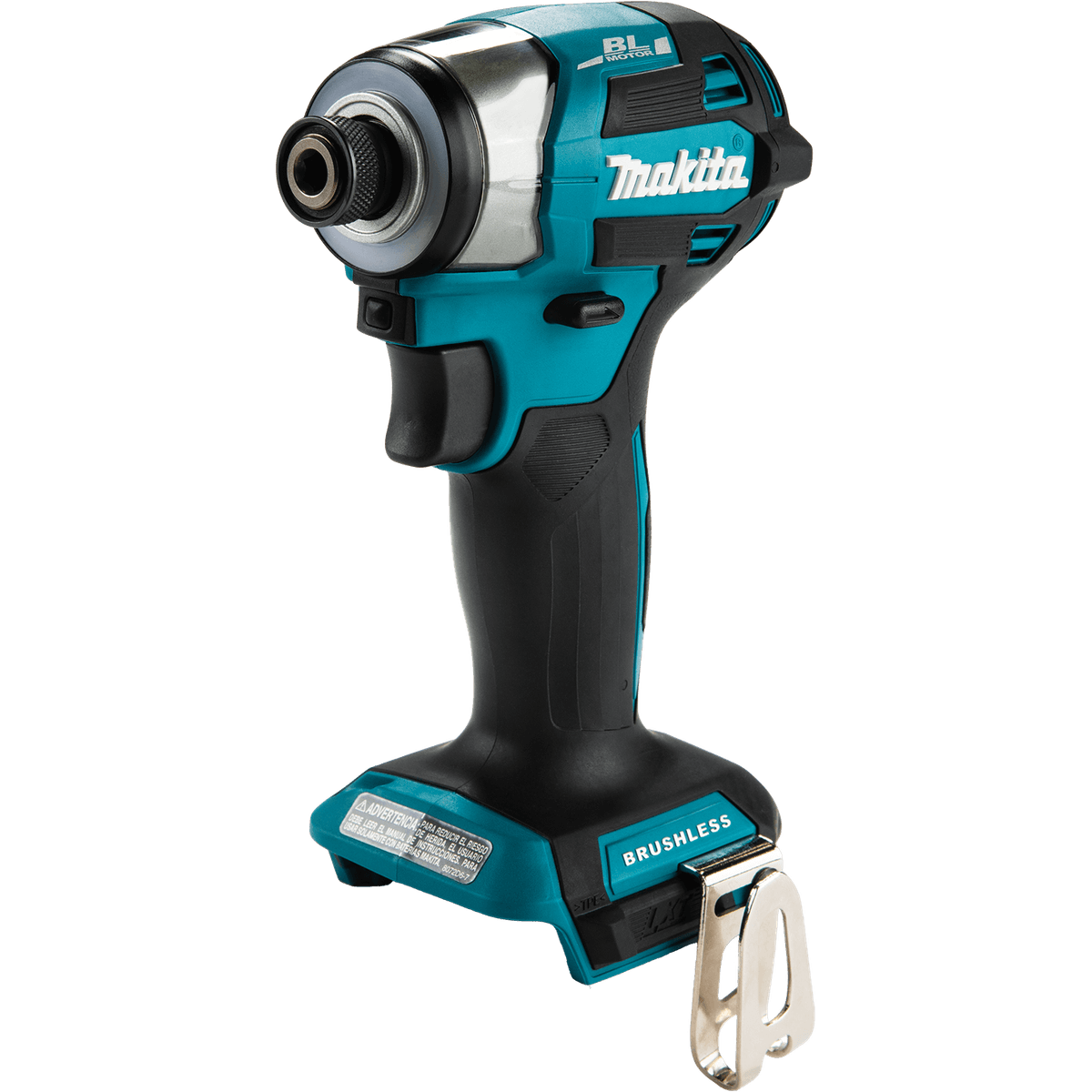
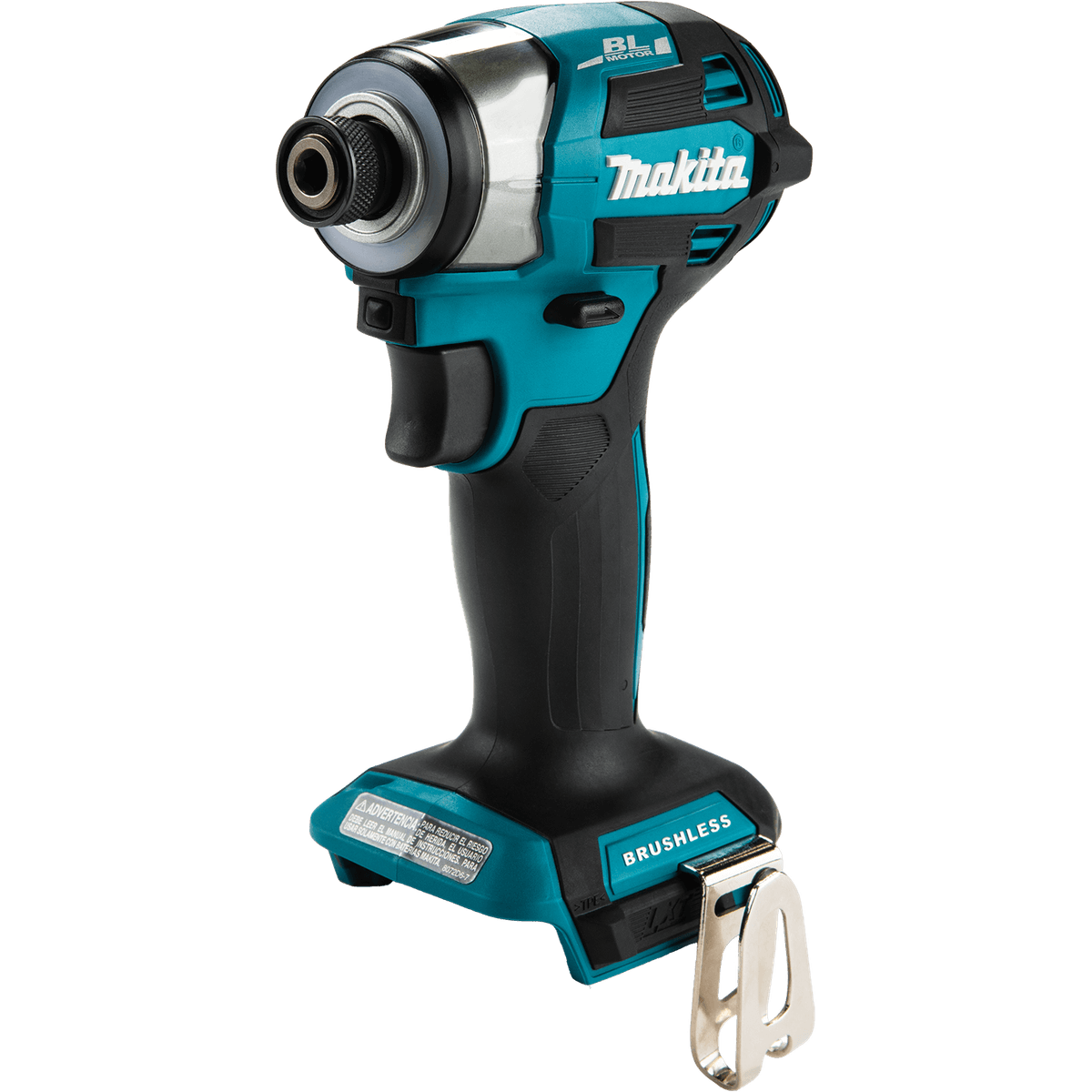
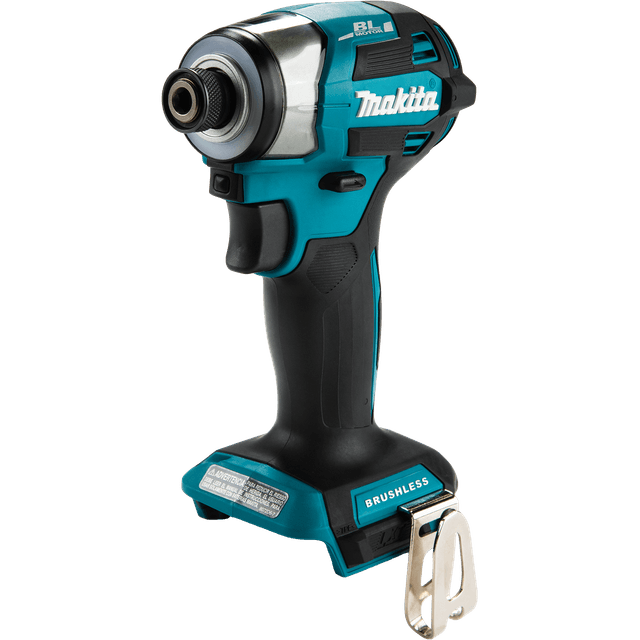
The Makita XDT20Z is built around a different philosophy than the Milwaukee: rather than maximizing peak torque, Makita has focused on intelligent torque control through their Quick-Shift Mode. This system detects when a fastener is approaching full seating and automatically shifts to a lower-speed, lower-torque mode to prevent over-driving, cam-out, and surface damage. In practice, it's the best fastener control system in this class in this class of tool.
The compact 4-1/2-inch head is the first thing you notice when you pick this up after holding the Milwaukee. Makita does not chase peak torque at all costs; the tool is built for balance, control, and clean fastening. The Makita LXT platform is known for its fit and finish, and the XDT20Z delivers on that reputation. The housing is solid, the trigger action is smooth, and the four-speed selector clicks positively through each position.
The LED light ring around the Makita nose reduces shadow more effectively than older single-LED layouts. For finish carpentry in darker spaces -- inside cabinets, under counters, in attic framing -- this lighting difference matters. The 4-1/2-inch head length is essentially identical to the Milwaukee at 4.59 inches, so both tools access the same tight spaces.
Where the Makita shows its limitation is on demanding fastener scenarios -- driving 4-inch lag bolts into treated lumber, running structural screws through multiple layers of LVL, or anything where you need sustained torque rather than precision. The 1,590 in-lbs ceiling is real, and on tough material the Makita works noticeably harder than the Milwaukee. For a framing carpenter or structural installer, that torque gap is significant.
The Milwaukee 2953-20 is genuinely overkill for everyday homeowner use. If you're assembling furniture, hanging curtain rods, and doing light home repairs, you're carrying an extra pound and paying a premium for 400 in-lbs of torque you'll almost never need. The Milwaukee also lacks a built-in bit holder, which is a small but recurring annoyance when you're switching between screw types throughout the day. And the noise level at full speed makes the Milwaukee unpleasant to use for extended sessions in enclosed spaces.
The Makita XDT20Z's Quick-Shift Mode, while excellent for precision work, can occasionally feel like it's holding you back when you want to drive a fastener fast and hard. The mode detection isn't always perfectly calibrated to the material, and there are scenarios where you want full torque delivered consistently rather than having the tool decide to back off. The 1,590 in-lbs ceiling also means this tool isn't the right choice for anyone whose primary use case involves structural fasteners, deck ledger bolts, or any regular heavy-duty application.
Which One Should You Buy
Trade professionals -- framers, electricians, plumbers, general contractors -- should default to the Milwaukee 2953-20. The 2000 in-lbs torque and 4-speed control give you a tool that handles every fastener scenario from delicate cabinet screws to structural lags without swapping tools. The auto-stop mode reduces damaged fasteners and material, and the M18 platform is the most widely used professional cordless system in North America.
Finish carpenters, cabinet installers, and woodworkers who spend most of their time on precision fastening should seriously consider the Makita XDT20Z. The Quick-Shift Mode is genuinely the best fastener control system in this class, and the compact head and LED light ring pay dividends over a full workday of overhead and tight-space installation. If you're already in the LXT ecosystem, this is the obvious choice.
For homeowners and DIYers who want a single impact driver to handle everything from deck building to interior trim, the Milwaukee's torque ceiling gives you more headroom. You may not need 2000 in-lbs often, but it's better to have it and not need it than to be fighting your tool on the rare occasion when you do.
If you're brand new to either platform and choosing your first 18V tool, consider the battery ecosystem size. Milwaukee's M18 platform is broader in the professional trade segment. Makita's LXT platform is one of the most extensive 18V systems ever built, with over 250 compatible tools. Either is a strong long-term investment.
Frequently Asked Questions
Is the Milwaukee M18 FUEL 1/4" Hex Impact Driver better than the Makita 18V LXT Quick-Shift Mode Impact Driver?
It depends on your priorities. The Milwaukee M18 FUEL 2953-20 excels at best-in-class 2,000 in-lbs torque for heavy structural and trade work. The Makita XDT20Z stands out for Quick-Shift Mode that reduces over-driving on delicate fasteners, plus a compact 4-1/2-inch head and LED light ring for precision work. Both are solid choices -- the right pick depends on whether you prioritize power or precision.
No. Milwaukee and Makita use proprietary battery platforms that are not cross-compatible. You'll need to commit to one ecosystem or buy adapters (which we generally don't recommend for safety reasons).
Which impact driver is better for a homeowner vs. a professional?
For homeowners and weekend warriors already in Makita LXT, the XDT20Z is the more forgiving precision pick because Quick-Shift Mode helps prevent overdriving. Professionals who drive hundreds of structural fasteners daily will appreciate the Milwaukee's torque headroom and durability under sustained heavy use.
Milwaukee tools are built for professional-grade durability and performance. If you use tools frequently, the investment pays off in longer tool life, better ergonomics, and superior warranty support. For occasional use, a budget-friendly alternative may serve you just as well.
What is Makita Quick-Shift Mode and does it actually work?
Quick-Shift Mode is Makita's fastener control technology that automatically detects when a screw is approaching full seating and shifts to a lower-torque, lower-speed mode to prevent over-driving and cam-out. In my testing it genuinely works -- I had measurably fewer stripped screw heads and over-driven fasteners compared to the Milwaukee in equivalent tests on trim and cabinet work. It takes a little getting used to if you're accustomed to full-torque impact drivers, but the precision payoff is real.
How does the compact-head difference affect real-world use?
Both drivers are compact, but the Makita's 4-1/2-inch head and LED light ring make it easier to place fasteners in cabinets, joist bays, and dark corners. For framing or rough-in tasks where you're mostly driving screws at waist level, Milwaukee's torque matters more than the small size difference.