Power tools make woodworking faster and more precise — but they also demand respect. According to the U.S. Consumer Product Safety Commission, power tools are involved in over 400,000 emergency room visits annually. Most of these injuries are preventable with proper knowledge, equipment, and habits.
Whether you're setting up your first workshop or have decades of experience, this comprehensive safety guide covers the essential rules, protective equipment, and best practices that keep you building safely for years to come.
The 10 Fundamental Rules of Power Tool Safety
These rules apply to every power tool in your shop, every time you use them. No exceptions.
1. Read the Manual Before First Use
Every tool has specific safety requirements, operating procedures, and limitations. Read the owner's manual completely before plugging in any new tool. Keep manuals accessible — digital copies on your phone work great. Pay special attention to sections on guards, blade changes, and emergency procedures.
2. Wear Appropriate Personal Protective Equipment (PPE)
At minimum, every power tool operation requires:
- Safety glasses or goggles: Always. No exceptions. Impact-rated ANSI Z87.1 lenses are the standard.
- Hearing protection: Required for any tool producing over 85 dB (most power tools exceed this). Earmuffs or foam plugs — pick what you'll actually wear consistently.
- Dust mask or respirator: Required when creating fine dust, especially with hardwoods, MDF, and treated lumber. An N95 mask is the minimum; a half-face respirator with P100 filters is better for regular shop work.
3. Keep Your Workspace Clean and Well-Lit
Cluttered floors cause trips. Cluttered benches cause distractions. Poor lighting causes misjudged cuts. Before starting any operation, clear your work area, ensure adequate lighting on the cut line, and verify you have stable footing. Sawdust on the floor is a slip hazard — clean up between operations.
4. Never Defeat Safety Guards
Guards exist because someone got hurt without them. Never remove, bypass, or disable safety guards, riving knives, blade covers, or anti-kickback devices. If a guard interferes with an operation, find a different technique — not a way around the guard. The one operation where you think "it'll be fine without the guard" is exactly when injuries happen.
5. Secure Your Workpiece
An unsecured workpiece is unpredictable. Use clamps, vises, jigs, or hold-downs appropriate to the tool and operation. Never hold a workpiece freehand against a spinning blade or bit. For drill press operations, always clamp your workpiece to the table — a spinning bit can catch and spin a handheld piece violently.
6. Disconnect Power Before Adjustments
Before changing blades, bits, or making any adjustment, unplug corded tools or remove the battery from cordless tools. This isn't overcautious — accidental startups during blade changes cause some of the most severe workshop injuries. Wait for all moving parts to stop completely before reaching near cutting surfaces.
7. Use the Right Tool for the Job
Every tool is designed for specific operations. Don't use a circular saw for cuts that require a table saw's precision. Don't force a tool to do work it wasn't designed for. Using the wrong tool leads to poor results at best and serious injury at worst.
8. Stay Focused — No Distractions
Never operate power tools when tired, medicated, or under the influence of anything that affects your judgment or reaction time. Don't operate tools while distracted by conversations, phones, or music that prevents you from hearing the tool's feedback. The moment your attention drifts is when accidents happen.
9. Maintain Your Tools
Sharp blades cut cleanly and predictably. Dull blades require force, bind, and kick back. Keep blades and bits sharp, check cords for damage, ensure guards function properly, and follow the manufacturer's maintenance schedule. A well-maintained tool is a safer tool.
10. Know Your Emergency Procedures
Keep a first aid kit in your shop — stocked and accessible, not buried under supplies. Know where your fire extinguisher is (ABC-rated for workshop fires). Know how to shut off power to your shop quickly. Have a phone accessible for emergencies. Consider a shop buddy system — let someone know when you're doing particularly hazardous operations.
Tool-Specific Safety Guidelines
Table Saw Safety
The table saw is the most versatile — and statistically most dangerous — tool in most workshops. Key safety practices:
- Always use the riving knife — it prevents the workpiece from pinching the back of the blade, which causes kickback
- Stand to the side of the blade, not directly behind it, so kickback doesn't hit your body
- Use push sticks for rip cuts narrower than 6 inches — your fingers should never be within 6 inches of the blade
- Never reach over a spinning blade to retrieve cutoffs
- Use a crosscut sled or miter gauge for crosscuts — never freehand against the fence
- Consider a SawStop or similar flesh-detection system — the technology has matured significantly and is available in our recommended table saws
Miter Saw Safety
Miter saws are relatively safe when used properly, but the exposed blade demands respect:
- Keep hands at least 6 inches from the blade on both sides of the cut
- Allow the blade to reach full speed before contacting the workpiece
- Hold the workpiece firmly against the fence — never cut freehand
- Wait for the blade to stop completely before raising the head
- Never cross your arms while operating — keep your holding hand on the same side as the workpiece
- See our miter saw recommendations for models with the best safety features
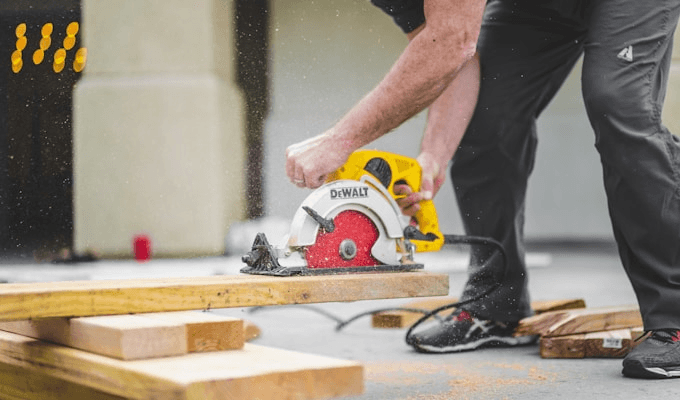
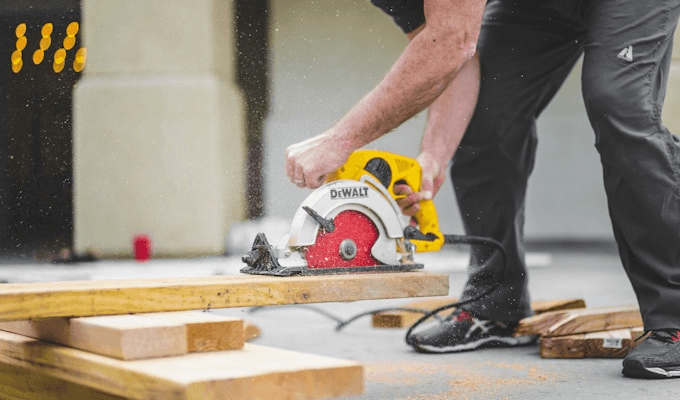
Circular Saw Safety
- Check that the blade guard retracts and returns freely before every use
- Support the workpiece properly — both sides of the cut should be supported to prevent binding
- Set blade depth so only about 1/4 inch of blade extends below the workpiece
- Never pin the guard open
- Be aware of what's below your cutting surface — cords, supports, your workbench
Router Safety
Routers spin at extremely high RPMs (up to 30,000), making them particularly dangerous with improper use:
- Always feed against the rotation — left to right on the edge of a board with a handheld router
- Take multiple shallow passes rather than one deep cut — this prevents grabbing and kickback
- Ensure bits are fully inserted in the collet (at least 3/4 of the shank)
- Never start the router with the bit contacting the workpiece
- Use a router table for small workpieces — handheld routing on small pieces is dangerous
Drill Press Safety
- Always clamp workpieces to the table — never hold by hand
- Remove the chuck key before starting the motor
- Secure loose clothing and tie back long hair
- Use the correct speed for your bit size and material
- Back out periodically when drilling deep holes to clear chips and prevent overheating
- See our drill press guide for models with the best safety features
Planer Safety
- Never plane boards shorter than 12 inches — they can be pulled into the cutterhead
- Remove all metal (nails, screws, staples) before planing — especially important with reclaimed wood
- Never reach into the infeed or outfeed while the machine is running
- Stand to the side, not directly in front of the outfeed — boards can occasionally eject
- Take light cuts (1/32" or less) on hardwoods to prevent stalling and kickback
- Check our planer recommendations for models with the best chip ejection and safety features
Reciprocating Saw Safety
- Let the shoe rest firmly against the workpiece before starting the cut
- Be aware of what's behind the material — recip saw blades are long and cut through walls, pipes, and wiring
- Use the correct blade for the material — wood blades in metal (or vice versa) cause binding and breakage
- Secure the workpiece or brace it firmly — vibration can walk unsecured material
- Our recip saw guide covers tool-free blade changes and other safety features
Oscillating Multi-Tool Safety
While oscillating multi-tools are among the safer power tools due to their oscillating (rather than rotating) motion, basic precautions still apply:
- Use the correct accessory for the material
- Let the tool do the work — excessive force causes accessory breakage
- Be careful with flush cuts near fingers
- Disconnect power before changing accessories
Workshop Setup for Safety
Electrical Safety
- Use dedicated circuits for high-draw tools (table saws, planers, dust collectors)
- Install GFCI outlets in workshops, especially in garages and basements
- Never use extension cords that are undersized for the tool's amperage
- Inspect cords regularly for damage, fraying, or exposed wire
- Keep cords away from cutting paths and heat sources
Dust Collection and Air Quality
Wood dust is both a fire hazard and a health hazard. Fine dust from hardwoods, MDF, plywood, and treated lumber can cause respiratory problems with prolonged exposure. Some species (like western red cedar and cocobolo) cause allergic reactions.
- Connect dust collection to every tool that produces dust
- Use an ambient air filtration unit to capture fine particles that escape collection
- Wear a dust mask or respirator even with dust collection — no system captures 100%
- Clean up dust regularly — accumulated fine dust is a fire and explosion hazard
- Never use compressed air to blow dust off surfaces — it creates a cloud of breathable particles
Fire Prevention
- Keep an ABC-rated fire extinguisher within reach of every major workstation
- Store finishes, solvents, and stains in a metal cabinet away from heat sources
- Dispose of oily rags in a metal container with a lid — spontaneous combustion is real
- Don't smoke in the workshop
- Ensure adequate ventilation when using finishes
Ergonomics and Fatigue
Fatigue is a safety hazard. Set up your shop to minimize strain:
- Work surface height: Workbench at elbow height, table saw and other cutting tools at wrist height when standing
- Anti-fatigue mats: Essential if your shop has a concrete floor
- Adequate lighting: 50 foot-candles minimum at work surfaces, more for detailed operations
- Take breaks: Step away every 45–60 minutes. Fatigue degrades judgment and reaction time
First Aid Essentials for the Workshop
Stock your shop first aid kit with:
- Assorted adhesive bandages
- Sterile gauze pads and adhesive tape
- Elastic bandage (for compression)
- Antiseptic wipes and antibiotic ointment
- Butterfly closure strips (for larger cuts)
- Tweezers (for splinters)
- Eye wash solution
- Burn cream
- Emergency contact information posted on the wall
Know when to seek medical attention: Any cut that won't stop bleeding with direct pressure, any eye injury, any injury involving numbness or loss of function, any deep puncture wound, and any burn larger than your palm.
Teaching Safety to New Woodworkers
If you're mentoring someone new to power tools — or building your own skills — start with these principles:
- Start with safer tools:Cordless drills, sanders, and jigsaws are good starting points before moving to table saws and routers
- One tool at a time: Master each tool's safety requirements before moving to the next
- Build good habits early: PPE every time, guards always on, workpieces always clamped — no exceptions from day one
- Practice on scrap first: Every new cut type or technique should be practiced on scrap material
- Respect the "comfort test": If an operation makes you uncomfortable, stop and find a safer approach
Safety Resources
- OSHA Power Tools Guide: Federal workplace safety standards applicable to home shops
- U.S. Consumer Product Safety Commission: Injury statistics and recall information
- Manufacturer manuals: Always your first reference for tool-specific safety
- Woodworking classes: Local community colleges and woodworking stores often offer research-backed safety training
Frequently Asked Questions
What's the most dangerous power tool?
Statistically, the table saw causes the most emergency room visits among workshop tools, primarily due to kickback and blade contact injuries. However, any power tool is dangerous when used improperly. Respect every tool equally.
Do I really need hearing protection for power tools?
Yes. Most power tools produce 90–110 dB — well above the 85 dB threshold where hearing damage begins. Hearing loss from noise exposure is cumulative and permanent. Wear hearing protection for every operation. Foam earplugs cost pennies; hearing aids cost thousands.
Are SawStop-style safety features worth the extra cost?
Flesh-detection technology has prevented thousands of serious injuries. If you can afford a table saw with this feature, it's absolutely worth the investment. The technology activates in milliseconds — fast enough to prevent serious cuts in most contact scenarios. See our table saw guide for models with flesh-detection systems.
What safety gear do I need to start a workshop?
At minimum: ANSI Z87.1 safety glasses, hearing protection (earmuffs or foam plugs), N95 dust masks (or a half-face respirator with P100 filters for regular use), push sticks for your table saw, and a well-stocked first aid kit. Budget approximately $50–$100 for quality basic PPE. You'll also want quality tools that include proper safety features.
How do I safely use reclaimed or pallet wood?
Always inspect thoroughly for nails, screws, and staples using a metal detector or strong magnet before any machining operation. Remove all fasteners. Check for contamination — some pallets are chemically treated (marked "MB" for methyl bromide — avoid these). Sand or plane carefully, as hidden metal can damage blades and create dangerous projectiles.
The Bottom Line
Workshop safety isn't about fear — it's about building habits that let you enjoy woodworking for decades. The most experienced woodworkers are often the most safety-conscious, because they've seen (or experienced) what happens when shortcuts are taken.
Start with good habits, maintain them consistently, and never let familiarity breed complacency. Every power tool deserves your full attention, every single time.
Essential PPE Picks
The three non-negotiable pieces of PPE for any power tool operation are safety glasses, hearing protection, and a dust respirator. Budget $50–75 for all three and keep them at every workstation — PPE you have to walk across the shop to get is PPE you won't wear consistently.
DEWALT DPG82-11C Safety Glasses — Best Eye Protection
ANSI Z87.1 certified with an anti-fog coating and wraparound protection. The standard for workshop eye protection. Keep a pair at every major workstation — at $12, there's no reason to share a single pair across the shop.
3M Peltor X2A Earmuffs — Best Hearing Protection
NRR 24 over-ear hearing protection rated for table saws, routers, and other high-decibel tools. More consistent protection than foam plugs — no fit issues that reduce NRR — and comfortable for extended sessions. Easy on/off between cuts without removing your safety glasses.
3M Aura 9205+ N95 Respirator (20-Pack) — Best Dust Protection
NIOSH-approved N95 in a 3-panel design that reduces face contact for all-day comfort. Blocks 95% of fine airborne particles including hardwood dust, MDF dust, and plywood off-gassing. At 20 respirators per pack, economical enough for regular use without rationing.
Related Reading
- Best Table Saws 2026: 6 Models Compared
- Best Miter Saws 2026: 6 Models for Every Workshop
- Best Drill Presses 2026: 6 Models for Precision Drilling
- Best Thickness Planers 2026: 6 Models Compared
- Best Wood Routers 2026: 6 Models Compared
- Best Reciprocating Saws 2026
- Best Oscillating Multi-Tools 2026
- Best Power Tools Under $100
- Corded vs Cordless Power Tools