The 7 Tools Every Beginner Should Own (In This Order)
1. Cordless Drill/Driver
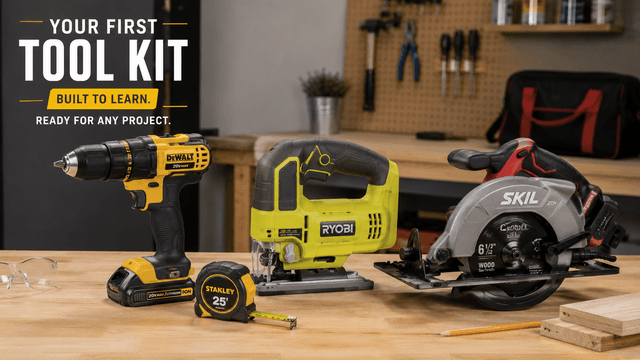
The single most important tool you can own. A cordless drill handles screws, anchors, shelf brackets, furniture assembly, and light drilling in one package. You will use it on almost every project. What to look for:- 18V or 20V -- anything under 12V will frustrate you on real jobs
- Brushless motor if your budget allows (longer motor life, better runtime)
- A kit that includes two batteries -- you do not want to stop mid-project waiting for a charge
- Variable clutch settings -- important for driving screws without stripping
2. Impact Driver
Most beginners skip the impact driver and regret it. An impact driver looks like a drill but works differently -- it uses rotational force bursts to drive long screws and lag bolts without stripping the head or wearing out your wrist. If you are building a deck, hanging cabinets, or doing any structural work, you need one. What to look for:- Same battery platform as your drill (so batteries are interchangeable)
- At least 1,500 in-lbs of torque
- Variable speed trigger
3. Circular Saw
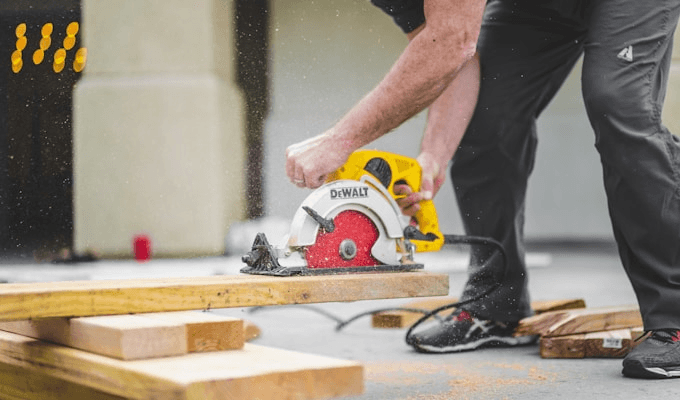
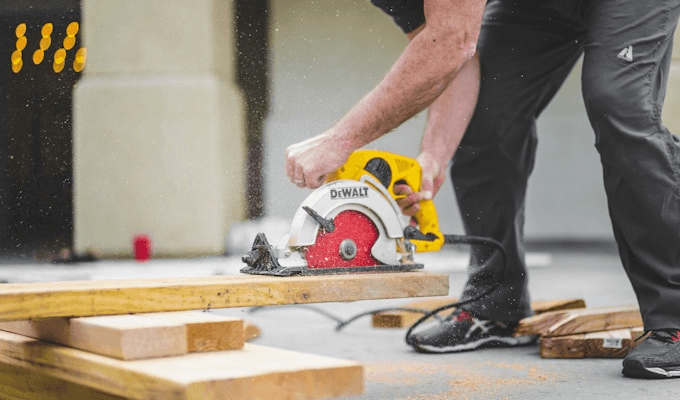
For cutting lumber, plywood, and sheet goods to length. A circular saw handles the straight cuts that a jigsaw cannot do efficiently. You need this before you can build anything from lumber or sheet goods. What to look for:- 6.5" or 7.25" blade -- 7.25" gives you more cutting depth for thicker material
- Cordless is convenient; corded gives more sustained power for heavy cutting days
- A good rip fence or guide rail (often sold separately -- worth it)
4. Jigsaw
For curved cuts, cutouts (sink holes, outlets, pipe access), and angled work a circular saw cannot do. Also great for cutting sheet goods in tight spaces where you cannot swing a circular saw. Not your first buy, but you will hit a project that requires one sooner than you expect. What to look for:- Orbital action setting -- faster aggressive cuts when needed
- Tool-free blade change -- saves time and frustration
- Variable speed trigger
5. Random Orbital Sander
For finishing wood surfaces, preparing for paint or stain, and removing old finishes. An orbital sander is cheap, easy to use, and saves hours of hand sanding. It is also one of the tools where budget models perform nearly as well as premium ones. What to look for:- 5" pad -- most sandpaper is made for this size
- Variable speed dial
- Dust collection port -- connect a shop vac and save your lungs
6. Oscillating Multi-Tool
The most underrated tool on this list. An oscillating tool cuts, sands, scrapes, and grinds in tight spaces nothing else reaches -- removing grout, cutting flush to a wall, trimming door jambs, removing caulk. Once you own one, you find uses constantly. What to look for:- Universal accessory fit (Starlock or universal adapter) -- most cheap tools lock you into one brand's blades
- Variable speed dial
- Cordless preferred -- you are usually using this in awkward positions
7. LED Work Light
Not a power tool in the traditional sense -- but every beginner underestimates how much lighting matters. A good LED work light prevents mistakes, reduces fatigue, and pays for itself on the first project. Battery-powered versions (same platform as your other tools) are the most flexible.Should You Buy a Combo Kit Instead?
If you are buying more than two tools at once, a combo kit almost always saves $100-$200 over individual purchases. Most beginner kits include a drill, impact driver, and circular saw with two batteries -- exactly what you need to start. Best budget combo kit -- Ryobi ONE+ 6-Tool Kit (PCL1600K2) The standard brushed kit includes a drill, impact driver, circular saw, reciprocating saw, multi-tool, and light, plus a 1.5Ah battery, a 4.0Ah battery, a charger, and a bag. Check the current price before buying; this is not an HP brushless kit. Best step-up combo kit -- DeWalt 20V MAX XR 7-Tool Kit (check current retailer pricing) Better motors, better build quality, and access to the 250+ tool DeWalt 20V MAX ecosystem. If you want tools that will grow with you into more serious work, start here. See our full combo kit guide for detailed kit breakdowns across all major platforms.Budget Tiers: What You Get at Each Level
| Budget | What You Can Do | Recommended Starting Point | |--------|-----------------|---------------------------| | Under $150 | Assemble furniture, hang shelves, drive screws | Drill/driver kit only | | $300-$350 | Add cutting and driving -- handle 70% of home projects | Combo kit (Ryobi 3-tool) | | $400-$600 | Full DIY capability -- decks, shelving, repairs, renovation | Step-up combo kit (DeWalt or Milwaukee) | | $800+ | Professional-grade tools with long-term platform investment | Milwaukee M18 FUEL build-out |Which Brand Should Beginners Choose?
Ryobi ONE+ is the right choice if you are on a tight budget or not sure how serious you will get. It has the lowest entry price, a huge tool ecosystem (280+ tools), and good enough performance for most home projects. DeWalt 20V MAX is the right choice if you want quality that holds up and a platform with strong retail availability. It is a step up in build quality and motor performance from Ryobi. Mid-range price. Milwaukee M18 is the right choice if you want the best motor performance and plan to use tools heavily. Higher price, but the tools last longer under hard use and the M18 FUEL line is the professional standard. Makita 18V LXT is a strong option if you prioritize ergonomics and quieter operation. Excellent build quality, similar price to DeWalt. For most beginners: start Ryobi if budget is the priority, start DeWalt if you want to invest in something you will not outgrow.See our full Ryobi vs DeWalt comparison for a detailed breakdown of both platforms.What to Skip as a Beginner
Some tools are commonly purchased early and regret: Miter saw -- great tool, but a circular saw with a good fence handles most beginner cuts. Buy a miter saw when you hit a real need (lots of trim work, repetitive angle cuts). Corded drill -- almost no reason to buy a corded drill in 2026. Battery technology has caught up and corded drills are not noticeably more powerful for typical use. Cheap no-name combo kits under $100 -- the batteries fade fast, the motors strip easily, and the tools are not repairable. A Ryobi kit costs more but lasts years longer. This is not the place to save money. Rotary tool (Dremel) -- useful for hobby and detail work, not useful for home projects. Buy the oscillating multi-tool first.What to Buy First
If you can only buy one tool today: the cordless drill/driver. It is the tool you will reach for on every project until you build out the full kit. If you can buy two: add the impact driver. Same battery, completely different use case. Together they cover 80% of fastening and assembly work. If you can buy three: add the circular saw. Now you can cut lumber and sheet goods to size and build real things. From there, the jigsaw, sander, and oscillating tool fill in the gaps as specific projects require them.Frequently Asked Questions
Which power tool should I buy first as a beginner?
A cordless drill/driver is the most versatile starter tool, handling drilling, fastening, and shelf mounting. It covers more tasks than any single other tool and sees daily use in both woodworking and home repairs. After the drill, adding an impact driver and circular saw gives you the core of a functional beginner toolkit without overspending.
Is cordless or corded better for a beginner?
Cordless is better for almost all beginner use. Modern 18V and 20V batteries provide more than enough runtime for typical home projects, and the freedom to move without a cord makes it easier to work in tight spaces and awkward angles. Corded tools make sense for heavy sustained use -- like cutting large amounts of lumber -- but that is rarely where beginners start.
Should I buy one brand or mix tools from different manufacturers?
Buy one brand if you can -- shared batteries are a real convenience and cost advantage. Owning three Ryobi tools with two batteries is much better than owning three different-brand tools that each need their own charger and battery type. That said, the best tool for a specific job sometimes comes from a different brand. Once you have a core kit in one platform, mixing for specialty tools (like a corded jigsaw or a specific brand's oscillating tool) is fine.
What is a realistic budget for beginner power tools?
A quality cordless drill/driver kit runs $79-$129 depending on brand. A three-tool combo kit (drill, impact driver, circular saw) runs $200-$350. For a complete functional toolkit with all seven essentials, expect $500-$700 buying good tools individually, or $300-$550 via a combo kit that covers the core three. Accessories (bits, blades, sandpaper) add another $50-$100 to get started.
Do I need a brushless motor as a beginner?
Not required, but worth the upgrade when the price difference is small. Brushless motors run cooler, last longer, and give better battery runtime -- which matters when you are learning and stopping and starting frequently. Most mid-range tools from Ryobi, DeWalt, and Milwaukee now come brushless as standard. If two options are close in price and one is brushless, choose brushless.