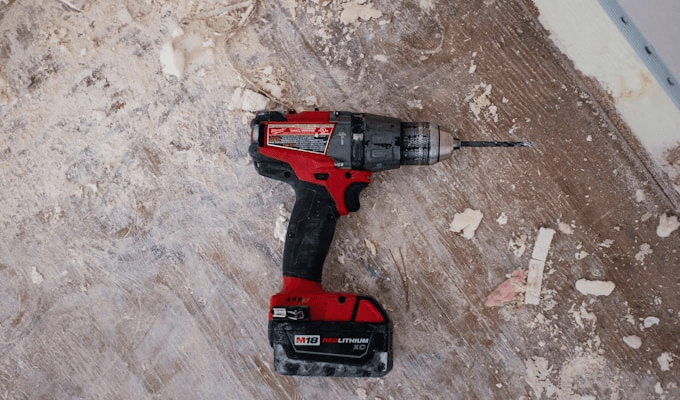
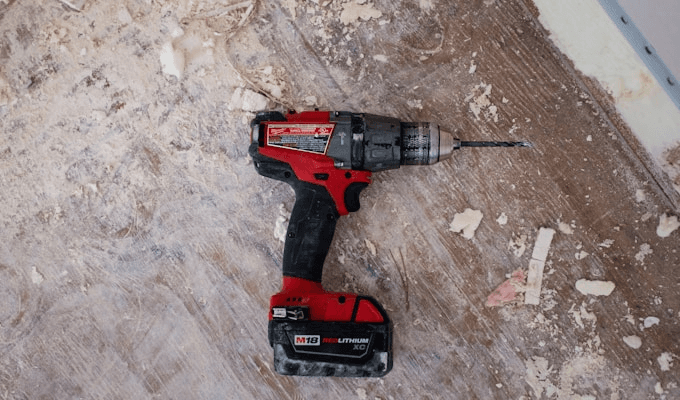
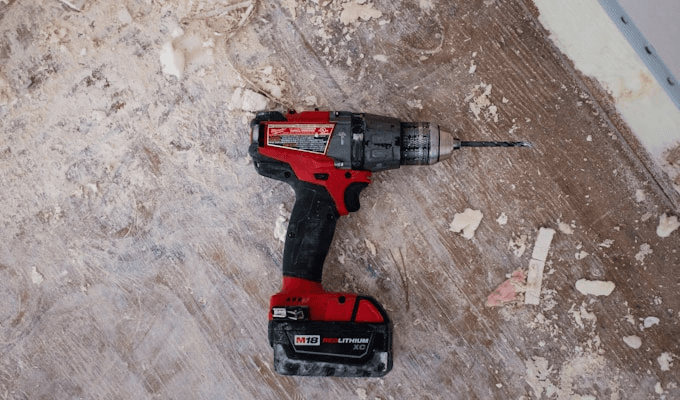
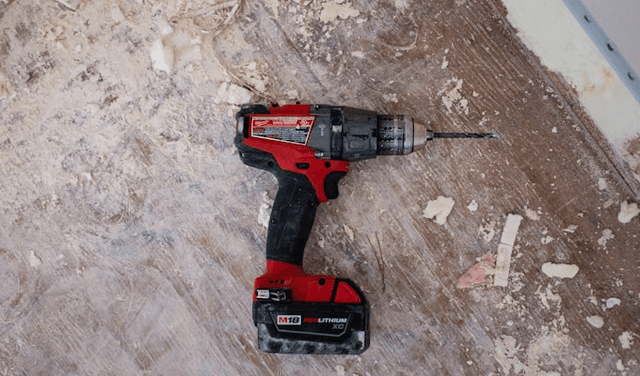
Most homeowners need 300-400 in-lbs for furniture and shelving. Contractors need 600+ for structural work. Here is how to match torque spec to your actual tasks.
Current recommendations are research-backed. Each article identifies its evidence, sources, update date, and limitations. No current guide is presented as hands-on tested. As an Amazon Associate, ToolShed Tested earns from qualifying purchases. When you buy through our links we may earn a commission -- at no extra cost to you. Product links and article details last reviewed March 25, 2026. Full disclosure.
Drill Torque Explained: A Practical Guide
Torque is the rotational force a drill applies to a fastener or bit. More torque means more ability to drive large screws, bore through hard materials, and power through resistance without stalling. But more isn't always better -- too much torque and the wrong clutch setting can snap screws, strip heads, or damage workpieces. Owners report seeing plenty of stripped cabinet hinges and snapped deck screws from people running drills with the clutch cranked all the way up, assuming that maximum torque is always the goal. It isn't.
The real skill with a drill isn't finding the most powerful one -- it's learning to match torque output to the task at hand. A well-set clutch on a 500 in-lb drill is more useful and produces better results than a clutchless 1,000 in-lb drill for most shop work.
Understanding Torque Ratings
Drill torque is measured in inch-pounds (in-lbs) or Newton-meters (Nm). Manufacturers typically list maximum torque, which is what the drill delivers in its lowest speed setting with the clutch fully open. This maximum figure represents what the drill can do under ideal conditions, not what it will do on every task.
- 1 Nm ≈ 8.85 in-lbs
- A drill rated at 60 Nm delivers roughly 530 in-lbs
There's also a distinction between hard torque and soft torque specifications. Hard torque (sometimes called max torque) is measured with the clutch bypassed in drill mode. Soft torque is what the clutch setting delivers at its maximum position. Many manufacturers list the higher hard torque number, which can be misleading if you're comparing drills for screw-driving work where the clutch is always engaged.
Torque Requirements by Task
These ranges represent the minimum torque needed to complete tasks reliably, not the maximum you should use. A 500 in-lb drill can assemble furniture just as well as a 200 in-lb drill -- the difference is that the 500 in-lb drill can also handle the harder tasks when you need it. The clutch setting determines how much of that available torque actually reaches the fastener.
What the table doesn't capture is how task difficulty varies within each category. Driving 2-inch drywall screws into a steel stud requires considerably more torque than driving them into pine. Drilling a 3/8-inch hole through a single 2x4 is much easier than drilling the same size hole through a stacked LVL beam. When in doubt, estimate toward the higher end of your typical task category.
Pro Tip:For most homeowners, a drill/driver in the 400-600 in-lbs range covers 95% of tasks. If you regularly drive 3-inch deck screws or lag bolts, pair it with a dedicated impact driver. The impact driver's hammering action makes short work of long fasteners without the torque reaction force that strains your wrist with a standard drill.
12V vs 18V/20V: How Voltage Affects Torque
Higher voltage generally means more available torque, but it's worth understanding why -- and where the correlation breaks down. Voltage determines how much power the battery can deliver to the motor. More voltage means the motor can develop more force before stalling. But motor design, gearing, and efficiency also matter significantly.
- 12V compact drills: 200-350 in-lbs -- great for light to medium tasks, easy on the wrist. The lighter weight of 12V tools is a real advantage for overhead work and applications where you're drilling dozens of holes.
- 18V/20V standard drills: 400-750 in-lbs -- the sweet spot for most users. This range handles virtually every homeowner and handyman task, with enough overhead for occasional demanding jobs.
- 18V/20V premium drills: 750-1,200 in-lbs -- serious capability for pros. These drills can replace an impact driver for many lag bolt applications and handle large-diameter hole saws in hardwood without bogging.
Drill vs. Impact Driver Torque
Impact drivers deliver torque through rapid concussive blows rather than continuous rotation. A compact impact driver rated at 1,800 in-lbs doesn't exert continuous force like a drill at 500 in-lbs -- it delivers short bursts. This makes impact drivers better for driving fasteners but worse for precision drilling. The burst-style torque delivery is why impact drivers can drive long screws without the wrist-wrenching kickback that a drill produces under the same load. When a drill stalls under high torque, it transmits that rotational force directly to your wrist. An impact driver simply increases its impact frequency instead of stalling.
Why the Clutch Matters More Than Max Torque
A 20-position clutch lets you dial in exactly how much torque the drill applies before the clutch slips. This prevents snapping small screws, over-driving screws past flush, stripping screw heads, and wrist injuries from sudden kickback. The clutch is arguably the most important feature on a drill/driver for finish and woodworking applications -- it transforms a high-torque tool into one that can drive delicate fasteners precisely.
A drill with 600 in-lbs and a good clutch is more useful than one with 1,000 in-lbs and a vague, inconsistent clutch. When evaluating drills, pay attention to clutch quality: the settings should be evenly spaced, clearly detented, and consistent from setting to setting. Cheap clutches have imprecise settings that make repeatable results difficult.
Clutch Settings Explained: The Real Torque Control
The clutch is where you translate the drill's rated torque into controlled, practical results. Most drills have 15-25 clutch positions plus a drill mode. Understanding how to use the clutch properly takes a drill from a blunt instrument into a precision tool.
How to Set the Clutch for Different Materials
The basic principle: lower clutch numbers for delicate materials and small screws, higher numbers for dense materials and larger fasteners. But the right setting varies by screw size, material density, and how far you want the screw driven.
Start lower than you think you need and increase until you find the setting that drives the screw fully without over-driving. For a specific screw and material combination, make a test drive in scrap first. Once you find the right setting, mark it or remember it for that task -- consistency is the goal. Changing clutch settings every few screws defeats the purpose.
Soft materials (foam insulation board, balsa, thin ply): Start at clutch settings 2-5. These materials require almost no torque, and even low clutch settings can over-drive small screws.
Softwood (pine, cedar, spruce) with standard wood screws: Settings 8-14 are typical. The wide range reflects the variation in screw length and pilot hole size. Larger screws and no pilot holes need higher settings.
Hardwood (oak, maple, cherry): Settings 12-20 or higher, with a pilot hole. Hardwood resists screw penetration significantly -- without a pilot hole, even the highest clutch setting may not drive the screw fully. Pilot holes are not optional in hardwood; they're necessary for both screw installation and preventing wood splitting.
Drywall screws into studs: Settings 5-10. Drywall screws have fine threads designed to be driven to a specific depth (just dimpling the paper, not tearing it). A proper drywall clutch setting produces consistent dimples across an entire sheet without adjusting. Many dedicated drywall drivers have a depth-stop instead of a clutch for this reason.
Torque Mode vs Drill Mode
The clutch ring on your drill has two fundamentally different modes: numbered torque positions and drill mode (usually indicated by a drill bit icon, sometimes with a hammer icon for hammer drill mode). Understanding when to use each makes a significant difference in both work quality and tool longevity.
Torque mode (the numbered positions): The clutch is active. When the drill reaches the set torque level, the clutch slips, making a clicking noise and preventing additional torque from reaching the bit or fastener. Use torque mode for all screw driving. The clutch protects both the screw and the workpiece from over-driving damage.
Drill mode (the drill bit symbol): The clutch is bypassed. The motor applies maximum available torque directly to the chuck without any slip. Use drill mode for boring holes -- the clutch would otherwise trigger prematurely as the bit encounters resistance. In drill mode, all the drill's rated torque is available, which is why the tool feels more powerful in this setting.
A common mistake is leaving the drill in high clutch or drill mode for screw driving because it "drives faster." This works until you over-drive a screw, strip a head, or snap a small fastener. Taking 10 seconds to set the clutch correctly saves you from those failures consistently.
When to Bypass the Clutch
Beyond drilling holes, there are specific screw-driving situations where bypassing the clutch or using the highest torque setting makes sense. Lag bolt installation is one -- lag bolts in structural framing need to be driven fully home, and the resistance is so high that a clutch set for standard wood screws would slip before the bolt seats. For lag bolts, use the drill/driver in its highest clutch setting or drill mode, and switch to an impact driver for maximum efficiency.
Driving large deck screws (3 inches and longer) into dense hardwood composite decking is another case where high clutch settings or drill mode is appropriate, especially with a pilot hole. The goal is full screw seating without the clutch interrupting the drive at an intermediate depth.
Torque vs Speed: Understanding the Trade-Off
Torque and speed in a drill are inversely related within the same gear. This is fundamental physics -- the motor produces a fixed amount of power (watts), and power equals torque times rotational speed. To get more torque, you sacrifice speed. To get more speed, you sacrifice torque.
This is why drills have two-speed gearboxes. Speed 1 (low gear) multiplies torque at the cost of RPM -- useful for screw driving and large-diameter hole boring where you need rotational force, not raw speed. Speed 2 (high gear) maximizes RPM at the cost of torque -- useful for drilling small holes in soft materials where speed produces cleaner results and torque demand is minimal.
In practice, the rule is: use Speed 1 for driving fasteners and large bits, Speed 2 for drilling small holes in wood and soft materials. Drilling a 3/8-inch hole in hardwood benefits from Speed 1's extra torque. Drilling a 1/8-inch pilot hole in pine is faster and cleaner in Speed 2. Many experienced users keep the drill in Speed 2 for light work and consciously shift to Speed 1 when they feel the motor working hard -- that laboring sound is the drill telling you it needs more torque and less speed.
There's also a heat management angle to the torque/speed relationship. A drill motor generates heat proportional to the current it draws. High torque demand means high current draw, which means more heat. Running the drill in its lowest speed setting (maximizing geared torque) typically draws less current than running in high speed against significant resistance, because the gear reduction allows the motor to spin more easily. This is why proper speed selection extends both motor and battery life.
Practical Drill Buying Guide by Torque Need
Here's how to think about torque requirements based on your actual user profile -- not the most extreme scenario you might ever encounter, but your realistic mix of tasks.
The Occasional Homeowner (under 20 hours per year): A 12V compact drill in the 250-350 in-lb range is genuinely sufficient and has real advantages -- it's lighter, more maneuverable in tight spaces, and less fatiguing for overhead work. The DeWalt DCD701B, Milwaukee M12 2407-20, and Makita FD07 are all excellent in this category. You'll handle furniture assembly, hanging shelves, installing hardware, and drilling pilot holes with no limitations. The only tasks that will occasionally feel underpowered are driving long screws into dense hardwood and drilling large holes in thick stock -- both of which you can address with pilot holes and patience.
The Active Handyman (50-150 hours per year): An 18V/20V drill in the 500-700 in-lb range hits the sweet spot. This covers the full range of home improvement tasks including deck work, fence installation, drywall hanging, and occasional framing repairs without constant struggles. The DeWalt DCD791, Milwaukee 2803, and Makita XFD14 represent this category well. This is the tier where brushless motors make the most economic sense -- the runtime and durability advantages pay off meaningfully at this usage level.
The Working Contractor (300+ hours per year): A premium 18V/20V drill in the 750-1,200 in-lb range is the right investment. At this usage level, the performance difference between a mid-range and premium drill is felt every single day. Milwaukee M18 FUEL, DeWalt FlexVolt Advantage, and Makita XFD16 operate at this tier. Pair the drill with a dedicated impact driver -- even a high-torque drill is less efficient than an impact driver for sustained fastener driving, and professional work almost always involves enough screws to justify the impact driver investment.
FAQ
Is higher torque always better?
No. Higher torque gives you more capability for demanding tasks, but it also increases the risk of over-driving screws, splitting wood, and wrist strain. Buy for your typical use case, not the most extreme scenario.
What torque do I need for concrete?
For concrete, torque matters less than having a hammer drill function. The hammer mechanism does the real work of breaking through masonry. Most 18V hammer drills with 500+ in-lbs handle concrete anchors up to 1/2 inch.
Can I increase my drill's torque?
You can't change the motor, but you can use Speed 1 (low gear) to maximize available torque. Using sharp bits and pilot holes also reduces the torque required to complete a task.
Do torque ratings matter for drilling holes?
Yes, especially for large-diameter holes. A 2-inch hole saw in hardwood demands serious torque. For standard twist bit drilling (up to 3/8"), even a compact 12V drill has enough torque.
How does torque work in hammer drill mode?
In hammer drill mode, the tool adds a rapid in-and-out hammering motion to the normal rotation. This hammering action is what breaks up concrete and masonry -- the rotational torque alone isn't what drives the bit through rock. Most hammer drills apply between 10,000 and 50,000 hammer blows per minute (BPM), and the torque rating in hammer mode is typically similar to the drill's standard rotational torque. The key difference is that in hammer mode, the bit doesn't need to "cut" through the material in the traditional sense -- it fractures the material ahead of it with each impact. A drill with adequate torque and a good hammer mechanism (and the right masonry bit) will outperform a higher-torque drill with a weak hammer function every time in concrete work.
Cordless vs corded torque -- is there a real difference?
Modern 18V and 20V brushless cordless drills have largely closed the gap with corded tools for most applications. A premium cordless drill in the 750-900 in-lb range competes well with most corded drills under 7 amps. Where corded tools still hold an advantage is sustained high-torque output over extended periods -- corded tools don't fade as battery charge depletes, and they can sustain maximum torque output indefinitely without thermal buildup from high current draw. For production drilling or sustained heavy work (mixing mortar with a paddle, drilling dozens of large holes in series), a corded drill or corded right-angle drill maintains more consistent output. For most tasks in a workshop or on a job site where cordless convenience matters, a quality brushless cordless drill is the practical choice.
Does higher torque mean faster drilling?
Not necessarily. Drilling speed is primarily a function of RPM and bit sharpness, not torque. Higher torque means the drill can maintain its RPM against greater resistance without stalling -- but a drill with more torque than needed for a given task won't drill noticeably faster than one with just enough torque. Where torque matters for effective drilling speed is in large-diameter situations: a hole saw cutting a 2-inch hole in oak needs significant torque to prevent the motor from bogging down and stalling. In that case, more torque does translate to faster completion because the drill can maintain its RPM consistently throughout the cut. For typical small-diameter drilling in soft materials, bit sharpness and speed selection matter far more than raw torque numbers.