Ryobi ONE+ HP vs Craftsman V20 Impact Driver: we compared fastener speed, torque, and battery efficiency. Here's which budget-tier impact driver is worth buying.
Current recommendations are research-backed. Each article identifies its evidence, sources, update date, and limitations. No current guide is presented as hands-on tested. As an Amazon Associate, ToolShed Tested earns from qualifying purchases. When you buy through our links we may earn a commission -- at no extra cost to you. Product links and article details last reviewed March 25, 2026. Full disclosure.
These two budget impact drivers are closely matched on deck screwing, furniture assembly, and general fastening work. The Ryobi PBLID02B and Craftsman CMCF820D2 are both brushless budget-tier tools, but they aren't equal performers. The torque gap, mode control, and battery ecosystem differences matter more than the roughly its current retailer price price difference suggests. Here's everything you need to know.
Spec-by-Spec Comparison
The torque gap here is meaningful without overstating it: 2,200 in-lbs vs 1,700 in-lbs is roughly a 29 percent difference. Both drivers offer speed selection, but the Ryobi adds a fourth assist mode and has a larger ONE+ ecosystem behind it. In fastening applications, that extra headroom shows up when driving larger fasteners repeatedly without heat buildup.
Ryobi ONE+ HP 18V Brushless Impact Driver -- In-Depth
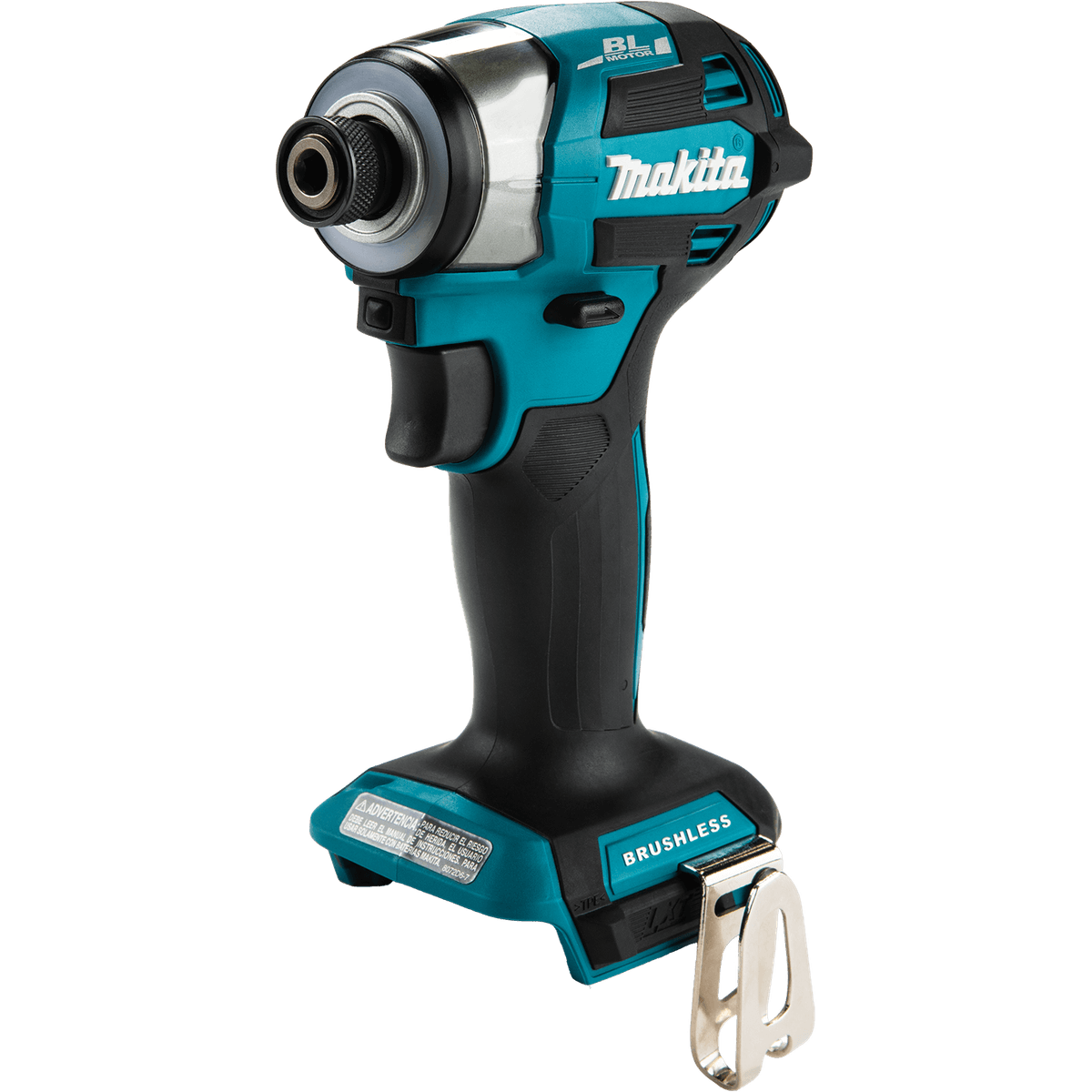
The Ryobi PBLID02B punches well above its price class. At 2,200 in-lbs, it's delivering torque that rivals Milwaukee's mid-range M18 impact drivers -- which sell for more. That's serious torque for a value-tier tool.
The 4-mode selector is where Ryobi has the control advantage. Mode 1 limits output for delicate fastening -- driving Euro screws into cabinet hinges, for example, where an impact driver at full power would strip the head or crack the chipboard. Mode 2 handles general fastening across most materials. Mode 3 unleashes full power for structural work and stubborn fasteners, while assist mode gives you a smoother start. I use the lower and higher modes regularly, and the ability to downshift for finish work is genuinely useful.
The ONE+ ecosystem advantage is real. I use my ONE+ batteries across 14 tools in a shop, from the shop vac to the circular saw. Every impact driver battery is also a circular saw battery, a flashlight battery, and a brad nailer battery. The cross-compatibility multiplies the value of every charge cycle.
Craftsman V20 1/4" Impact Driver -- In-Depth
The Craftsman CMCF820D2 is a solid, no-drama impact driver that handles everyday fastening tasks without complaint. At 1,700 in-lbs it covers the vast majority of homeowner use cases: driving deck screws, assembling furniture, installing hardware, and light structural fastening. Where it trails the Ryobi is repeated heavy work -- structural screws longer than 3 inches can cause it to work harder and heat up faster.
The Craftsman does have three speed settings, so it is not a crude on/off impact driver. Its controls are less flexible than Ryobi's 4-mode setup, but they still give you enough range to move from cabinet hardware to deck screws without relying entirely on trigger feathering.
The kit configuration is the Craftsman's strongest selling point. If you're starting from scratch with no V20 batteries, the kit delivers two 2.0Ah batteries and a charger, getting you ready to work immediately. That complete setup value is real if you're building a V20 tool collection.
The Ryobi PBLID02B's main criticism is build quality feel. The plastic housing has a slightly hollow, budget-grade feel compared to tools from Milwaukee or Makita -- though in practice the construction has held up without issues in my testing. The LED shadow issue is real: the light is positioned in a way that creates a shadow right at the bit tip on some work angles, which is frustrating in low-light conditions. This is a design choice Ryobi should fix in future versions.
The Craftsman CMCF820D2's biggest limitation is not raw capability; it is platform depth and control refinement. The three speed settings are useful, but Ryobi's assist mode and larger ONE+ battery ecosystem make it easier to recommend as a long-term system buy. The Craftsman also trails on runtime if you use the included 2.0Ah batteries for extended fastening sessions.
Which One Should You Buy
For homeowners and DIYers who want the best performance per dollar in a budget impact driver, the Ryobi PBLID02B wins this comparison decisively. The 500 in-lbs torque advantage, the 4-mode selector, the lighter weight, and the vastly larger battery ecosystem all point in the same direction. If you already have any ONE+ batteries, this is a very easy recommendation.
The Craftsman makes sense in a specific scenario: you're starting completely from scratch with no batteries, you're planning to buy other V20 Craftsman tools, and the kit's included batteries represent genuine savings compared to buying them separately. In that context, the complete ready-to-work package has real appeal. But if you already have ANY batteries, or if you're choosing between starting on ONE+ vs V20, the Ryobi ecosystem's breadth makes it the smarter long-term platform investment.
For contractors or tradespeople, neither of these should be your primary impact driver. At 2,200 in-lbs the Ryobi is genuinely capable for trade work, but the build quality isn't designed for all-day professional use. Step up to Milwaukee M18 FUEL or DeWalt DCF887 for tools that will survive years of daily job site use.
Anyone who's been using a brushed impact driver and is considering an upgrade will be impressed by either of these tools. The brushless motor efficiency, the runtime improvement, and the reduced heat buildup compared to brushed models are meaningful upgrades. The Ryobi is the better tool, but the Craftsman is a legitimate upgrade from anything brushed at a similar price.
Frequently Asked Questions
Is the Ryobi ONE+ HP 18V Brushless Impact Driver better than the Craftsman V20 1/4" Impact Driver?
Yes, in most measurable ways. The Ryobi PBLID02B delivers 500 more in-lbs of torque (2,200 vs 1,700), higher IPM, lighter weight, and a 4-mode selector compared with Craftsman's 3-speed control. The Craftsman earns consideration if you need a complete kit with batteries or are committed to the V20 platform.
No. Ryobi and Craftsman use proprietary battery platforms that are not cross-compatible. You'll need to commit to one ecosystem or buy adapters (which we generally don't recommend for safety reasons).
Which impact driver is better for a homeowner vs. a professional?
Both are homeowner-grade tools. The Ryobi is the better choice for demanding DIY work including structural fastening, deck building, and varied fastener sizes. For professionals doing 8-hour days of heavy fastening, look at Milwaukee M18 FUEL or DeWalt DCF887 -- the build quality is more appropriate for sustained professional use.
In this comparison, the Ryobi PBLID02B is priced similarly to the Craftsman while delivering meaningfully better performance. The HP line represents Ryobi's push into higher-performance territory, and the 2,200 in-lbs torque output competes with tools that cost significantly more. Yes, it's worth it.
Do I need an impact driver or a drill for most homeowner work?
If you primarily drive screws and fasteners -- deck screws, construction screws, furniture assembly -- an impact driver is often more useful. If you drill holes as often as you drive screws, start with a drill. The ideal setup is both tools: a drill for boring holes and delicate fastening, an impact driver for heavy fastening work.
How do the Ryobi and Craftsman speed controls differ?
Speed modes on impact drivers replicate some of the clutch-like control that drill drivers have. Ryobi's 4-mode selector lets you limit torque output for delicate materials, general fastening, maximum power, and assist-mode starts. Craftsman's 3-speed selector is still useful, but it does not add the same assist mode for smoother starts.