Ryobi and DeWalt target different buyers at very different price points. We compare battery ecosystems, tool quality, and long-term value so you can p
We buy and test our core review products; some buying-guide recommendations are research-backed and clearly labeled. As an Amazon Associate, ToolShed Tested earns from qualifying purchases. When you buy through our links we may earn a commission -- at no extra cost to you. Product links and article details last reviewed March 22, 2026. Full disclosure.
The Ryobi vs DeWalt debate sits at the heart of every tool buyer's decision: spend less and get more tools, or spend more and get professional-grade durability? Both brands dominate their respective price tiers, and both have legitimate reasons to earn your money. After testing dozens of tools from each manufacturer, we're breaking down exactly where each brand wins, loses, and delivers the best value for your specific needs.
This isn't a simple "one brand is better" comparison. Ryobi and DeWalt serve fundamentally different buyers. Understanding that distinction saves you hundreds of dollars and ensures you end up with tools that match your actual usage patterns.
Brand Overview: Two Different Philosophies
Ryobi: The Ecosystem Builder
Ryobi's 18V ONE+ platform is the largest cordless tool ecosystem on the market, with over 300 tools sharing a single battery platform. That's not marketing fluff—it's a genuine strategic advantage. Buy one battery and charger, and you can power everything from cordless drills to fans, lights, and even a portable power station.
Ryobi targets homeowners and serious DIYers who want breadth of capability without professional-grade pricing. Their tools are manufactured by Techtronic Industries (TTI), the same parent company behind Milwaukee, which means shared engineering DNA at a fraction of the cost.
DeWalt: The Professional Standard
DeWalt's 20V MAX system is the contractor's workhorse. Built by Stanley Black & Decker, DeWalt tools are engineered for daily professional abuse—dropped off scaffolding, run for eight-hour shifts, covered in concrete dust. That durability commands premium pricing, but professionals justify the cost through reliability and performance.
DeWalt offers approximately 200+ tools on their 20V MAX platform, with the FLEXVOLT line bridging into higher-power applications that previously required corded tools.
Head-to-Head: Cordless Drills
The cordless drill is both brands' flagship product, making it the fairest comparison point.
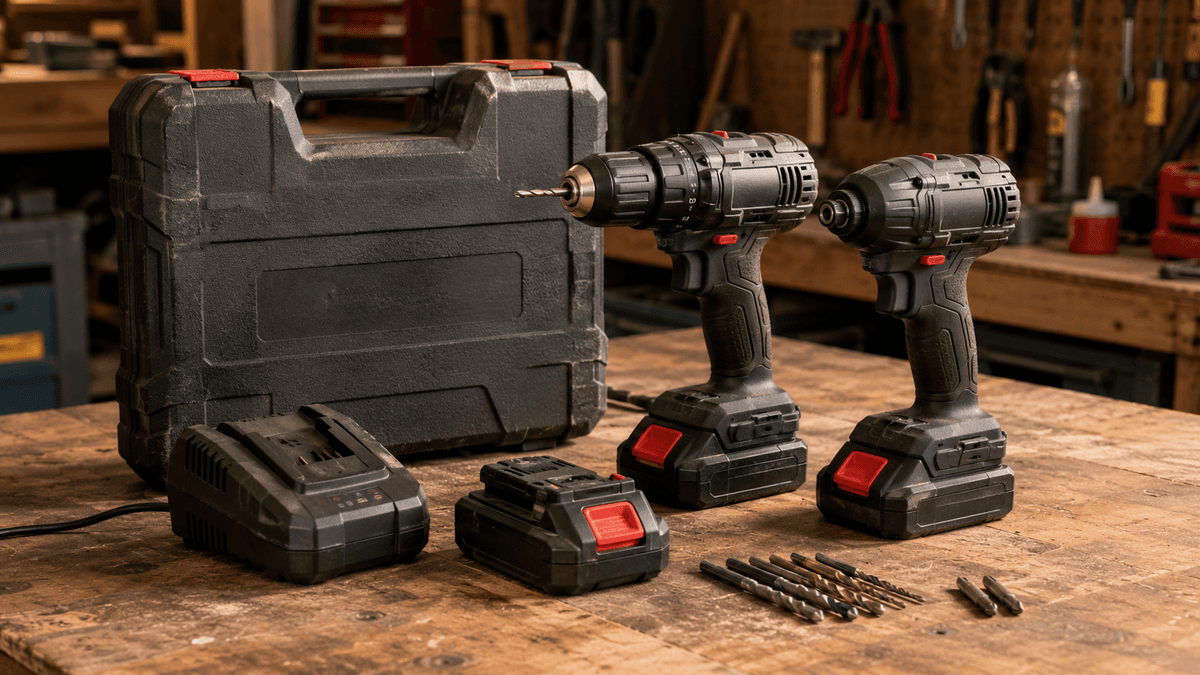
Ryobi 18V ONE+ HP Brushless Drill (PCL1600K2): 750 in-lbs torque, brushless motor, two-speed transmission, LED light, includes two 1.5Ah batteries and charger. Price check: check current retailer pricing.
DeWalt 20V MAX XR Brushless Drill (DCD800D2): 887 in-lbs torque, brushless motor, three-speed transmission, LED work light, includes two 2.0Ah batteries and charger. Price check: check current retailer pricing.
Our Take: DeWalt delivers 18% more torque and adds a third speed setting that benefits professional users who need fine-tuned control. But for DIY applications—hanging shelves, assembling furniture, drilling into standard materials—Ryobi's 750 in-lbs is more than sufficient. The price gap buys professional durability you may never need.
Winner: Ryobi for DIY value. DeWalt for professional performance.
Head-to-Head: Impact Drivers
Impact drivers reveal the biggest performance gap between these brands.
Ryobi 18V ONE+ HP Brushless Impact Driver (PBLID02B): up to 2,200 in-lbs torque, 4-mode control, quick-release chuck, compact design. Bare tool: around its current retailer price.
DeWalt 20V MAX XR Brushless Impact Driver (DCF850B): 1,825 in-lbs torque, three-speed control, precision drive mode for delicate work, compact design. Bare tool: $129-159.
Our Take: Near-identical torque numbers, but DeWalt's precision drive mode is a legitimate differentiator for professionals who alternate between heavy lag bolts and delicate finish work. DIYers rarely need that control—Ryobi's single-speed impact handles 95% of home applications perfectly.
Winner: Tie on raw performance. DeWalt wins on refinement.
Head-to-Head: Circular Saws
Circular saws test motor power and cutting precision under real-world conditions.
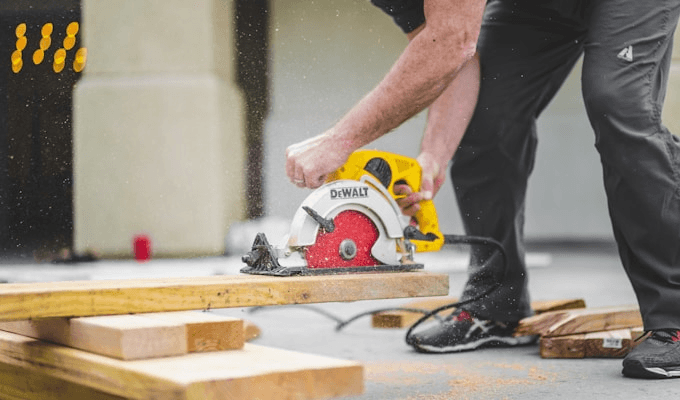
Ryobi 18V ONE+ HP Brushless 7-1/4" Circular Saw (PBLCS300): Full-size blade, brushless motor, electric brake, LED cut line indicator. Bare tool: $129-149.
DeWalt 20V MAX 7-1/4" Circular Saw (DCS570B): 5,500 RPM, brushless motor, bevel capacity to 57°, rubber grip. Bare tool: $149-179.
Our Take: Both handle standard framing cuts competently. DeWalt's higher RPM means smoother cuts in hardwoods, and the superior bevel range matters for trim and finish carpentry. For framing and basic construction, Ryobi performs comparably at a lower price point.
Winner: DeWalt for cutting quality. Ryobi for budget builds.
Battery Ecosystem Comparison
This is where the real long-term value calculation happens.
Ryobi's ecosystem breadth is unmatched. Where else can you buy a cordless hot glue gun, portable power station, or bug zapper that shares batteries with your drill? For homeowners building a complete garage setup, Ryobi's ecosystem multiplies value exponentially.
DeWalt's ecosystem focuses on professional tools. Fewer lifestyle products, but deeper capability in construction, woodworking, and industrial applications. The FLEXVOLT system extends into territory Ryobi can't touch—miter saws, table saws, and planers that previously required outlets.
Durability and Build Quality
Here's where DeWalt genuinely earns its premium.
Drop test performance: DeWalt tools consistently survive drops from 10+ feet onto concrete with functional integrity. Ryobi tools handle typical workshop drops (3-5 feet) but show more cosmetic and occasional functional damage at higher heights.
Dust and debris resistance: DeWalt's sealed housings and better-quality switches resist jobsite conditions that would compromise Ryobi tools over time. For indoor workshop use, this difference is irrelevant.
Motor longevity: DeWalt's brushless motors are rated for roughly 50% more runtime cycles than comparable Ryobi brushless motors. At DIY usage rates (a few hours per week), both brands last years. At professional rates (8+ hours daily), DeWalt's engineering matters.
Warranty: Both offer 3-year limited warranties on tools and 3-year warranties on batteries. DeWalt's professional service network is more extensive for repairs.
Price Comparison: Total Workshop Cost
Building equivalent workshops with each brand reveals the true cost difference:
That $500-700 savings at the complete workshop level is significant. It's the difference between owning six tools and owning ten. For most homeowners, breadth of tools matters more than maximum durability on any single tool. Check our best combo kits guide for bundled deals from both brands.
Who Should Buy Ryobi?
- Homeowners and DIYers who want a complete tool ecosystem at accessible prices
- Weekend warriors who use tools moderately (a few hours per week)
- Budget-conscious buyers who'd rather own more tools than fewer premium ones
- First-time tool buyers testing their interest in DIY before committing to professional brands
- Lifestyle tool users who want batteries shared across fans, lights, and outdoor equipment
If you're in this camp, see our best power tools under $100 for Ryobi picks that deliver outstanding value.
Who Should Buy DeWalt?
- Professional contractors who depend on tools daily for income
- Heavy-duty users tackling demanding materials (hardwoods, metals, masonry)
- Jobsite workers whose tools face dust, drops, and harsh conditions
- Woodworkers who need the precision and power of FLEXVOLT tools
- Long-term investors who prefer buying once at a higher price over replacing budget tools
For a deeper look at DeWalt's lineup versus its closest professional competitor, read our DeWalt vs Milwaukee comparison.
The Verdict: It Depends on You
Ryobi and DeWalt both deliver on their promises. Ryobi promises accessible, capable tools for everyday use—and delivers. DeWalt promises professional-grade reliability and performance—and delivers. The wrong choice isn't buying either brand; it's buying the wrong brand for your actual needs.
Choose Ryobi if: You value ecosystem breadth, budget flexibility, and your tools live in a garage rather than a truck bed.
Choose DeWalt if: Your livelihood depends on tool reliability, you work in harsh conditions, or you need power levels that consumer-grade tools can't deliver.
Either way, both brands have earned their reputations. The tools work. The ecosystems are mature. The decision comes down to matching your budget and usage patterns to the right platform.
Frequently Asked Questions
Q: Are Ryobi and Milwaukee made by the same company?
A: Yes. Both are manufactured by Techtronic Industries (TTI). However, they're engineered by separate teams with different performance targets. Milwaukee targets professionals; Ryobi targets homeowners and DIYers. Shared parent company doesn't mean shared quality tiers.
Q: Can I use Ryobi batteries in DeWalt tools?
A: No. Ryobi 18V ONE+ and DeWalt 20V MAX batteries are completely incompatible. Each brand uses proprietary battery connections. Third-party adapters exist but void warranties and may create safety risks.
Q: Is DeWalt 20V MAX actually 20 volts?
A: DeWalt's "20V MAX" is a nominal voltage rating. Actual voltage under load is approximately 18V, similar to other brands' 18V tools. It's a marketing distinction, not a performance advantage over 18V platforms.
Q: Which brand has better customer service?
A: DeWalt's professional service network is more extensive, with authorized service centers nationwide. Ryobi relies primarily on Home Depot's return policy and TTI's warranty center. For professionals needing quick turnaround, DeWalt has the edge.
Q: Should I switch from Ryobi to DeWalt (or vice versa)?
A: Generally, no. The cost of replacing batteries and chargers makes switching expensive. If your current tools meet your needs, stay with your ecosystem. Only switch if your usage patterns have fundamentally changed—like transitioning from DIY to professional contracting.
Q: Which brand holds resale value better?
A: DeWalt tools retain approximately 40-60% of retail value on secondary markets. Ryobi tools retain roughly 25-40%. If you plan to upgrade eventually, DeWalt's higher resale value partially offsets the initial premium.
For homeowners and DIYers who want solid performance without the pro price premium, the Ryobi PBLDD01K ONE+ HP 18V Brushless Drill Kit is the right call -- includes two batteries and handles everything a home shop needs: For users who've outgrown Ryobi or need sustained professional-grade power, the DeWalt DCD708C2 20V MAX ATOMIC Compact Drill Kit is the upgrade that justifies the price: