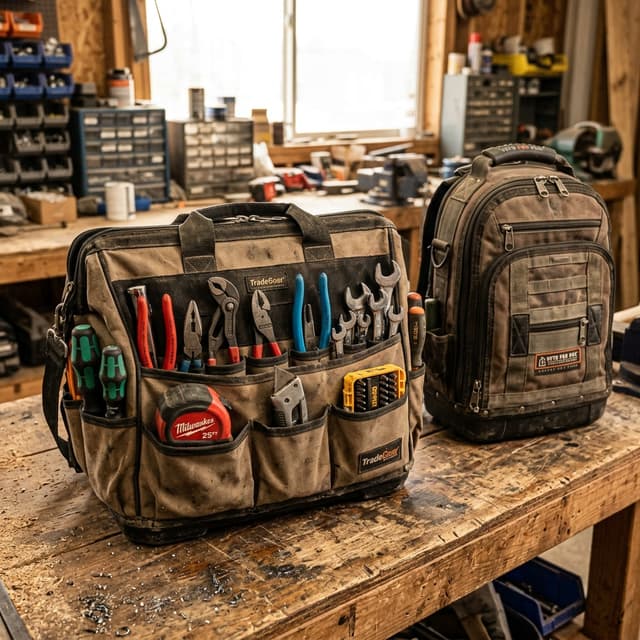
We compared 5 tool bags and backpacks by pocket layout, base construction, materials, portability, and fit for different trades.
Current recommendations are research-backed. Each article identifies its evidence, sources, update date, and limitations. No current guide is presented as hands-on tested. As an Amazon Associate, ToolShed Tested earns from qualifying purchases. When you buy through our links we may earn a commission -- at no extra cost to you. Product links and article details last reviewed August 11, 2026. Full disclosure.
The 35-pocket layout provides dedicated positions for many hand tools while leaving larger storage areas for bulkier equipment. The padded laptop sleeve separates plans, tablets, and documents from the main tool storage area.
Dual carry handles on the top and side let you grab the bag quickly in either orientation -- a practical detail that sounds minor until you are moving between floors on a job site all day.
Key features: 30+ pockets and loops, padded laptop sleeve, reinforced base plate, padded shoulder straps, top and side carry handles.
Pros: Impact-resistant molded base separates the fabric body from the floor. The 35-pocket layout supports organized storage. A padded laptop sleeve protects devices up to 15.6 inches. Top and side handles provide two quick-grab positions.
Cons: Premium relative to basic soft bags. A structured backpack is bulkier than an open tote. No wheels for heavier tool configurations.
Who it's for: Electricians, plumbers, and contractors who haul tools daily and need organized storage designed for frequent job-site use.
Verdict: Our best-overall pick in this five-model comparison for buyers prioritizing backpack carry, a molded base, and laptop storage.
Best for Trades | Check current price | Rating: 4.6/5
Klein Tools built the 55421BP-14 for electricians, with 39 pockets, tall interior pockets for screwdrivers, a hard molded front pocket, and a bright interior. It has the second-highest published pocket count in this five-model comparison, behind the 50-pocket CLC carrier.
The published 1680D ballistic weave exterior is a meaningful material upgrade over standard 600D polyester bags for buyers concerned about abrasion and punctures. The molded base also keeps the bag upright and separates the fabric body from a wet or rough floor.
The molded base is designed to protect the bag from floor contact and help it stand upright. The bright interior creates more contrast around small tools and parts in dim work areas.
Key features: 39 pockets, molded base, hard molded front pocket, bright interior, 1680D ballistic-weave exterior.
Pros: Thirty-nine pockets support trade-specific organization. The published 1680D ballistic-weave exterior and molded base are designed for job-site use. The bright interior improves visual contrast around small tools.
Cons: Most expensive bag in the roundup. Heavier at 5.1 lbs empty. Sized for electricians specifically -- not as versatile for general carpentry or plumbing tool layouts.
Who it's for: Electricians and low-voltage technicians who want a trade-focused 39-pocket layout with a molded base.
Verdict: Our electrician-focused pick in this comparison because its 39-pocket layout, tall tool pockets, molded base, and bright interior align with common electrical-tool loads.
Best Open-Top | Check current price | Rating: 4.5/5
The open-mouth format is the fastest traditional bag layout for tool visibility, and the DEWALT DWST560103 is the current DeWalt pick in this slot. The wide opening keeps hand tools and compact power tools visible, while the newer PRO construction adds a water-resistant compartment and a tougher base than the old soft-bag recommendation.
The 31 pockets and loops keep small tools organized along the bag walls while the main compartment stays open for larger tools. The padded shoulder strap and carry handles give you both hands-free transport and quick-grab access depending on what the job site requires.
The reason to buy this current DeWalt bag over the older soft-bag recommendation is durability: 1680D fabric, dirt-repellent tarpaulin, an IP54 compartment, and a waterproof base are more credible for daily jobsite use.
Key features: 16-inch open-mouth layout, 31 pockets and loops, 1680D fabric, dirt-repellent tarpaulin, IP54 water-resistant compartment, waterproof base, padded shoulder strap.
Pros: Open-mouth design provides fast tool visibility and access. 31 pockets and loops organize hand tools and compact power tools without turning the bag into a pile. IP54 compartment and waterproof base add real jobsite protection. Padded shoulder strap and carry handles cover both hands-free and quick-grab use.
Cons: Open-mouth format is still less weather-sealed than a closed backpack. Less structure than a backpack for heavy battery and tool loads.
Who it's for: Carpenters, painters, and general contractors who prioritize fast tool access over weather protection and want a traditional open-top bag at a fair price.
Verdict: Best open-mouth bag in the roundup. Fast access, current DeWalt model support, and better weather protection than the old soft-bag pick.
Most Pockets | Check current price | Rating: 4.4/5
The CLC 1539 is the high-capacity soft-carrier pick in this comparison. CLC specifies 43 interior pockets, seven exterior pockets, an extra-large center compartment, two zippered side panels, padded handles, and an adjustable shoulder strap.
The zippered side panels help contain hand tools during transport, while vertical pockets keep frequently used tools visible. Its soft-sided construction is less rigid than the molded-base backpacks but offers more published pockets than the other bags in this group.
The roomy center compartment keeps larger tools accessible without digging, and the shoulder strap matters once the bag is loaded. This is a genuine work bag at an accessible price, not a branded storage container with decorative pockets.
Key features: 50 pockets, 18-inch zippered multi-compartment layout, padded handles, adjustable shoulder strap, large center compartment.
Pros: Fifty published pockets provide the highest pocket count in this comparison. The large center compartment accommodates power tools and accessories. Zippered side panels reduce spillage during transport. Padded handles and an adjustable shoulder strap provide two carry options.
Cons: Smaller capacity than Milwaukee or Klein bags. Less structured -- collapses when set down empty. Less rigid than molded-base backpacks.
Who it's for: DIYers, homeowners, and apprentices who need a capable tool bag without spending premium money and don't require daily heavy-use durability.
Verdict: Our high-capacity soft-carrier pick. Compare its current price with the structured backpacks before deciding whether pocket count or base rigidity matters more.
Best Premium Option | Check current price | Rating: 4.8/5
The Veto Pro Pac Tech-MCT is the premium technician-bag pick in this comparison. Veto specifies a stabilizing injection-molded waterproof base, 44 interior and exterior pockets, two storage bays, 12 inches of vertical storage, and a 30-pound maximum payload.
The center-panel design divides the bag into two storage bays for separating hand tools from meters or a compact drill. Its vertical pockets and molded base support upright organization, although the five-pound empty weight and premium price make it excessive for many occasional users.
The premium is real. For tradespeople who carry a bag throughout the workday, the rigid frame, waterproof base, and replaceable organization value can justify the price better than they would for an occasional DIY user.
Key features: Waterproof molded base, 44 pockets, two storage bays, 12-inch vertical storage, 30-pound maximum payload.
Pros: Injection-molded waterproof base helps keep tools dry in wet conditions. Forty-four published pockets and two storage bays support separated organization. Twelve inches of vertical storage accommodates longer hand tools and meters.
Cons: Premium price. Five-pound published empty weight. More capacity and structure than many occasional users need.
Who it's for: Master electricians, HVAC technicians, and service plumbers who run 8-10 hour days and prioritize a rigid, weather-resistant premium bag.
Verdict: Our premium pick for service technicians who need vertical organization, two storage bays, and a waterproof molded base and can justify the higher price and five-pound empty weight.
Backpack vs Open-Top vs Rolling
Backpacks distribute weight across your shoulders and keep both hands free -- best for tradespeople who move between floors, climb ladders, or work across large sites. Open-top bags give the fastest tool access and work best for stationary or near-stationary work where you set the bag down once and pull from it all day. Rolling bags (not in this roundup) work for technicians who carry heavy tool sets across flat surfaces -- warehouses, hospitals, commercial facilities -- but are impractical on stairs or rough terrain.
Pocket Count
Higher pocket counts create more dedicated storage positions, but the layout matters as much as the total. Too many small pockets can add bulk without accommodating the tools you actually carry. For frequent trade use, map regularly used tools to the pocket sizes and keep loaded weight in mind.
Base Material: Molded vs Soft
Soft bases trade rigidity for lower weight and easier packing. Molded or reinforced bases are designed to hold their shape and separate bottom-of-bag tools from floor contact. For frequent use on wet or rough surfaces, a reinforced or molded base may justify its added weight and price.
Shoulder Strap vs Dual Handles
Shoulder straps are better for long-distance carry across a job site. Dual handles are better for quick loading and unloading from a truck or tool chest. The Milwaukee and Klein bags offer both. If you regularly carry more than 30 lbs of tools more than 100 feet, shoulder strap support is not optional.
Waterproofing
Standard polyester bag bodies are not fully waterproof. If you work on wet slabs, outdoors, or in crawl spaces, prioritize a molded or waterproof base and check whether the manufacturer rates only one compartment or the entire base for water resistance. For indoor-only work, this feature may matter less than weight or access.
Frequently Asked Questions
Use the manufacturer's published payload limit when one is available and keep the loaded weight within what you can carry safely. Capacity varies by model: Veto publishes a 30-pound maximum payload for the Tech-MCT, while several other manufacturers in this comparison do not publish an equivalent load rating on the cited product page.
Tool bags are soft-sided, portable, and designed for the tools you carry to every job. Tool boxes are hard-sided, usually stationary, and designed for storage and organization in a shop, garage, or truck bed. Tool bags prioritize portability and access speed. Tool boxes prioritize capacity, organization, and long-term storage. Most tradespeople use both -- a bag for the job site and a box for base storage.
Yes. All five bags in this roundup fit in a standard truck bed, and most fit in a standard truck bed toolbox. Backpack-style bags like the Milwaukee and Klein take up less horizontal footprint than open-top bags of the same capacity. If you stack bags in a truck bed toolbox, backpacks stack more efficiently than open-top bags.
A working electrician's daily bag may include needle-nose pliers, lineman's pliers, wire strippers, diagonal cutters, voltage testers, screwdrivers, nut drivers, a tape measure, utility knife, electrical tape, connectors, cable ties, and a multimeter. Specialty work can add fish tape, knockout sets, conduit tools, and crimpers. Choose pocket count and dimensions by mapping the specific tools you carry rather than treating one pocket threshold as universal.
Specification Sources
Model-specific specifications were checked on August 7, 2026 against the manufacturers: Milwaukee 48-22-8200, Klein 55421BP-14, DEWALT DWST560103, CLC 1539, and Veto Pro Pac Tech-MCT. Retailer prices and included configurations can change, so use the current-price links rather than figures embedded in this article.