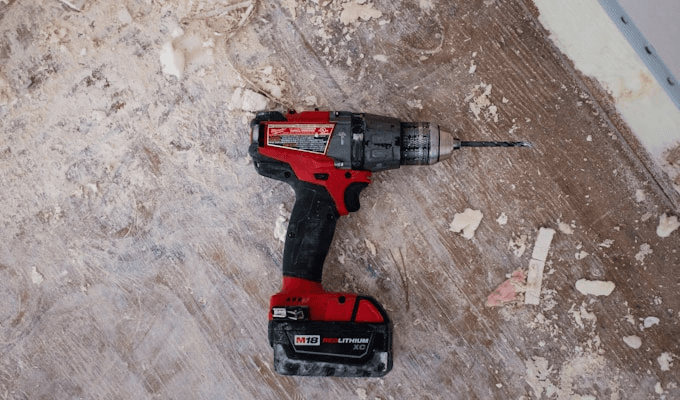
Milwaukee M12 FUEL vs M18 FUEL Drill: compact vs full-size within the same brand. We break down when the M12 is the smarter buy and when M18 is worth the size.
Current recommendations are research-backed. Each article identifies its evidence, sources, update date, and limitations. No current guide is presented as hands-on tested. As an Amazon Associate, ToolShed Tested earns from qualifying purchases. When you buy through our links we may earn a commission -- at no extra cost to you. Product links and article details last reviewed March 25, 2026. Full disclosure.
This comparison is more nuanced than it looks. Both are Milwaukee FUEL drills -- both brushless, both all-metal construction, both backed by Milwaukee's 5-year warranty. But the M12 and M18 platforms serve different workloads, and choosing the wrong one for your workflow has real consequences for efficiency and tool fatigue.
After running both platforms in shop and jobsite work, the separation is clear. The M12 FUEL 3403-20 is genuinely powerful for its class -- it's not just a "good enough" compact drill. And the M18 FUEL 2903-20 isn't just bigger -- it's substantially more powerful in ways that matter for structural work.
Spec-by-Spec Comparison
The torque gap is the defining difference: 550 vs 1400 in-lbs. That's not a small margin -- the M18 FUEL delivers 2.5 times the torque of the M12. The weight gap is equally significant in the other direction: the M12 is 1.5 lbs lighter, which at tool-only weight means you're adding the weight of a full coffee mug every time you pick up the M18 instead. Over eight hours of use, that matters enormously.
Milwaukee M12 FUEL 1/2" Drill/Driver -- In-Depth
The M12 FUEL 3403-20 is one of the most impressive compact drills ever made. At 2.0 lbs and 6.5 inches long, it fits into spaces where a full-size drill simply won't go -- inside cabinet face frames, in electrical panels, in tight joist bays, under bathroom vanities. Electricians and plumbers who work in constrained spaces often reach for M12 tools as their primary platform specifically because of this dimensional advantage.
The 550 in-lbs torque figure undersells the M12 FUEL's real-world capability. For everything up to and including 3/8-inch lag screws, installing hardware, driving hinge screws, drilling holes up to 1-inch diameter in wood -- the M12 handles the task without hesitation. The POWERSTATE motor is efficient enough that the lighter, smaller M12 batteries deliver surprisingly good runtime on typical task loads.
The 6.5-inch length is the killer feature for overhead work. Anyone who's spent a full day driving screws overhead knows that every ounce of tool weight and every inch of length translates directly into shoulder fatigue. The M12 FUEL is the tool that lets you work overhead all day without needing a chiropractor appointment the next morning.
Milwaukee M18 FUEL 1/2" Drill/Driver -- In-Depth
The M18 FUEL 2903-20 is Milwaukee's benchmark drill -- the tool they built to dominate the professional 18V market on torque and reliability. At 1400 in-lbs, it has meaningful headroom over everything in the competition at this price point, and the POWERSTATE motor handles sustained heavy loads without the heat buildup that plagues lesser drills.
The all-metal ratcheting chuck is one of the details that separates pro-grade tools from everything else. Under high torque, a lesser chuck can slip or loosen, letting the bit spin in the chuck. The M18 FUEL's chuck grips with authority and maintains that grip under the hardest reported drilling conditions. For anyone who's had a bit spin out during a critical boring operation, this quality is instantly appreciated.
The M18 ecosystem is the deepest and most comprehensive in the cordless tool world. Every M18 battery you own is currency for over 250 tools -- from compact oscillating multi-tools to full-size miter saws. The investment in M18 REDLITHIUM batteries compounds over time as your tool fleet grows.
The M12 FUEL's limitation is obvious but worth stating precisely: it's not a heavy-duty structural drill. Trying to use the M12 for large-diameter hole saw work in dense material, or for sustained large-fastener driving into engineered lumber, pushes it past its design parameters. It will work, but more slowly, with more heat buildup, and potentially with shortened motor life if you push it hard regularly. The M12 excels at its intended load range; treat it as a primary drill for that range and a backup outside of it.
The M18 FUEL's shortcoming is dimensional. At 7.6 inches long and 3.5 lbs, it doesn't fit into spaces where compact drills shine. Electricians installing devices in deep electrical boxes, trim carpenters working in tight cabinet interiors, and HVAC techs threading screws in tight equipment rooms all find the M18 too large for some daily tasks. If your work regularly puts you in confined spaces, you'll find yourself wishing for a smaller tool regardless of how good the M18 is.
Neither tool is a hammer drill. For masonry work -- anchoring into concrete, driving into brick -- you need the Milwaukee 2804-20 (M18 hammer drill) or an M12 rotary hammer. Both the M12 FUEL and M18 FUEL 2903-20 are drill/drivers only.
Which One Should You Buy
Electricians, HVAC technicians, plumbers, and anyone whose daily work involves access in confined spaces should strongly consider making M12 FUEL their primary platform. The 6.5-inch length and 2-pound weight solve real daily problems that the M18 creates. For trade work where you're in and out of tight spaces all day, the M12 FUEL isn't a compromise -- it's the right tool.
Carpenters, framers, general contractors, and serious DIYers who work primarily in open spaces should choose M18. The torque reserve means you never hit a wall on a drilling task, the battery capacity handles full days without constant swaps, and the M18 ecosystem gives you access to the broadest range of compatible tools in the industry. If tight spaces aren't your primary challenge, the performance advantage of M18 is the better investment.
The most common professional solution is to own both -- M12 as the daily driver for light fastening and tight-space work, M18 for heavy drilling and structural applications. This isn't padding; it's genuinely how most Milwaukee tradespeople I know equip themselves. The two platforms are designed to complement each other, not replace each other.
For a homeowner who only wants one drill, the M18 FUEL 2903-20 is the stronger recommendation. Home projects include enough variety that the torque headroom matters more than the compact form factor. The M12's tight-space advantage shows up less frequently in home applications than in trade work. If money is the constraint, the M12 is a genuinely capable drill that handles the vast majority of home tasks -- just know its limits on demanding work.
Frequently Asked Questions
Is the Milwaukee M12 FUEL drill powerful enough for real work?
Yes, for the majority of everyday tasks. At 550 in-lbs, the M12 FUEL handles general drilling, screwdriving, furniture assembly, and light structural fastening without issue. Where it reaches its limits is sustained large-diameter boring in dense material and driving very long structural fasteners. For those specific applications, M18 is the appropriate tool.
No. M12 and M18 batteries are not cross-compatible due to different physical connectors and voltage requirements. Each platform requires its own batteries. This is one reason some users hesitate to invest in both platforms -- you're maintaining two separate battery inventories.
Which Milwaukee drill is better for a homeowner vs. a professional?
For homeowners, the M18 FUEL is the better single-drill purchase because home projects are varied enough that the power headroom matters more than compact size. For professionals, the answer depends on trade: electricians and plumbers often prefer M12 as their primary platform; carpenters and framers typically need M18 power.
Milwaukee tools are built for professional-grade durability and performance. Both the M12 FUEL and M18 FUEL come with a 5-year warranty, use Milwaukee's POWERSTATE brushless motor technology, and are built to withstand sustained professional use. For users who rely on tools daily, the investment in Milwaukee quality pays back through fewer replacements and consistent performance over years of service.
Should I start with M12 or M18 if I'm new to Milwaukee?
Start with M18. The ecosystem is larger, the tools cover more applications, and the M18 REDLITHIUM batteries work across the widest range of Milwaukee tools. Once you're in the M18 ecosystem and have a battery investment, you can add M12 tools where compactness makes sense -- but the M12 batteries won't help your M18 tools, while M18 batteries power an enormous range of heavy and light tools alike.
Is the weight difference between M12 and M18 really significant?
Over a short project, the 1.5-pound weight difference is barely noticeable. Over an eight-hour workday with hundreds of repetitive fastening motions, especially overhead, that difference is enormous. Ergonomic research consistently shows that tool weight is one of the primary contributors to musculoskeletal strain in tool users. The M12's weight advantage is a genuine long-term health benefit for trades workers who drive screws all day.