Glue-ups slipping? These five bar clamps deliver serious clamping force for panels, cabinets, and joinery. Compare force, throat depth, and value.
Current recommendations are research-backed. Each article identifies its evidence, sources, update date, and limitations. No current guide is presented as hands-on tested. As an Amazon Associate, ToolShed Tested earns from qualifying purchases. When you buy through our links we may earn a commission -- at no extra cost to you. Product links and article details last reviewed October 6, 2026. Full disclosure.
Quick answer: The Bessey K Body REVO is the best bar clamp for most woodworkers, with a manufacturer-stated 1,700 lbs of clamping force and 3-3/4 in parallel jaws that keep panels flat during glue-ups. Cabinetmakers should look at the Jorgensen Cabinet Master, whose deeper 4 in reach and square-clamping jaws suit carcasses and frames. For fast one-handed holding, the Irwin Quick-Grip SL300 delivers 300 lbs of sustained force with a trigger release. Value and budget buyers round out the rack with the Bessey Tradesman F-style clamp and the Yost 15000 Series bar clamp.
Research comparison, checked October 6, 2026: Recommendations use manufacturer pages, retailer listings, and Amazon listing data linked below. They are editorial judgments about documented features, without measured clamping-force results. Amazon sellers, bundles, condition, price, and availability can change; confirm the exact listing matches the described version and bar length before buying.
What to Look for in a Bar Clamp
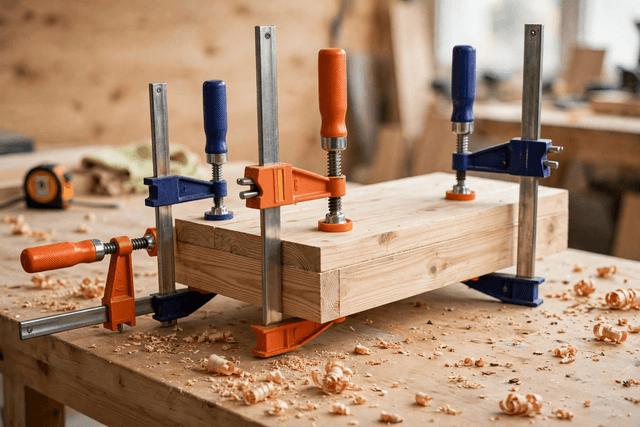
Two numbers drive most clamp decisions: clamping force, which determines whether the joint closes tight under glue-up pressure, and throat depth, which sets how far from an edge you can clamp. Screw-driven clamps (parallel and F-style) apply the highest force, typically from 600 to 1,700 lbs in this lineup, while trigger clamps trade force for speed. Parallel jaws keep boards flat and joints square on wide panels; F-style jaws concentrate pressure at a point, which is fine for assembly and edge work but can bow a panel if over-tightened. Buy bar lengths that cover your typical work: 12 and 24 in clamps handle most furniture parts, while 36 in and longer lengths cover table tops and wide panels.
Compare Clamping Force and Throat Depth
1. Bessey K Body REVO: Best Overall
The Bessey K Body REVO is the parallel-jaw clamp other clamps are measured against. Its manufacturer-stated 1,700 lbs of nominal clamping force (2,200 lbs load limit) is the highest in this group, applied through large parallel jaw faces that distribute pressure evenly and keep work square at a nominal 90 degrees. The 3-3/4 in throat clears most rails and stiles, bar lengths run from 12 to 98 in, and the sliding jaw converts to a spreader without tools. The 2K composite handle includes a hex socket so a hex key can add leverage, and the removable glue-resistant jaw pads protect workpieces.
Choose the REVO when glue-ups are the core of your work: panels, doors, tabletops, and cabinet carcasses where even pressure across the whole jaw face prevents bowing. The linked listing is the KREX2450 kit (two 24 in and two 50 in clamps with two KBX20 rail extenders), so confirm the listing matches the version and bar length you want; single clamps are sold separately by length. Premium pricing is the main drawback, and long bars are heavy, but for a primary clamp family the REVO is the safest long-term buy.
2. Jorgensen 3700 Cabinet Master: Best for Cabinets
The Jorgensen Cabinet Master is a 90-degree parallel-jaw bar clamp tuned for casework. Manufacturer listings state 1,500 lbs of clamping force through large plastic jaws that distribute pressure across wide areas to keep corners square and prevent the workpiece from bowing or lifting. Its standout spec is the 4 in reach, a full quarter inch deeper than the REVO's throat, which reaches farther into cabinet carcasses and frame assemblies. Bar lengths commonly run 18, 24, 36, 48, 60, and 72 in; a built-in clamp stand steadies the clamp for one-handed setup, and the sliding head reverses for spreader duty.
Pick the Cabinet Master when your work centers on boxes, cabinets, frames, and panel doors rather than general glue-ups. The maple handle is comfortable for repeated hand tightening, and it is often priced below the Bessey on comparable bar lengths. The linked listing is a 24 in 2-pack, so verify whether the listing is a single or a set and confirm the bar length before buying. It gives up some nominal force to the REVO, but the deeper reach and casework-focused jaws make it the better dedicated cabinet clamp.
3. Irwin Quick-Grip SL300: Best One-Handed
The Irwin Quick-Grip SL300 is the one-handed trigger clamp most shops reach for first. It delivers 300 lbs of sustained clamping force through locking swivel jaws, per the manufacturer, with a pistol-grip trigger for tightening and a quick-release trigger for one-handed loosening. The I-beam bar resists flexing and bowing under load, the 3-1/4 in throat depth handles most workpieces (retailers commonly list 3-3/16 in), and a Quick-Change screw converts it to a spreader in a few turns. Common bar lengths are 6, 12, 18, 24, and 36 in.
Choose the SL300 when speed matters: holding a part while you position it, quick dry-fits, light glue-ups, and assembly jigs where one hand stays free. The linked listing is the 12 in model (1964718), sold as a single clamp, and pairs well with the 24 in version for general bench work. Do not mistake it for a screw clamp replacement; 300 lbs cannot substitute for a parallel clamp on a tense panel glue-up, and trigger clamps can creep if left as the only force. As a complement to high-force screw clamps, it is essential.
4. Bessey Tradesman: Best Value
The Bessey Tradesman (TGJ2.512+2K shown) is an F-style bar clamp that brings 600 lbs of nominal clamping force per the manufacturer at a working-shop price. The 2-1/2 in throat and 12 in capacity cover everyday glue-ups, with 6, 18, 24, and 30 in lengths in the TGJ line, and larger TG4 and TG5 series exist for more reach. The integrated anti-slip system, a set screw molded into the sliding arm that interlocks with the serrated rail, prevents the arm from walking under load, and the profiled rail resists flexing and torsional forces. The 2K composite handle with comfort insert replaces the traditional wood handle on current versions.
Buy the Tradesman when you need a fleet of reliable everyday clamps rather than one premium parallel clamp. Six hundred pounds closes most furniture joints without drama, and the anti-slip rail makes setup trustworthy. Confirm the handle style on the listing (2K composite or wood) and the bar length, since Amazon listings mix variants. F-style jaws are not parallel, so use the REVO or Cabinet Master for wide panels where even pressure matters, and reserve the Tradesman for assembly, edge gluing, and general shop holding.
5. Yost 15000 Series Bar Clamp: Budget Pick
The Yost 15000 Series is a trigger-style bar clamp positioned for budget shops, with a manufacturer-stated 330 lbs of clamping force and a 3-3/8 in throat depth across the series. Bar lengths run 6, 12, 18, 24, and 36 in, a speed-release latch opens and closes the clamp quickly, and the fixed jaw reverses so the clamp doubles as a spreader. Yost commonly sells these in multi-packs, which is the fastest way to fill a clamp rack on a budget.
Choose the Yost when quantity beats pedigree: holding stock for sawing and drilling, positioning jigs, and light assembly where 330 lbs is plenty. At this price tier, treat it as a supporting player rather than the clamp you trust on a critical glue-up. Amazon listings mix singles and sets across bar lengths, so check that the listing matches the length you need. For beginners building a first shop, a multi-pack of these plus one or two premium screw clamps is a sensible starting split.
Match the Clamp to the Job
- Panel glue-ups: Use parallel-jaw clamps like the Bessey K Body REVO or Jorgensen Cabinet Master. Even pressure across wide jaw faces keeps boards flat and joints square.
- Cabinet carcasses: Pick the Jorgensen Cabinet Master for its 4 in reach and square-clamping jaws, or step up to longer REVO bars for large casework.
- Quick one-handed holds: The Irwin Quick-Grip SL300 is the fast choice for positioning, dry-fitting, and holding while the other hand works.
- Budget shop build-out: Round out the rack with Bessey Tradesman F-style clamps and Yost 15000 Series bar clamps for everyday holding and light assembly.
Frequently Asked Questions
How many clamps do I need for a panel glue-up?
Plan on a clamp every 8 to 12 in of glue line, alternating above and below the panel to balance pressure. A 24 in panel needs roughly three to four clamps; a 48 in panel needs five to six. Buying a matching set of parallel clamps is the most reliable way to keep wide glue-ups flat.
Should I buy parallel-jaw or F-style clamps?
Parallel-jaw clamps keep boards flat and distribute pressure across the whole jaw face, which suits panels, doors, and carcasses. F-style clamps concentrate pressure at one point and cost less, which suits assembly, edge gluing, and general holding. Most shops use both: parallel clamps for critical glue-ups and F-style clamps for everything else.
Do I need the longest bar length?
No. Buy for your most common work. A clamp can only clamp work shorter than its capacity, so a 24 in clamp cannot close a 30 in panel. Stock the lengths you reach for weekly, typically 12 and 24 in for furniture parts, and add 36 in or longer clamps only when wide panels become routine. Extender accessories exist for some parallel clamp families.
Building out the shop beyond clamps? See our guide to miter saw stands for steady cutting setups, the best workbench roundup for a solid gluing surface, the best benchtop planers for flat glue-up stock, and the best compact routers for joinery work. For how we evaluate tools, read how we test.