A reliable floor jack is one of those essential garage tools that separates the capable DIYer from the frustrated one.
Current recommendations are research-backed. Each article identifies its evidence, sources, update date, and limitations. No current guide is presented as hands-on tested. As an Amazon Associate, ToolShed Tested earns from qualifying purchases. When you buy through our links we may earn a commission -- at no extra cost to you. Product links and article details last reviewed August 21, 2026. Full disclosure.
A reliable floor jack is one of those essential garage tools that separates the capable DIYer from the frustrated one. Whether you're rotating tires, changing oil, or accessing the undercarriage for maintenance work, a good floor jack makes the difference between a quick job and an exhausting struggle. The market for home garage floor jacks has evolved significantly, with new safety features, improved designs, and better build quality becoming standard at various price points. This guide examines what makes a floor jack suitable for home garage use, evaluates the current options, and helps you choose the right one for your needs.
Why You Need a Quality Floor Jack
Before diving into specific models, it's worth understanding why investing in a proper floor jack matters. A cheap, poorly-designed jack can slip, fail under load, or require excessive pumping to lift even modest vehicles. Beyond convenience, a sturdy jack is a safety tool—working under an improperly supported car introduces genuine risk. A quality floor jack has a stable base, smooth hydraulic action, and enough capacity for your vehicles with a reasonable safety margin.
Most home garage owners work with vehicles weighing between 3,000 and 4,500 pounds. This range covers sedans, crossovers, and light trucks. A 3-ton jack (6,000-pound capacity) is the practical minimum for home use; it provides a healthy safety margin while remaining compact and maneuverable. Heavier-capacity jacks (4-ton and above) are ideal if you own pickup trucks, SUVs, or plan to support multiple vehicles regularly.
Key Features to Look For
Lifting Height and Lowering Speed
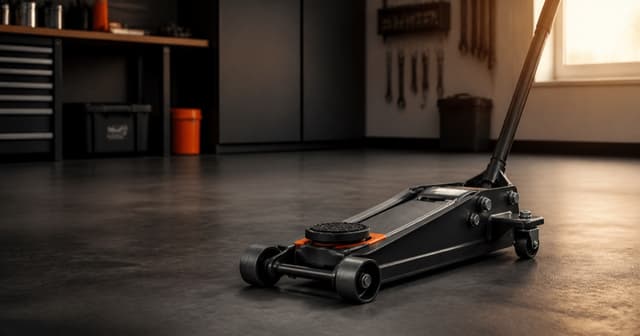
Floor jacks vary significantly in their minimum and maximum lifting heights. A low minimum height (around 2.75 to 3 inches) allows you to slide the jack under vehicles with low ground clearance. Maximum height typically ranges from 13 to 20 inches; higher is generally better, as it gives you more working room beneath the vehicle. Lowering speed also matters—slower descent is safer and easier to control, particularly when you're first learning to use a new jack.
Pump Type and Effort Required
Single-stage pumps require more strokes but produce smoother action and are generally more reliable. Double-stage pumps (also called two-stage) lift faster initially, then switch to a slower stage for fine adjustments. For home garage work, the difference is minimal—you're not lifting dozens of cars daily—so either design works well. What matters more is whether the pump feels responsive and doesn't require excessive force. Look for jacks where the handle operates smoothly without binding or requiring awkward body positioning.
Base Width and Stability
A wider, longer base means better stability when the jack is extended. Home garage floors are typically flat and level, but debris, slight slopes, and uneven concrete can affect stability. A jack with a base wider than 16 inches is more forgiving of imperfect surfaces.
Build Material and Durability
Steel construction is standard and appropriate for home use. Cast iron pump components resist wear better than aluminum in high-pressure applications. Look for jacks with reinforced pump housings and quality seals; these features indicate an engineer who anticipated real-world use rather than ideal conditions.
Top Floor Jack Options for Home Garages
Budget-Conscious Buyers
If you're outfitting a garage for basic maintenance and expect to use your jack once or twice monthly, you don't need a premium option. View economical floor jacks on Amazon and look for models with solid customer reviews and clear safety documentation. A 3-ton unit in the $80–$150 range will handle most sedan and crossover work reliably. Brands like Torin and AmazonBasics offer competent designs in this segment. The trade-off is typically in refinement—the pump might require more strokes, lowering might be faster than ideal, and the finish won't be showroom-quality. For occasional home use, these limitations are acceptable.
Mid-Range Balance
The sweet spot for most home garage owners sits around its current retailer price. In this range, you get smoother pump action, better-quality seals, and more thoughtful design details. Explore mid-range floor jacks with good reviews and you'll notice meaningful improvements in ease of use and durability. Models from Sunex, Otherpower, and Arcan appear frequently in this category. These jacks often feature dual-stage pumps, wider bases, and better handle ergonomics. The incremental cost buys reliability and a noticeably better user experience.
Premium Options for Serious Work
If you work on vehicles regularly, own heavier vehicles, or want maximum convenience, premium floor jacks (check current retailer pricing) justify their cost through superior engineering and longevity. These models typically feature larger pump chambers (meaning fewer strokes to reach full height), better seals that resist contamination, and refined lowering controls. Search for professional-grade floor jacks and you'll find models with lengthy warranties, excellent customer service, and designs refined over years of professional shop use. Brands like Snap-on and high-end Arcan models fall here.
Weight Capacity: Don't Guess
Matching jack capacity to your vehicles is non-negotiable. Check your vehicle's owner manual for curb weight, or search online for your specific make and model. Always choose a jack rated for at least 1.5 times your vehicle's weight—a 3-ton jack (6,000-pound capacity) handles a 4,000-pound car with good margin; a 4-ton jack is better for a 5,500-pound truck.
Never pump a jack to its absolute maximum height while someone is working under the vehicle. The last inch or two of travel is a mechanical emergency margin, not working space. This is why choosing a jack with adequate capacity matters: you'll never need to operate it at its limit.
Safety Considerations
A floor jack is a lifting tool, not a permanent support. Always use jack stands rated for your vehicle's weight when you're working underneath. Position jack stands on solid frame points; consult your owner's manual for proper placement. The correct procedure: jack the vehicle, position stands, then lower the vehicle onto the stands while the jack remains in place as backup support.
Check your jack's condition before each use. Inspect for leaks, damage, and smooth operation. Hydraulic fluid that appears milky or contaminated suggests moisture has entered the system—have the jack serviced or replaced. Keep the pump area free of dirt; even small debris can damage seals and cause failure.
Proper Maintenance Extends Lifespan
Storing your jack properly dramatically extends its life. Keep it in a dry location away from temperature extremes. Before seasonal storage, pump the jack fully extended, then slowly lower it to release pressure. If you won't use it for several months, this gentle cycling prevents seal damage. Never leave a jack fully extended or fully compressed for extended periods—hydraulic seals age faster under constant pressure.
Keep the base clean and dry. If you get mud or salt spray on it (particularly in winter conditions), wipe it clean after use. Check the hydraulic fluid level if your jack has a sight glass; some designs allow topping up, while others are sealed. Consult your manual for the correct procedure—using the wrong fluid type can damage seals and cause failure.
Choosing the Right Size for Your Garage
Physical space matters. A 3-ton jack with a collapsed height of 3.75 inches can slide under almost any car. Maximum heights of 15–17 inches provide adequate working clearance. 4-ton and larger jacks are slightly bulkier but still fit in standard garage storage. Measure your lowest-clearance vehicle and your storage space before ordering.
Handle length varies too. Longer handles (around 38–42 inches) require less physical effort but take up more storage space. If you have strength or mobility considerations, a longer handle is worth the space trade-off.
2026 Market Trends
The current market emphasizes safety features like pressure-relief valves (which prevent over-pressurization), stable wider bases, and better seals that resist moisture and contamination. Hydraulic jack design hasn't dramatically changed in decades—it's a mature technology—but manufacturers are applying incremental improvements to reliability and user experience. Smart features like digital pressure gauges are appearing on premium models, though they're not essential for home use.
Sustainability is becoming more relevant; better seals and longer-lasting designs reduce waste compared to disposable budget jacks. If you plan to own your jack for a decade or longer, investing in quality pays environmental dividends alongside economic ones.
Conclusion: Your Ideal Floor Jack Awaits
The best floor jack for your home garage depends on your specific vehicles, frequency of use, and budget. A 3-ton jack serves most sedan and crossover owners adequately; if you own larger vehicles or work frequently, step up to 4 tons. Don't sacrifice reliability for price—a $150 mid-range option offers far better value than a $60 budget model that might slip or fail at a critical moment. Review popular floor jacks with proven safety records before deciding, and prioritize models with consistent positive reviews, clear weight specifications, and good customer service.
A quality floor jack transforms basic garage maintenance from frustrating to straightforward. It's an investment in safety, convenience, and self-reliance. Choose wisely, use it safely with jack stands, and your floor jack will serve reliably for years.