Starting a woodturning hobby doesn't require a workshop full of expensive equipment, but choosing the right lathe makes all the difference between frustration and genuine enjoyment.
Current recommendations are research-backed. Each article identifies its evidence, sources, update date, and limitations. No current guide is presented as hands-on tested. As an Amazon Associate, ToolShed Tested earns from qualifying purchases. When you buy through our links we may earn a commission -- at no extra cost to you. Product links and article details last reviewed August 21, 2026. Full disclosure.
Starting a woodturning hobby doesn't require a workshop full of expensive equipment, but choosing the right lathe makes all the difference between frustration and genuine enjoyment. A beginner-friendly wood lathe should balance affordability with stability, offer enough power for learning projects, and come equipped with reliable controls that won't intimidate newcomers. Whether you're drawn to turning spindles, bowls, or decorative pieces, understanding what features matter most will help you invest wisely in your first lathe.
This guide breaks down the key considerations for selecting a beginner wood lathe, examines what separates quality machines from problematic ones, and walks through realistic expectations as you develop your turning skills.
Understanding the Basics of Wood Lathe Selection
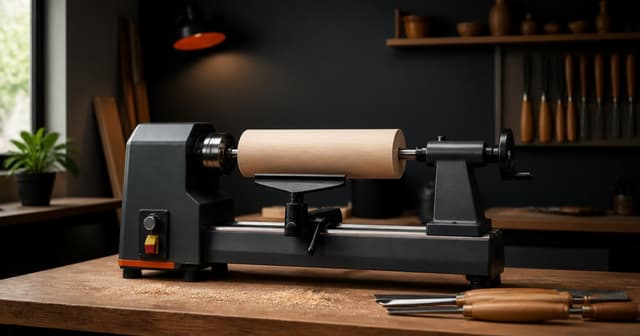
Before comparing specific models, it helps to understand what makes one lathe suitable for beginners while another demands experienced hands. The core function is simple: a lathe holds wood and spins it while you shape it with hand-held tools. But the execution varies dramatically in terms of stability, power delivery, and ease of setup.
Swing diameter—the largest diameter of wood you can mount—matters more than you might initially think. A lathe with a 10-inch swing can handle most spindle work and small bowls. A 12-inch swing opens up more bowl-turning possibilities without becoming unwieldy for your workspace. Bed length determines how long a workpiece can be, which affects what you can turn. Many beginner lathes offer 16 to 20 inches of capacity, sufficient for most learning projects.
Variable speed control is essential for safety and learning. Larger-diameter pieces need slower speeds, while spindles benefit from faster rotation. Without variable speed, you're either fighting a too-fast lathe or struggling with a sluggish one. Look for a lathe that ranges from around 500 to 3000 RPM, though some models go higher.
The headstock and tailstock alignment, spindle runout, and overall rigidity determine how vibration-free your experience is. Budget lathes sometimes suffer from wobble, which makes learning difficult and produces rough surfaces. A heavier, more rigid machine absorbs vibration better.
Key Features That Matter for Beginners
Speed Control and Power A 1-horsepower motor is sufficient for most beginner work. Anything less may struggle with larger bowl blanks or harder woods, while you don't need premium power consumption for learning fundamentals. Variable speed via electronic control or step pulley is non-negotiable—it prevents the sudden jerk of high-speed rotation on large diameters and lets you match speed to your project safely.
Tailstock Design The tailstock—the adjustable support at the opposite end of the spindle—must engage and release smoothly. A quick-release lever is much more beginner-friendly than fussy screws. You'll adjust and readjust it frequently as you develop technique, so accessibility matters.
Headstock Access You need clear space on the left side (assuming right-handed work) to move your tool rest and rest your hands comfortably. Some compact lathes position the motor or control box awkwardly, limiting your working space.
Tool Rest Stability The tool rest—the metal bar where you steady your turning tools—must lock firmly without vibration. A wobbly tool rest is one of the fastest ways to generate frustration and unsafe catches. Look for machines that use a solid, simple locking mechanism rather than finicky lever clamps.
Bench-Top Versus Free-Standing Lathes
Bench-top lathes mount on a workbench and save significant shop space, making them popular for hobbyists with limited room. They're typically lighter and more affordable. The trade-off is reduced stability if your bench itself moves, and less comfortable working height if your bench is standard desk height. Many turners end up building or buying a dedicated stand anyway.
Free-standing lathes come with their own base or cabinet, providing inherent stability and often better ergonomics. They consume more floor space but feel more professional and stable from the first time you switch them on. For someone seriously committing to the hobby, a free-standing machine often proves more satisfying long-term.
Motor Types and Drive Systems
Direct-drive motors (spindle and motor are one unit) are standard on most lathes and are reliable and efficient. Belt-drive systems with step pulleys are older technology but allow true variable speed without electronics. Electronic variable-frequency drives (VFDs) are increasingly common and offer infinite speed adjustment, though they add cost and complexity.
For beginners, electronic variable speed is intuitive and safe. Step pulley systems require stopping the lathe to change speed, which is inconvenient. Direct electronics handle the heavy lifting with a simple dial or buttons.
Setting a Realistic Budget
Entry-level beginner lathes run from about $300 to $700. You can find machines below that, but they often sacrifice stability for cost. In the $700 to $1,500 range, you find machines with better build quality, larger capacities, and more refined speed control. Spend less than $300, and you're often buying a machine that's more frustrating than educational.
Factor in additional costs: a set of turning tools (chisels, gouges, and skew chisels) runs $100 to $300, safety gear including face shield and dust protection adds $50 to $100, and your learning curve will benefit from a grinding jig for sharpening tools ($40 to $100). Total startup investment for a beginner hobby typically falls between $500 and $1,200.
How to Avoid Common Beginner Mistakes
Don't assume lighter is better—a lathe that's too light will chatter and vibrate excessively, making every project feel unstable. Adequate weight (50 to 100+ pounds) matters for dampening vibration.
Don't prioritize maximum capacity over stability. An entry lathe with 10-inch swing that's rock-solid beats a 12-inch model that wobbles constantly.
Don't rely on online forum gossip alone. Seek reviews from actual users, not just YouTube unboxing videos. Read negative reviews carefully—they often highlight real pain points.
Avoid machines sold primarily as novelty items or gifts. Budget lathes that come from non-woodworking-focused brands often cut corners on spindle runout and bearing quality.
Top Candidates for Beginner Turners
When researching, focus on brands with reputation in the woodturning community: Jet, Delta, WoodRiver, JET, Powermatic, and Nova all produce beginner-suitable machines.
Jet Woodworking lathes are a solid mid-range option with good stability and reliable speed control. Models like the Jet JML-1014 offer 10-inch swing, variable speed, and straightforward controls—exactly what you need without overwhelming complexity.
For the budget-conscious, WoodRiver wood turning lathes provide decent entry-level machines with acceptable stability and decent customer support, though they require careful setup and may not have quite the precision of higher-end brands.
If you're willing to invest slightly more, Nova wood lathes are respected for their engineering. The Nova Comet line is specifically marketed at beginners and offers excellent value with good build quality.
For space-constrained workshops, Grizzly Industrial wood lathes manufacture compact bench-top models that deliver stable operation without requiring significant floor space.
Beginner-Friendly Features to Prioritize
Look for lathes that include a basic tool rest, headstock and tailstock, and spindle bolts in the box. Some budget models require you to buy these separately, which inflates total cost. Electronic speed control should be clearly marked and intuitive—no guessing games.
A quick-release tailstock is worth the premium. Ball-bearing construction in both headstock and tailstock indicates longevity. Reversible spindle (thread direction both ways) makes certain projects easier, though it's not essential for beginners.
Read detailed specifications about spindle runout—how much wobble exists at the spindle tip. Anything under 0.002 inches is excellent; under 0.005 inches is acceptable for beginner work.
Making Your Final Decision
Visit a woodturning club or open workshop if possible and ask experienced turners what they'd recommend for your budget. Many clubs have machines available for trial, and trying a machine yourself is far more valuable than reading specs online.
Watch video reviews from woodworking-focused channels, not just Amazon summaries. See the machine in actual operation and hear how quiet it runs (or doesn't).
Consider the seller's return policy and warranty. A company confident in their product offers at least 30 days return and a year of coverage.
Conclusion: Starting Your Woodturning Journey
Choosing the best wood lathe for beginner turners is about matching capability to your realistic needs rather than buying the biggest or cheapest option available. A stable 10-inch machine with variable electronic speed control will serve you excellently as you develop fundamental skills over your first year of turning.
Invest in a lathe from a reputable woodworking brand, prioritize build quality and stability over maximum capacity, and budget realistically for tools and safety gear alongside the lathe itself. Your first machine doesn't need to be perfect—it needs to be reliable enough that you enjoy using it and solid enough that you can focus on technique rather than fighting vibration.
Start with spindle work and small turnings to develop control, then gradually expand into bowl turning as your confidence grows. Many turners keep their first machine for years even after investing in larger, more specialized lathes, simply because of the reliable performance and the memories of learning on a machine that encouraged rather than frustrated them.