We break down portable power stations for the garage and jobsite: the Jackery Explorer-1000-v2 is the best overall, the Anker SOLIX C1000 Gen 2 is the pick for running corded tools, the EcoFlow Delta-2 is the value leader, and the Anker SOLIX F3800 Plus steps up to whole-home and 240V duty.
The default pick. 1070Wh of LiFePO4 at a fair price covers 90% of garage, deck, and jobsite jobs, and the 1-hour recharge means you are rarely waiting on it.
Research rank #1Amazon paid link; price & availability change.
Current recommendations are research-backed. Each article identifies its evidence, sources, update date, and limitations. No current guide is presented as hands-on tested. As an Amazon Associate, ToolShed Tested earns from qualifying purchases. When you buy through our links we may earn a commission -- at no extra cost to you. Product links and article details last reviewed June 12, 2026. Full disclosure.
✓ Buy if:The default pick. 1070Wh of LiFePO4 at a fair price covers 90% of garage, deck, and jobsite jobs, and the 1-hour recharge means you are rarely waiting on it.
✕ Skip if:1500W ceiling stops short of high-draw items like a table saw or a 15A circular saw under load
✓ Buy if:The tool-runner's pick. That extra 500W of continuous output unlocks routers, larger sanders, and shop vacs that choke a 1500W station, and you can bolt on more capacity.
✕ Skip if:Still not a substitute for a generator on a sustained 15A circular saw or large compressor
✓ Buy if:The smart-money buy. On sale it is routinely the cheapest path to 1kWh of LiFePO4, and the 3kWh expansion ceiling future-proofs it better than most rivals.
✕ Skip if:X-Boost is a workaround, not true continuous output; do not rely on it for motors
✓ Buy if:The starter unit. It will not run a saw, and it is not meant to. For keeping devices and lights alive during an outage or off-grid weekend, it is the easy, affordable yes.
✕ Skip if:300W output is for electronics and small loads, not corded power tools
✓ Buy if:The do-everything tier. If you need to run a welder, a big compressor, or a chunk of your house, this is where a power station stops being a gadget and starts replacing a generator.
✕ Skip if:Heavy and expensive; this is a system purchase, not an impulse buy
✓ Buy if:The default pick. 1070Wh of LiFePO4 at a fair price covers 90% of garage, deck, and jobsite jobs, and the 1-hour recharge means you are rarely waiting on it.
Best for
Best Overall for Garage and Jobsite
Package
Kit / verify included batteries
✕ Skip if:1500W ceiling stops short of high-draw items like a table saw or a 15A circular saw under load
✓ Buy if:The tool-runner's pick. That extra 500W of continuous output unlocks routers, larger sanders, and shop vacs that choke a 1500W station, and you can bolt on more capacity.
Best for
Best High-Output Unit for Power Tools
Package
Kit / verify included batteries
✕ Skip if:Still not a substitute for a generator on a sustained 15A circular saw or large compressor
✓ Buy if:The smart-money buy. On sale it is routinely the cheapest path to 1kWh of LiFePO4, and the 3kWh expansion ceiling future-proofs it better than most rivals.
Best for
Best Fast-Charging All-Rounder
Package
Kit / verify included batteries
✕ Skip if:X-Boost is a workaround, not true continuous output; do not rely on it for motors
✓ Buy if:The starter unit. It will not run a saw, and it is not meant to. For keeping devices and lights alive during an outage or off-grid weekend, it is the easy, affordable yes.
Best for
Best Compact and Budget Pick
Package
Kit / verify included batteries
✕ Skip if:300W output is for electronics and small loads, not corded power tools
✓ Buy if:The do-everything tier. If you need to run a welder, a big compressor, or a chunk of your house, this is where a power station stops being a gadget and starts replacing a generator.
Best for
Best for Whole-Home and Heavy Jobsite Use
Package
Kit / verify included batteries
✕ Skip if:Heavy and expensive; this is a system purchase, not an impulse buy
Kit/package: verify included batteries before checkout
The default pick. 1070Wh of LiFePO4 at a fair price covers 90% of garage, deck, and jobsite jobs, and the 1-hour recharge means you are rarely waiting on it.
Key features
1070Wh LiFePO4 battery, 1500W AC output (3000W surge)
Full recharge in roughly 1 hour on AC
Around 30 lb, app control, USB-C PD fast charge
LiFePO4 chemistry rated for 4,000+ cycles to 70% capacity
✓ What Stands Out (Pros)
The sweet-spot capacity for most garages: runs power tools, a fridge, lights, and chargers
LiFePO4 lasts roughly 4x the cycles of older lithium-ion units, so it ages slowly
1500W output covers the majority of corded shop tools and small appliances
Genuinely fast solar and AC recharge, not an overnight trickle
✕ Watch Out For (Cons)
1500W ceiling stops short of high-draw items like a table saw or a 15A circular saw under load
Single-unit design, so no battery expansion when your needs grow
Who it's for: Homeowners and DIYers who want one capable unit for garage backup, outdoor projects, and grab-and-go power without stepping up to a whole-home system.
Kit/package: verify included batteries before checkout
The tool-runner's pick. That extra 500W of continuous output unlocks routers, larger sanders, and shop vacs that choke a 1500W station, and you can bolt on more capacity.
Key features
1056Wh LiFePO4 battery, 2000W AC output (3000W peak)
Full charge in about 58 minutes on AC
Expandable with an add-on battery for 2kWh+
LiFePO4 cells rated for 3,000 cycles to 80%
✓ What Stands Out (Pros)
2000W continuous is the difference-maker: it runs tools that trip a 1500W unit
Battery expansion path means it grows with your needs instead of being replaced
Fastest recharge in its class, under an hour wall-to-full
SurgePad tech briefly handles short startup spikes from motors
✕ Watch Out For (Cons)
Still not a substitute for a generator on a sustained 15A circular saw or large compressor
Add-on battery is a separate purchase that adds real cost
Who it's for: DIYers and tradespeople who run corded shop tools off-grid and need more headroom than a 1500W unit gives, with room to expand later.
Kit/package: verify included batteries before checkout
The smart-money buy. On sale it is routinely the cheapest path to 1kWh of LiFePO4, and the 3kWh expansion ceiling future-proofs it better than most rivals.
Key features
1024Wh LiFePO4 battery, 1800W AC output (2700W surge)
0 to 80% in roughly 50 minutes on AC
Expandable to 3kWh with add-on batteries
App control, 15 output ports
✓ What Stands Out (Pros)
1800W output threads the needle between the 1500W and 2000W tiers
Expandable to 3kWh, the widest growth range of the mid-size units
Frequent sale pricing makes it the value leader at 1kWh
X-Boost mode can run some higher-wattage resistive loads
✕ Watch Out For (Cons)
X-Boost is a workaround, not true continuous output; do not rely on it for motors
Cooling fans are audible under heavy load
Who it's for: Buyers who want maximum capacity-per-dollar and a clear expansion path, and who shop the sales rather than paying sticker.
Kit/package: verify included batteries before checkout
The starter unit. It will not run a saw, and it is not meant to. For keeping devices and lights alive during an outage or off-grid weekend, it is the easy, affordable yes.
Key features
293Wh battery, 300W AC output (500W surge)
Pure sine wave AC outlet plus USB-C PD
Around 7 lb, true grab-and-go size
Recharges from wall, car, or solar panel
✓ What Stands Out (Pros)
Light enough to carry one-handed to a deck, campsite, or remote repair
Pure sine wave output is safe for laptops, cameras, and sensitive electronics
Runs lights, fans, chargers, and small tools for hours
The lowest-risk way to learn whether a power station fits your life
✕ Watch Out For (Cons)
300W output is for electronics and small loads, not corded power tools
293Wh empties quickly under any real appliance draw
Who it's for: First-time buyers, campers, and anyone who needs portable power for phones, laptops, lights, and small gear rather than shop tools.
Kit/package: verify included batteries before checkout
The do-everything tier. If you need to run a welder, a big compressor, or a chunk of your house, this is where a power station stops being a gadget and starts replacing a generator.
Key features
3840Wh LiFePO4 battery, 6000W AC output
120V/240V dual-voltage output for 240V tools and appliances
Expandable to tens of kWh with stacked batteries
Wheels and a luggage handle despite the size
✓ What Stands Out (Pros)
6000W and true 240V output runs welders, large compressors, and well pumps
Massive 3840Wh base capacity, expandable into whole-home territory
Dual-voltage is rare at this price and unlocks 240V shop equipment
LiFePO4 chemistry for long service life under heavy cycling
✕ Watch Out For (Cons)
Heavy and expensive; this is a system purchase, not an impulse buy
Overkill for anyone who only needs to run hand tools and chargers
Who it's for: Serious workshops, off-grid builds, and homeowners who want outage backup that can actually run 240V tools and major appliances.
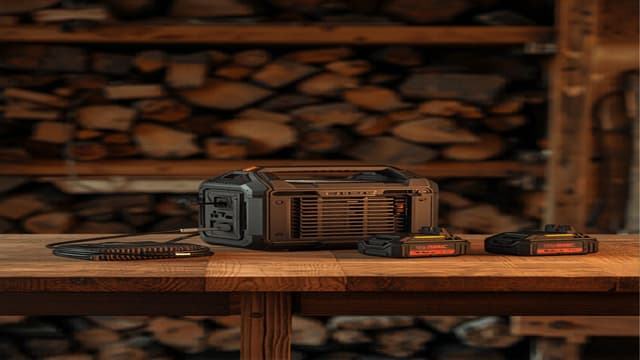
A portable power station is the quietest, cleanest way to put real electricity where there is no outlet: the far corner of the garage, the middle of a deck build, a tailgate, or your kitchen during an outage. The catch is that "portable power station" now spans a 10x range, from a 7-pound unit that tops up a laptop to a 240V monster that runs a welder. Buy the wrong size and you either overpay for capacity you never touch or, worse, watch a unit shut down the moment a tool draws more than it can give. This guide picks the right one for the work you actually do, with the wattage math that decides it.
The 30-Second Answer
Most garages and DIY projects: Jackery Explorer 1000 v2. 1070Wh of long-life LiFePO4, 1500W output, fast recharge. The size that fits the most jobs.
Running corded shop tools off-grid: Anker SOLIX C1000 Gen 2. 2000W continuous output plus a battery-expansion path runs tools a 1500W unit cannot.
Best capacity per dollar: EcoFlow Delta 2. 1024Wh, 1800W, and a 3kWh expansion ceiling, routinely the value leader on sale.
Lights, laptops, and small gear: Jackery Explorer 300. A 7-pound grab-and-go unit and the lowest-risk way to start.
Whole-home backup or 240V tools: Anker SOLIX F3800 Plus. 6000W, dual-voltage, expandable into whole-home territory.
That is the decision. The rest of this guide is the wattage math behind it, the chemistry that decides how long your unit lasts, and where a power station still loses to a generator. If your real problem is keeping power tools running during outages, our best portable generators guide and best inverter generators guide cover the gas side of that decision.
Where This Guidance Comes From
This is a research-backed, spec-verified buyer's guide, not a research-backed shootout. The picks come from comparing published capacity, continuous and surge output, battery chemistry, recharge times, and warranty terms across the four leading brands, cross-checked against current pricing and the load math from our own coverage of sizing power for tools. Where a number is a manufacturer spec, we say so. Where it is a load rule of thumb, we show the math. We have not bench-tested every unit here, and we are not going to pretend otherwise.
Quick Comparison: The Picks at a Glance
Model
Capacity
AC Output
Chemistry
Best For
Jackery Explorer 1000 v2
1070Wh
1500W (3000W surge)
LiFePO4
Best overall garage unit
Anker SOLIX C1000 Gen 2
1056Wh
2000W (3000W peak)
LiFePO4
Running corded tools
EcoFlow Delta 2
1024Wh
1800W (2700W surge)
LiFePO4
Best value, expandable
Jackery Explorer 300
293Wh
300W (500W surge)
Li-ion
Compact, budget, devices
Anker SOLIX F3800 Plus
3840Wh
6000W, 120V/240V
LiFePO4
Whole-home, 240V tools
Two specs decide almost everything here, and most buyers fixate on the wrong one. Capacity (watt-hours) is the fuel tank: how long it runs. Output (watts) is the engine: what it can run at all. A unit with a huge battery and a small inverter will run a phone for days but shut off instantly when you plug in a circular saw. Match the output to your heaviest tool first, then size the capacity to your runtime.
Why Output Watts Decide Whether a Tool Even Runs
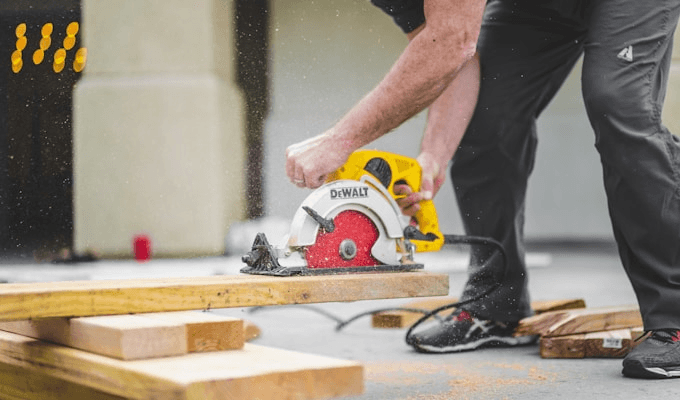
Every AC tool has two power numbers that matter: its running wattage and its much higher startup surge. A corded circular saw might run at 1200W but spike to 2500W or more for a fraction of a second when the motor kicks over or bogs down in a cut. If your power station's continuous output is below the running draw, the tool never starts. If it is above the running draw but below the surge, the tool may start and then trip the station mid-cut. This is exactly why our guide to sizing a generator for power tools exists, and the same math applies to battery stations.
Top PickJackery Explorer-1000-v2 Portable Power Station
The honest takeaway: a 1500W to 2000W station is brilliant for cordless-tool charging, lights, fridges, and the lighter end of corded tools, but it is not a generator. If your day involves a table saw, a big compressor, or a welder, you either step up to a 240V station like the F3800 Plus or you run gas. For everyone charging batteries and running hand tools, a mid-size LiFePO4 station is quieter, cleaner, and lives indoors safely, which gas units never will.
Battery Chemistry: Why LiFePO4 Is Worth Paying For
The single most important spec after output is the battery chemistry, and it is the one marketing pages bury. Older portable stations used standard lithium-ion (NMC) cells. Nearly every unit worth buying in 2026 has switched to LiFePO4 (lithium iron phosphate), and the difference is not subtle:
Cycle life: LiFePO4 units are typically rated for 3,000 to 4,000+ charge cycles before dropping to 70 to 80% capacity. Older lithium-ion stations were often rated for 500 to 800. That is the difference between a unit that lasts a decade of regular use and one that fades in two or three years.
Thermal safety: LiFePO4 is far more resistant to thermal runaway, which is why these units are comfortable to store and charge inside a garage.
Depth of discharge: LiFePO4 tolerates being run down hard and recharged repeatedly without the same accelerated wear.
The tradeoff is weight and price, LiFePO4 is heavier and costs a bit more per watt-hour, but for anything you plan to keep and cycle regularly, it pays for itself. The same chemistry shift is reshaping cordless tools, a trend we cover in the battery technology revolution. Of our picks, only the compact Jackery Explorer 300 uses older lithium-ion; everything from 1kWh up is LiFePO4, and that is deliberate.
Jackery Explorer 1000 v2: The Default Garage Unit
For most readers this is the answer, and the reasoning is boring in the best way. 1070Wh of LiFePO4 capacity and 1500W of continuous output land exactly where the majority of garage and project loads live: charging a fleet of tool batteries, running a work light and a fan all day, keeping a fridge alive in an outage, and powering the lighter corded tools without drama. At around 30 pounds it is still one-person portable, and the roughly 1-hour AC recharge means you are rarely stuck waiting on it.
The 1500W ceiling is its honest limit. It will not run a 15-amp circular saw under load, and it has no battery expansion. But for the buyer who wants a single capable unit and not a system, it is the cleanest value in the category. If your tool fleet is cordless, pair it with the right charging strategy from our battery-life guide, and the smartest first move is to settle your battery platform so a single station keeps every pack topped through a long project day. It is also the unit we point garage owners to for running a bank of LED work lights and topping off tire inflators far from an outlet.
Who the Explorer 1000 v2 is for
Homeowners and DIYers who want capable, no-fuss backup and project power. If you are not regularly running high-draw corded tools, this is very likely the right size, and stepping up to a 2000W unit is paying for headroom you will not use.
Anker SOLIX C1000 Gen 2: The Pick for Running Tools
When the work involves corded shop tools, that extra 500 watts of continuous output is the whole ballgame. The C1000 Gen 2 delivers 2000W continuous (3000W peak) from a similar 1056Wh LiFePO4 pack, and that headroom is the difference between a station that runs a router, a larger random-orbital sander, or a shop vac and one that trips. Anker's SurgePad tech briefly handles short startup spikes, and the unit recharges fully in under an hour.
The real long-game advantage is expandability. You can bolt on an additional battery to push past 2kWh, so a unit bought for tool work today grows into outage backup tomorrow without a second purchase from scratch. If you are running a corded shop setup, the same load logic applies to dust collection, which we cover in the dust collector guide and shop vacs roundup.
Who the C1000 Gen 2 is for
DIYers and tradespeople who run corded tools where there is no outlet and need more than 1500W, with the option to add capacity later. If your current frustration is "my power station keeps shutting off when I plug in a tool," this is the fix.
EcoFlow Delta 2: The Value and Expansion Play
The Delta 2 is the smart-money pick. 1024Wh of LiFePO4 and 1800W of output (with a 2700W surge) split the difference between the 1500W and 2000W tiers, and EcoFlow's frequent sale pricing routinely makes it the cheapest path to a kilowatt-hour of long-life storage. Its standout spec is the expansion ceiling: add-on batteries take it to 3kWh, the widest growth range of the mid-size units here.
One honest caveat: EcoFlow's X-Boost mode advertises running higher-wattage devices than 1800W by lowering voltage. It works for some resistive loads like heaters and kettles, but it is a workaround, not true continuous output, and you should not lean on it for motor-driven tools. Buy the Delta 2 for its real 1800W rating and treat X-Boost as a bonus, not a spec.
Who the Delta 2 is for
Value-focused buyers who shop the sales, want a clear expansion path, and would rather start at 1kWh and grow than overbuy on day one.
Jackery Explorer 300: The Compact Starter
Not every job needs a kilowatt-hour. The Explorer 300 is a 293Wh, 7-pound unit with a 300W pure sine wave outlet, and it is the right tool for a real and common need: keeping phones, laptops, cameras, lights, and small gear alive during an outage or an off-grid weekend. Pure sine wave output matters here, it is safe for sensitive electronics, which cheaper modified-sine units are not.
Its 300W output means it is explicitly not for power tools, and pretending otherwise is how buyers end up disappointed. But as the lowest-risk way to find out whether a power station fits your life, or as a dedicated electronics-and-lights unit alongside a bigger station, it earns its place. It is also genuinely useful in a vehicle or on a campsite where its weight is a feature, not a compromise.
Who the Explorer 300 is for
First-time buyers, campers, and anyone whose need is devices and lights rather than tools. If you are not sure you need a power station at all, this is the low-stakes way to find out.
Anker SOLIX F3800 Plus: The Whole-Home and 240V Tier
This is where a power station stops being a gadget and starts replacing a generator. The F3800 Plus packs 3840Wh of LiFePO4, puts out 6000W, and, crucially, delivers true 120V/240V output. That dual-voltage capability is rare at this price and it is what unlocks the heavy stuff: a welder, a large air compressor, a well pump, a 240V table saw. Stack additional batteries and it climbs into genuine whole-home backup territory.
It is heavy and it is a real investment, so it is overkill for anyone who only charges tool batteries and runs hand tools. But if you have a serious workshop, an off-grid build, or you want outage backup that can actually run major appliances and 240V equipment, this is the tier that delivers. For the workshop loads it can drive, see how it pairs with our coverage of portable air compressors and the new best MIG welders guide, since a 240V station is one of the few battery units that can feed a welder at all.
Who the F3800 Plus is for
Serious workshops, off-grid setups, and homeowners who want outage backup with the muscle to run 240V tools and major appliances, with an expansion path to whole-home.
The Decision Tree: Match the Station to Your Situation
Your situation
Buy
Why
Devices, lights, off-grid weekends
Jackery Explorer 300
Light, affordable, pure sine wave for electronics
One capable garage and backup unit
Jackery Explorer 1000 v2
1kWh LiFePO4, 1500W, fast recharge, fair price
Best capacity per dollar, room to grow
EcoFlow Delta 2
1kWh on sale, expandable to 3kWh
Running corded shop tools off-grid
Anker SOLIX C1000 Gen 2
2000W continuous, battery expansion
Welder, big compressor, or 240V loads
Anker SOLIX F3800 Plus
6000W, true 240V, whole-home expansion
Sustained heavy power-tool use all day
Consider a generator instead
Gas still wins on sustained high-draw runtime
That last row is the one most buying guides will not tell you, so we will: for sustained, all-day, high-draw power-tool work far from an outlet, a quiet inverter generator is often still the more practical and cheaper answer. Read our inverter generators guide before assuming a battery station is automatically the upgrade. The right answer depends entirely on your loads and how long they run.
Power Station vs Generator: The Honest Comparison
These two product categories overlap, and the marketing on both sides oversells. Here is the straight version.
The clean answer for most readers: a power station for the garage, electronics, cordless-tool charging, and short outages where silence and indoor safety matter; a generator when you need to run heavy tools for hours or ride out a multi-day outage. Plenty of well-equipped shops own both. If you are weighing fuel types on the generator side, our gas vs electric coverage walks through the same engine-versus-battery tradeoff in another category.
Solar: When to Add Panels, and When to Skip Them
Every brand here sells matching solar panels, and they are genuinely useful in the right scenario: multi-day off-grid use, RV and van life, or true emergency preparedness where the grid may be down for days. A panel turns a finite battery into a slow-but-renewable supply. For the typical garage or weekend-project buyer, though, solar is often an upsell you do not need, the AC fast-charge on these LiFePO4 units already refills them in about an hour from any outlet.
Buy solar if your use case is genuinely off-grid or emergency-resilience focused. Skip it if your station lives in a garage with a wall outlet ten feet away. You can always add a panel later; the input port is standard on all of these. If the goal is a fully kitted shop rather than just backup power, our workshop equipment guide maps where a power station fits alongside everything else, and the garage heater guide covers the one big resistive load you should never try to run off a battery station for long.
Five Power Station Mistakes That Cost Money
Buying for capacity and ignoring output. A giant battery with a 1500W inverter still cannot start a 1800W tool. Match the watts to your heaviest load first, then size the watt-hours for runtime.
Overpaying for whole-home capacity you will never cycle. If you charge tool batteries and run lights, a 1kWh unit is plenty. A 3.8kWh unit that sits at 100% for months is wasted money and wasted battery health.
Trusting "X-Boost" style modes for motor tools. Voltage-lowering boost modes work for resistive loads like heaters, not for the motors in saws and compressors. Buy for the true continuous rating.
Ignoring battery chemistry. An older lithium-ion unit at a discount may be rated for a fraction of the cycles of a LiFePO4 unit. The "deal" can cost more per usable year.
Expecting generator runtime from a battery. A power station running a 1500W load empties a 1kWh battery in well under an hour. For sustained heavy loads, that is a generator job. Know which you are buying.
Frequently Asked Questions
Can a portable power station run power tools?
It depends entirely on the tool and the station's output. A 1500 to 2000W LiFePO4 station easily charges cordless tool batteries and runs drills, drivers, sanders, and shop vacs. Corded circular saws, table saws, large compressors, and welders need either a 240V high-output station or a generator, because their running and surge wattage exceeds what mid-size stations deliver.
How big a power station do I need for my garage?
For charging a cordless tool fleet, running lights and a fan, and keeping a fridge alive in an outage, a 1kWh unit (around 1000Wh) with 1500W output is the sweet spot. Step up to 2000W output if you run corded tools, and to a 240V unit only if you need to power 240V equipment or back up much of your house.
Is LiFePO4 really worth paying more for?
For anything you cycle regularly, yes. LiFePO4 units are typically rated for several times the charge cycles of older lithium-ion stations and are safer to store and charge indoors. The higher upfront cost is usually cheaper per usable year if you actually use the unit.
Can I use a power station indoors during a blackout?
Yes, that is one of their biggest advantages over generators. Power stations produce no exhaust and run near silently, so they are safe to use inside the house. Never run a gas generator indoors or in an attached garage under any circumstances.
Power station or generator: which should I buy?
Buy a power station for clean, quiet, indoor-safe backup, electronics, cordless-tool charging, and light corded tools. Buy a generator for sustained high-draw tools and multi-day outages. Many shops own both. The deciding factor is how much power you need and for how long; see our portable generators guide for the gas side.
The Verdict
Pick the station for the load, not the headline capacity. The Jackery Explorer 1000 v2 is the right answer for most garages: enough LiFePO4 capacity and output to charge tools, run lights, and ride out short outages, at a fair price and a fast recharge. Step up to the Anker SOLIX C1000 Gen 2 if you run corded tools and keep tripping a 1500W unit, take the EcoFlow Delta 2 when value and expansion matter most, start with the Jackery Explorer 300 if you only need devices and lights, and go to the Anker SOLIX F3800 Plus when you need 240V muscle and whole-home backup. Size the output to your heaviest tool, size the capacity to your runtime, insist on LiFePO4 for anything you will cycle, and you will buy right the first time.
The default pick. 1070Wh of LiFePO4 at a fair price covers 90% of garage, deck, and jobsite jobs, and the 1-hour recharge means you are rarely waiting on it.
This guide is research-backed. It compares exact-model manufacturer sources, current market information, and recurring owner feedback; it does not claim direct physical testing. No paid placements influence our rankings.
Model identity (Primary)Exact model, kit contents, voltage platform, and current manufacturer documentation are matched before products are compared.
Use-case fit (Primary)Published capacity, controls, dimensions, compatibility, and limitations are evaluated against the jobs and buyers named in the guide.
Comparison consistency (Primary)Every option is assessed against the same category-relevant criteria, with unsupported performance assumptions excluded.
Warranty and support (Secondary)Current warranty terms, platform support, replacement options, and manufacturer documentation are reviewed for ownership risk.
Price and owner signals (Secondary)Current pricing and recurring verified-owner patterns inform value and reliability context without being presented as our own test results.